
Last updated November 22, 2026
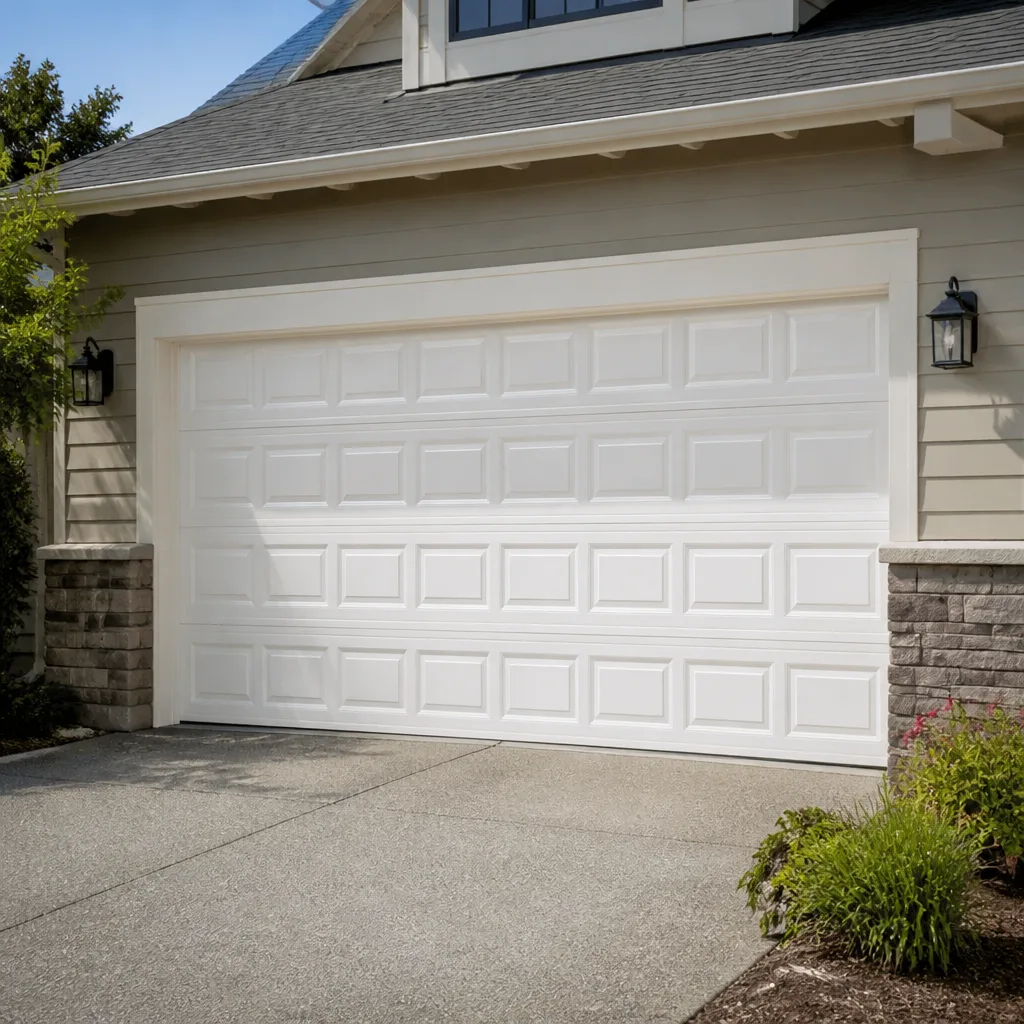 Raised-panel steel
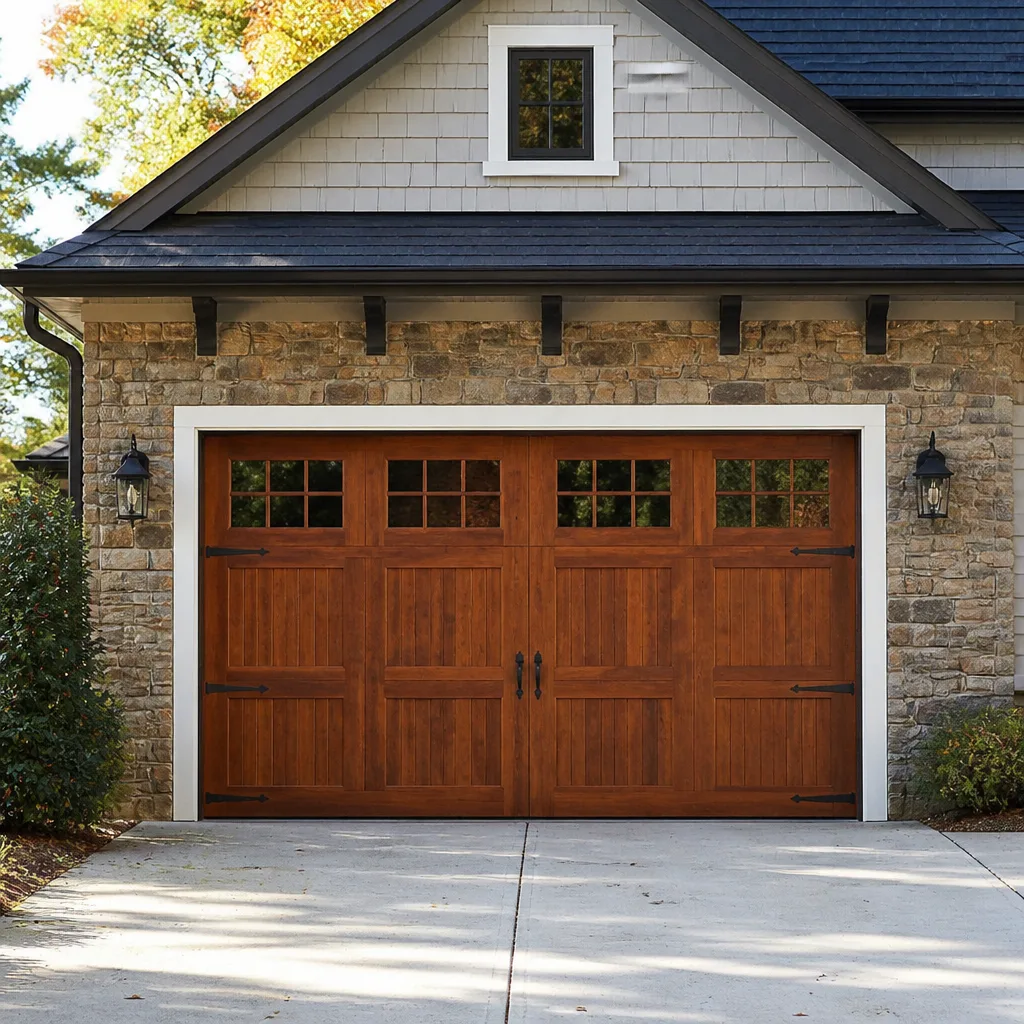 Carriage house
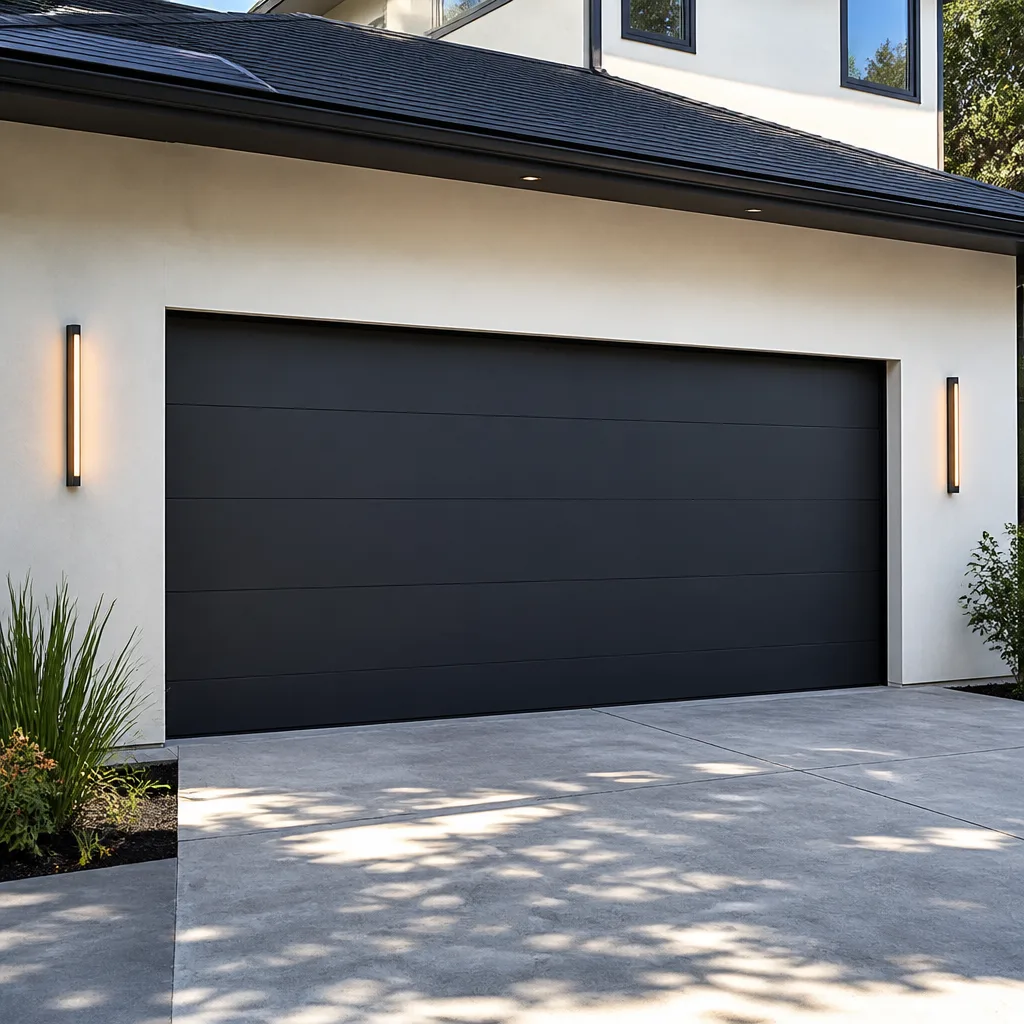 Modern flush
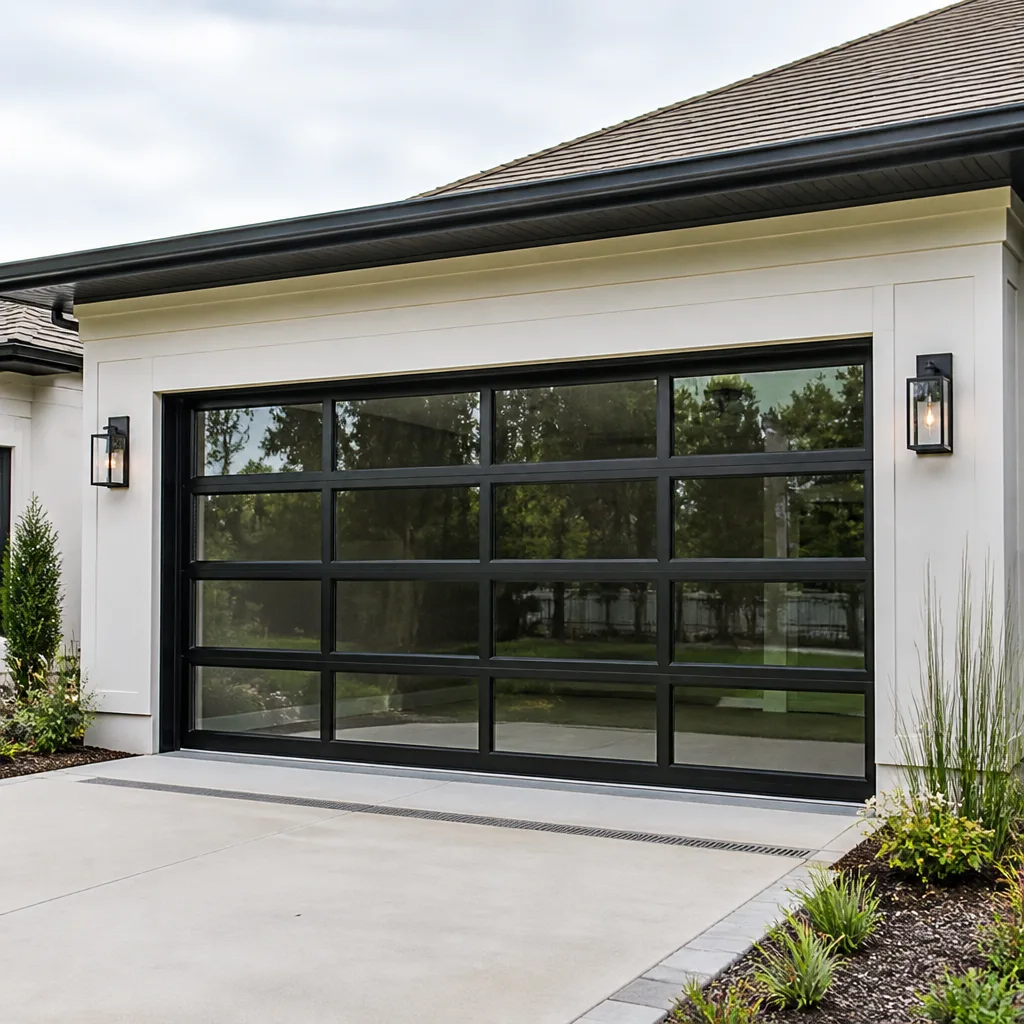 Full-view glass
 LiftMaster openers
 Chamberlain openers
Full 25-point door and opener safety check with every visit - springs, cables, rollers, tracks, and your LiftMaster or Chamberlain opener included
You get a price before we start. It does not change when the pro arrives.
Get your free estimateGarage Door Emergency Preparedness Guide for South Tampa Homes
When a torsion spring breaks at 6:45am on a weekday in South Tampa, the door usually won’t move by hand either. Most homeowners don’t know the manual release procedure, and the ones who try it often pull the wrong way and bend the cable drum. That’s the mechanical emergency. The other kind is weather: a door that’s fine in July can be the weak point in the wall during a tropical system. Preparing for both takes two separate playbooks, and this guide walks you through both – the release sequence, the storm protocol, the temporary fixes that are actually safe, and the post-storm checks that keep you from making a bad situation worse.
Quick Answer
A garage door emergency in South Tampa falls into one of two categories: a mechanical failure (broken spring, snapped cable, opener dead, door off track) or a storm event where a weakened door becomes a structural risk. For mechanical failures, the priority is to disengage the opener safely with the release cord, keep the door closed if you can, and call for same-day service. For storms, the priority is to know whether your door is rated for the wind load, reinforce if it’s rated, and evacuate if it isn’t. Both scenarios reward preparation done before the emergency, not during it.
Styles & brands we work with
- Raised-panel steel
- Carriage house
- Modern flush
- Full-view glass
- LiftMaster openers
- Chamberlain openers
Table of Contents
- The Two Kinds of Garage Door Emergency in South Tampa
- How to Use the Manual Release Without Damaging the Door
- Temporary Fixes That Hold for 12 to 24 Hours – and What Never To Do
- Hurricane Protocol: Is Your Door Rated for the Storm Coming?
- What to Have Ready Before You Call for Emergency Service
- Post-Storm Door Assessment: What to Check Before You Open It
- Building a Garage Door Emergency Kit for a South Tampa Home
- What a Homeowner Can Safely Do vs. What Needs a Technician
The Two Kinds of Garage Door Emergency in South Tampa
The word “emergency” gets used loosely for garage doors, and in South Tampa it’s worth separating the two cases because the response is completely different. One is mechanical: something breaks, the door stops working, and you need it fixed now because the car is trapped or the house is open to the street. The other is environmental: a storm is coming, the door is the largest opening in your house, and whether it holds determines whether the roof stays on.
Mechanical emergencies are common and predictable. Torsion springs are the single most common failure – they’re under high tension every hour of the day and they fatigue from cycles, not from age alone. A door that cycles four times a day will wear a spring faster than one that cycles twice. Cables snap, rollers come out of the track, and openers fail from worn gears or a dead logic board. In our experience across South Tampa, more than half of the calls that come in as “emergency” trace back to a spring or a cable.
Environmental emergencies are seasonal but not rare. A garage door rated for a certain wind load is a structural system; a door not rated for that load can fail inward under pressure, and when it fails it can compromise the roof structure above it. That’s why the two playbooks split: mechanical failure wants a technician today, storm preparation wants a checklist in the weeks before the season starts.
For routine repairs after a mechanical emergency, see our Garage Door Repair South Tampa page, which covers the most common failures and how each is diagnosed.
How to Use the Manual Release Without Damaging the Door
The manual release exists so you can open the door by hand when the opener won’t run or the power is out. Used correctly, it’s simple. Used incorrectly, it can drop the door, damage the cable drum, or put you in the path of a moving door. Follow the sequence in order and stop if anything feels wrong.
- Check the door’s position. If the door is fully closed, the release is safe to use. If it’s fully open, close it first with the opener if possible. If the opener is dead and the door is open, do not pull the release – call a technician, because the door can free-fall.
- Stand clear of the door’s travel path. Position yourself to the side, not underneath the door. The door should be visible but not over your head or feet.
- Find the release cord. It hangs from the trolley on the opener rail, usually red-handled. If you don’t see it, look along the rail from the opener housing toward the door.
- Pull straight down, firmly. One clean pull. Don’t yank it sideways or repeatedly – the trolley disconnects with a single downward motion, and tugging laterally can bend the release arm.
- Test the door by hand. Lift the door slowly. A properly balanced door should lift with one hand and stay where you leave it. If it fights you or slams down, a spring or cable is broken and the door is not safe to operate by hand – close it gently and stop.
- Re-engage before running the opener. Once you’re done, pull the door down to meet the trolley and it will reconnect. Never run the opener with the door disconnected – the trolley will travel to the end of the rail and jam.
Two mistakes account for most of the damage we see. The first is pulling the release while the door is open, which lets the door come down under its own weight. The second is leaving the door disconnected and then hitting the opener button, which drives the trolley into the end stop and can strip the gear. If you’re not sure of the door’s state, leave the release alone and call.
Safety note: never put your hands near the springs, cables, or hinges to inspect a door that has just failed. The springs and cables are under extreme tension and can cause serious injury. Visual inspection from a distance is fine; touching is not. That’s a job for a trained technician.
Temporary Fixes That Hold for 12 to 24 Hours – and What Never To Do
If a spring or cable has failed and you can’t get a technician out the same day, you need the door secured, not operating. The goal is to keep the door closed and locked until a professional arrives. These steps are safe to do yourself.
- Leave the door fully closed. A closed door with a broken spring is held by gravity and the opener’s trolley. It won’t open on its own, and a burglar can’t lift it easily.
- Disconnect the opener from the door. Pull the release cord so the opener won’t try to open a door that’s disconnected from its spring system. This prevents the opener from straining against a door it can’t move.
- Add a manual lock or vice grips. If your door has a slide lock, engage it. If it doesn’t, a pair of locking pliers clamped on the track just above a roller will stop the door from being lifted from outside.
- Secure the bottom seal. If the bottom seal or weatherstripping has come loose, push it back against the floor so wind-driven rain doesn’t get in. A towel wedged at the corners will help until the technician arrives.
What not to do is just as important. Don’t try to wind, unwind, or cut the springs. Don’t remove the cables or try to re-route a slipped cable. Don’t lift the door by hand to “test” whether it will operate. And don’t run the opener with the door disconnected – the trolley will hit the end of the rail and possibly damage the opener head. If any part of the door is hanging or the track is bent, do not attempt to move it at all.
We answer 24/7. A call outside dispatch hours is booked into the next opening, Sunday through Friday, 7am to 7pm. Call (833) 696-2185 for a free estimate.
Hurricane Protocol: Is Your Door Rated for the Storm Coming?
A garage door rated for wind load is part of your home’s structural envelope, and an unrated or under-rated door can be the first thing to fail in a tropical system. Florida code requires garage doors on new construction to be rated for the design wind speed of the area they’re in, and South Tampa homes fall under that requirement. But plenty of older homes in the area still have doors that predate the current code, or doors that were rated when they were new and haven’t been maintained since. Knowing which you have is the whole game.
To check your door’s rating, look for a label on the door itself or on the track. It will list the design pressure rating and, in most cases, a maximum wind speed. If you can’t find a label, look at the door’s construction: a rated door will have heavier gauge sections, reinforced hinges, and a track system rated for the wind load. If you find no label and the door is older, treat it as unrated until a technician confirms otherwise.
The decision tree for a storm that’s forecast to affect South Tampa:
- If your door is rated and in good repair. You don’t need to brace it. A rated door with intact hinges, rollers, and track is already the structural system. Your job is to make sure nothing is blocking the door from closing fully and that the opener has power.
- If your door is rated but shows damage. Bent track, missing rollers, or a door that doesn’t close flush means the rating is compromised. Don’t rely on it. Call a technician to assess before the storm arrives if there’s time.
- If your door is unrated. Bracing with a manufactured garage door brace kit can help for lower-wind events, but it does not turn an unrated door into a rated one. For a major hurricane, FEMA and the Florida Division of Emergency Management recommend following local evacuation orders regardless of what reinforcement you’ve done.
- If an evacuation order is issued. Evacuate. No garage door reinforcement substitutes for leaving a mandatory evacuation zone. A braced door helps protect the house from wind and rain; it does not protect you.
For full-scope work on a compromised door before storm season, see our garage door repair service page.
What to Have Ready Before You Call for Emergency Service
The single biggest factor in how fast an emergency repair goes is whether the technician arrives with the right parts. Springs, cables, and openers are not universal. If dispatch knows what you have, they can stage the part and often fix the door on the first visit. If they don’t, you’re looking at a second appointment when the parts come in.
Have these details ready before you dial:
- Door brand and panel count. We work on Clopay, Amarr, Wayne Dalton, Raynor, and the other major brands, so knowing the brand helps us match parts to the hardware already in your garage. Count the horizontal panels too – a four-panel door and a five-panel door take different springs.
- Spring type and location. Torsion springs mount on a shaft above the door. Extension springs run along the horizontal tracks on each side. Look from a distance – don’t touch – and note which you have.
- Opener brand and model. LiftMaster, Chamberlain, Genie, and Craftsman are all common in South Tampa. The model number is usually on a sticker on the back or side of the opener housing, or inside the light cover.
- What the door is doing. Won’t move at all, moves a few inches and stops, opener runs but the door doesn’t, door is crooked, loud bang from above the door. Each points to a different failure.
- Door weight class. Single-car and double-car doors use different springs. If you know whether the door is insulated or not, that helps too.
- A photo of the door and the opener. If you can text or email a photo, that’s often faster than describing it. The technician can confirm the model before leaving.
Having a door brand and model on hand also speeds up opener work specifically. Our garage door opener repair service covers the major brands, and the model number is what determines which boards, gears, and remotes are compatible.
Post-Storm Door Assessment: What to Check Before You Open It
After a hurricane or tropical storm passes through South Tampa, the garage door needs an assessment before you hit the opener. Wind pressure, debris, and water can all damage a door in ways that aren’t obvious from inside. Do these checks from the ground, on foot, with a flashlight.
- Look at the tracks first. Both vertical and horizontal tracks should be straight and parallel. A bent track means the door can’t travel smoothly – don’t run the opener until a technician aligns it.
- Check the springs and cables from a distance. A stretched or displaced spring or a cable that’s come off its drum is a clear signal to stop. Never try to reattach a cable yourself.
- Inspect the bottom seal. If the bottom seal or weatherstripping has been pushed inward or torn loose, wind-driven water is getting under the door. Push it back into place if you can do it safely; if it’s torn, it needs replacing.
- Check the panels for bends or separations. A door that’s been pushed inward but springs back may be fine; one that stays bowed has been stressed beyond its rating and needs a professional look.
- Look for debris in the track. Branches, leaves, and gravel in the track will stop the door. Clear what you can reach safely, then test the door by hand with the opener disconnected.
- Only then run the opener. If everything above is intact, reconnect the trolley and run the door once. If anything sounds or looks off, stop.
If the door passed all checks, it’s still worth having a technician look at it after a significant storm. Hidden stress in springs and cables is common, and a spring that was near the end of its life before the storm is often the one that fails two weeks after.
Building a Garage Door Emergency Kit for a South Tampa Home
The best time to prepare for a garage door emergency is the day before it happens. A small kit kept in the garage means you won’t be searching for a flashlight in the dark. None of this substitutes for a technician, but it buys you time and keeps you safe while you wait.
- A bright flashlight and spare batteries. The garage has no windows in most South Tampa homes, and a spring failure often means the opener has also stopped.
- A pair of locking pliers. For clamping the track above a roller as a temporary lock if the door has no slide lock.
- A permanent marker and a notepad. To write down the door brand, panel count, spring type, and opener model before you call.
- A copy of the door’s label or a photo of it. Keep it on your phone – a photo of the door label and the opener model sticker saves a lot of time on the phone.
- A flashlight-rated magnet. Handy for picking up small hardware that falls in the track.
- The number for a garage door specialist. Written on the wall of the garage, not just saved on a phone that might be dead. Call (833) 696-2185.
Keep the kit on a shelf near the garage door, not buried behind boxes. And once a year, before storm season, take two minutes to check the door balance by hand and look at the springs from a distance. A door that lifts with one hand and stays where you leave it is balanced; a door that fights you or slams down needs a technician.
What a Homeowner Can Safely Do vs. What Needs a Technician
Some garage door issues are safe to handle yourself. Others are the reason garage door repair is a trade. The dividing line is simple: anything that involves the springs, cables, or the torsion shaft is off-limits. Everything else is a judgment call.
Safe for a homeowner:
- Pulling the manual release cord with the door closed.
- Clearing debris from the tracks with a broom or vacuum.
- Replacing the batteries in the opener remote or keypad.
- Replacing the bottom seal or weatherstripping.
- Lubricating hinges, rollers, and the opener rail with a garage door lubricant.
- Taking photos and noting the brand and model for a service call.
Needs a technician:
- Any spring or cable work. Torsion springs hold enough energy to cause serious injury, and the correct procedure requires winding bars and training.
- Track alignment and roller replacement on a door with a broken or stretched component.
- Opener gear or logic board replacement if the unit is more than a few years old.
- Any door that moves crooked, binds, or comes off its track.
- Post-storm inspection of a door that took wind or debris impact.
When the answer is “call a technician,” the fastest path is a specialist who works on doors only, because the parts and the diagnosis happen in one visit. We work on the brand already in your garage rather than adapting a generic part to fit.
Common Mistakes to Avoid
- Pulling the release cord while the door is open. The door will free-fall under its own weight. Only release the trolley with the door fully closed, or call a technician if it’s stuck open.
- Running the opener after the release has been pulled. The trolley will travel to the end of the rail and can strip the opener gear. Reconnect before testing the opener.
- Assuming a hurricane brace makes an unrated door safe. A brace helps a rated door stay secure; it does not upgrade an unrated one. Follow evacuation orders regardless of what’s on the door.
- Ignoring a bent track after a storm. A track that’s visibly out of alignment means the door can’t travel smoothly. Running the opener on a bent track can damage rollers, hinges, and the door itself.
- Buying a universal spring or opener part. Springs are matched to door weight and panel count; opener boards are matched to model. The right part, not the nearest substitute, is what keeps the door working.
- Waiting for a spring to fail completely before replacing it. A spring that’s stretched, noisy, or visibly worn is a scheduled replacement, not a 6:45am emergency. Catching it early means the car isn’t trapped.
- Not knowing the door brand before calling. We work on LiftMaster, Chamberlain, Genie, Clopay, Amarr, Wayne Dalton, Craftsman, and Raynor. Knowing which one you have is the difference between a same-day fix and a second visit.
See the difference
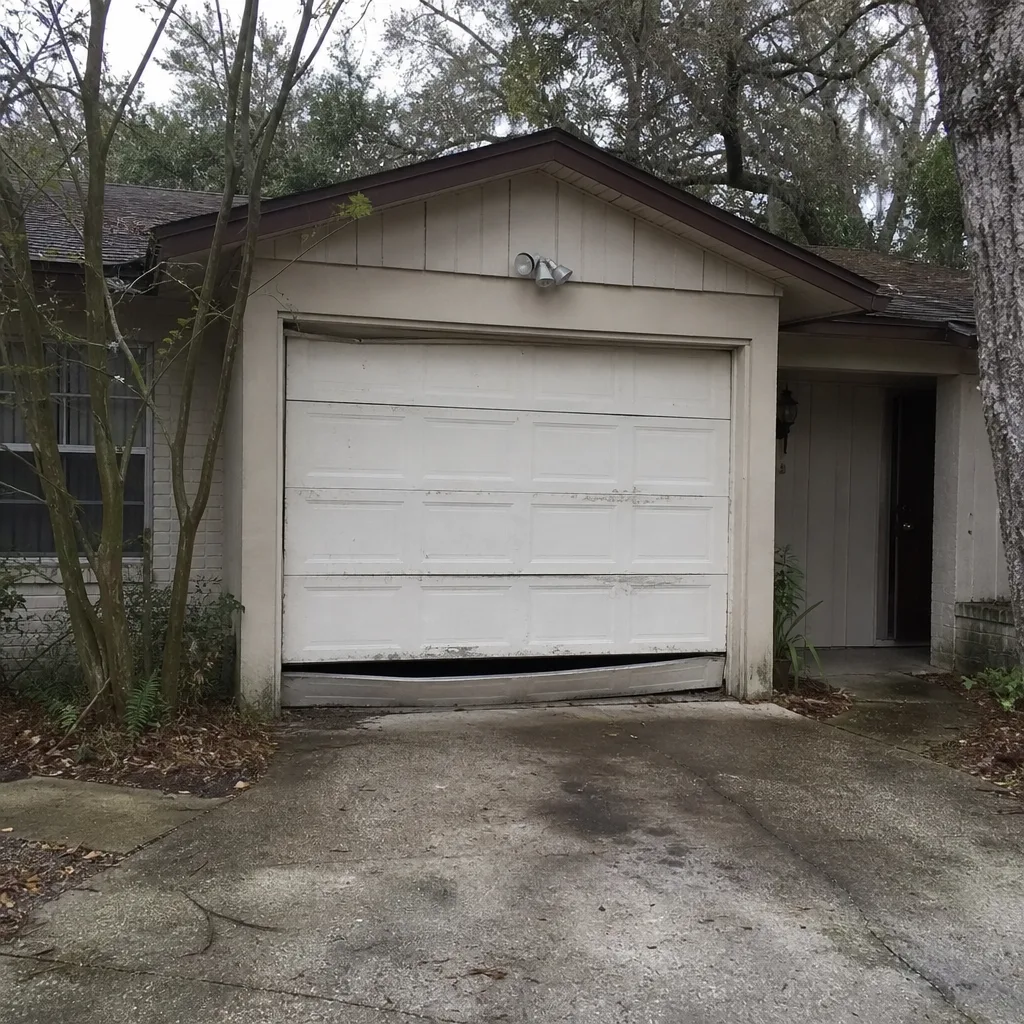 Before
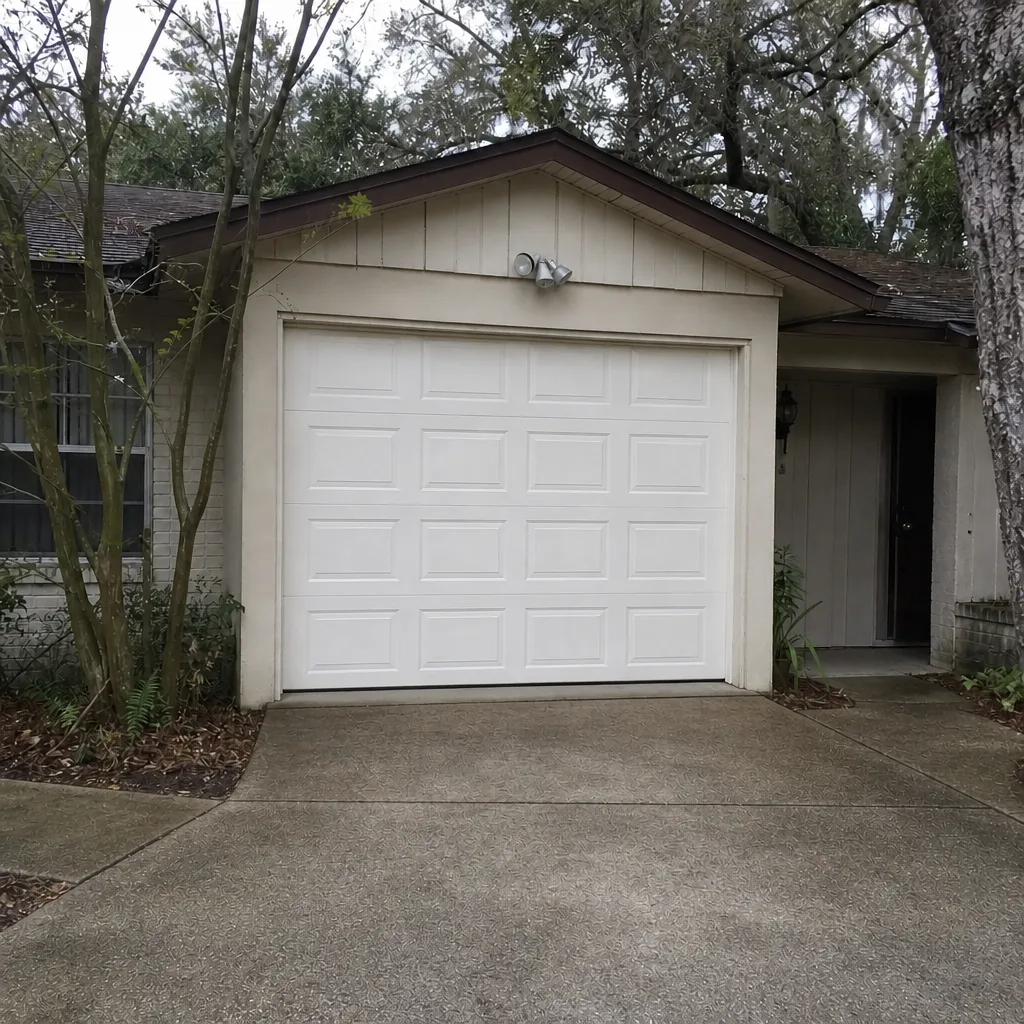 After
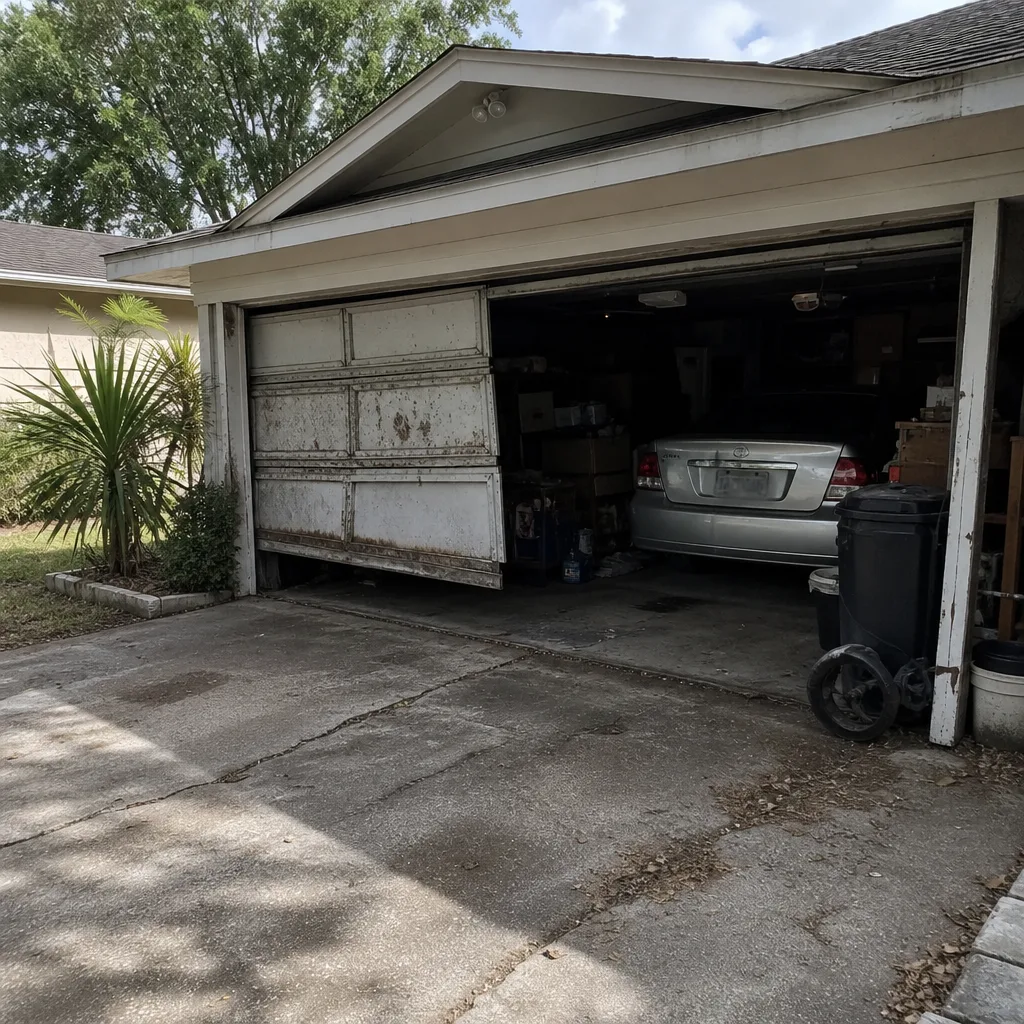 Before
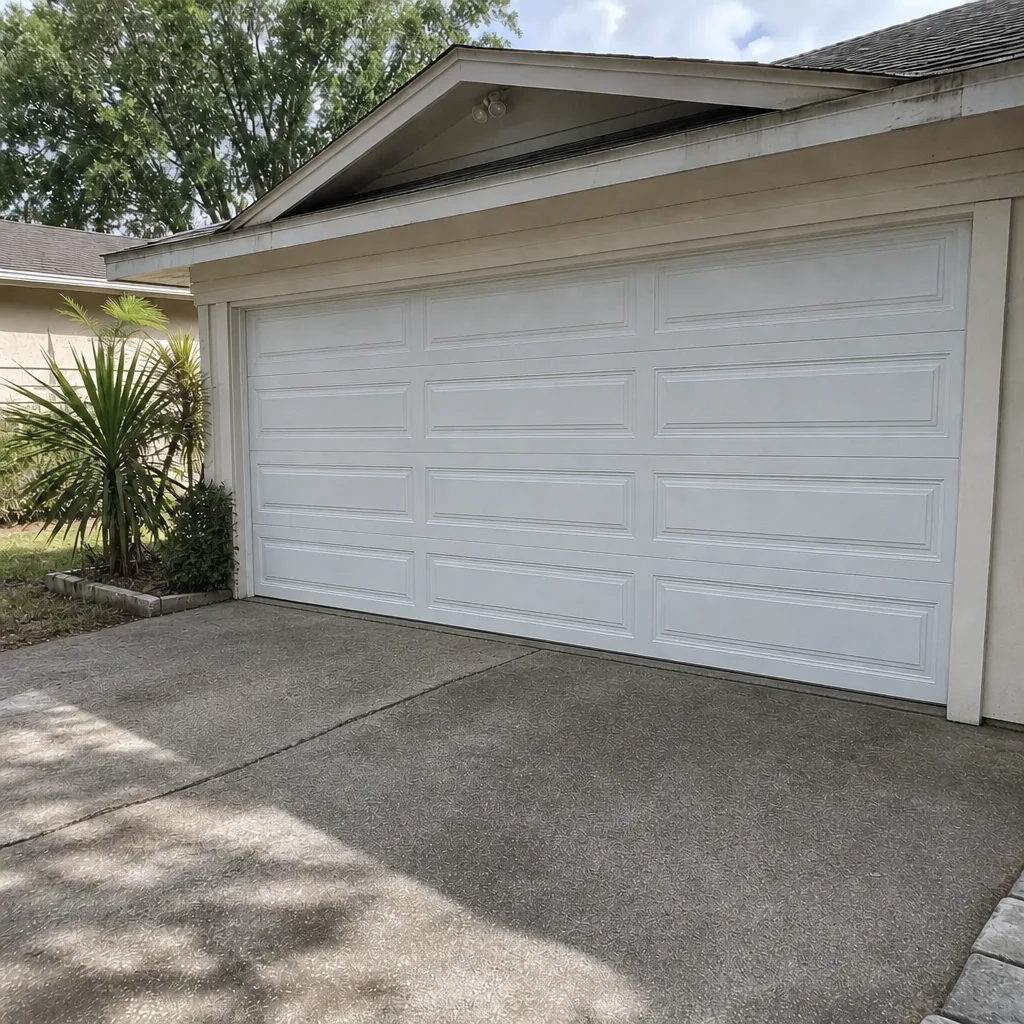 After
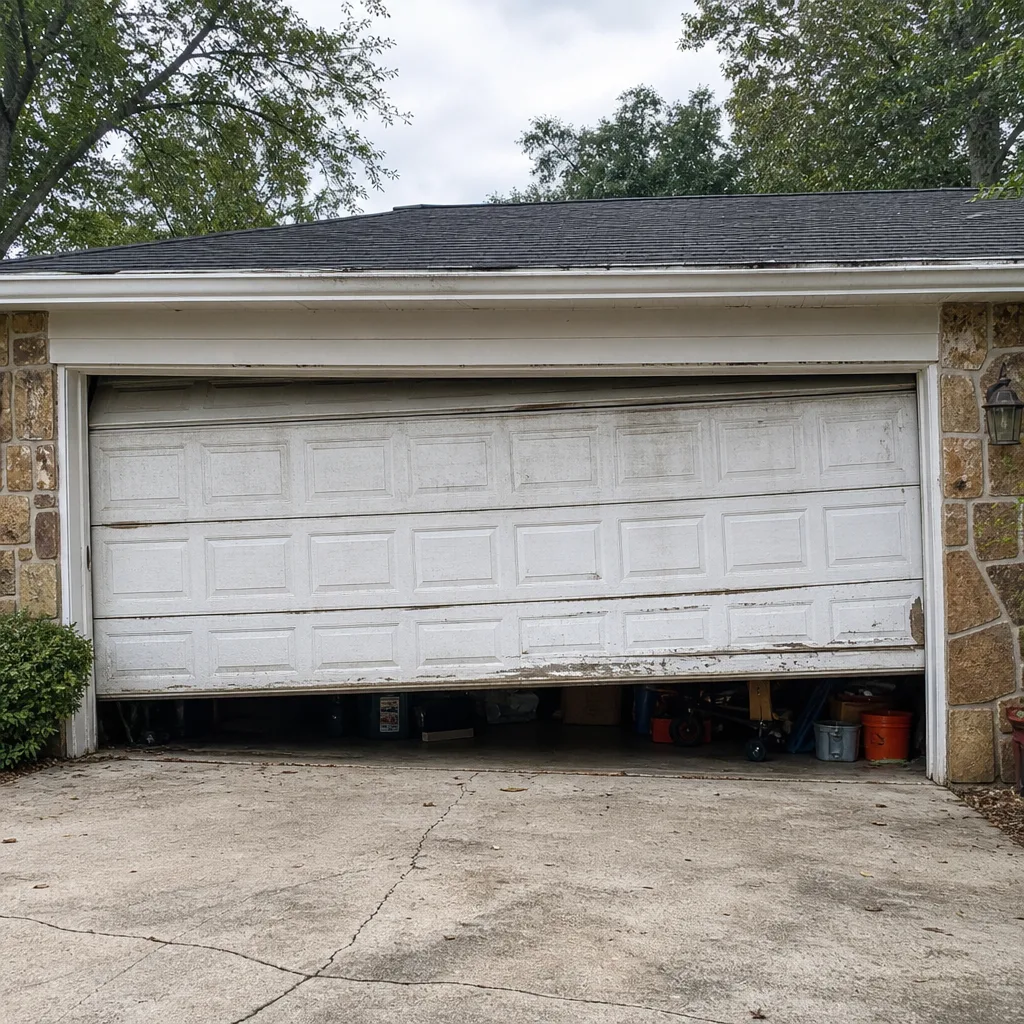 Before
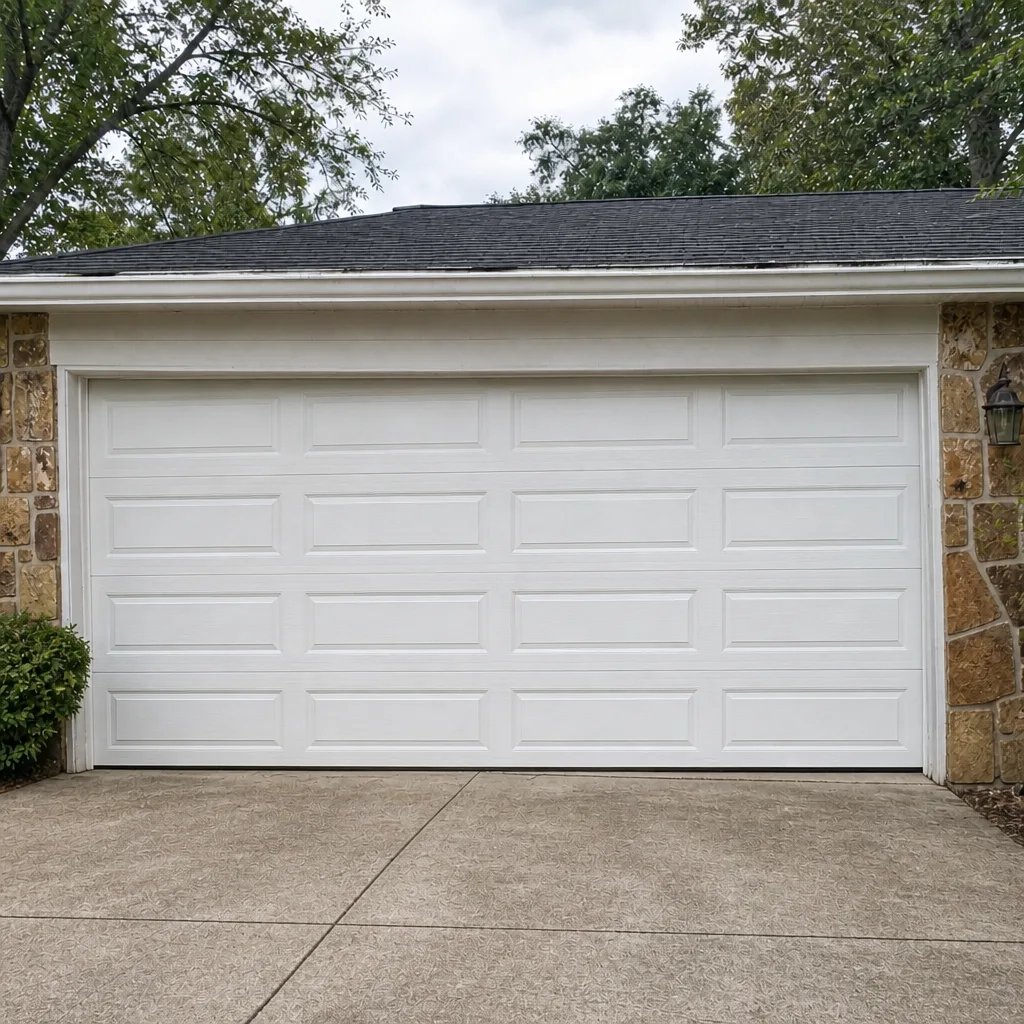 After
When to Call a Professional
Call a professional any time the springs or cables are involved, the door moves crookedly, or the opener is doing something it didn’t do yesterday. Also call if you’re not sure – a phone diagnosis is faster than a home repair gone wrong. The cases where we strongly recommend a technician rather than a homeowner attempt: a broken spring or cable, a door that’s come off its track, an opener that runs but doesn’t move the door, a door that reverses on its own, and any post-storm door that took wind or debris. Garage Door Repair South Tampa offers free estimates in South Tampa – call (833) 696-2185. Our technicians have up to 12 years of experience and work on the major brands already installed in the area.
Frequently Asked Questions
Spring repair in South Tampa typically runs $180 to $340 for one spring, and a matched pair is usually replaced together at about twice that. Opener repairs and cable replacements fall in similar ranges depending on the part. The written estimate sets the final price, and the price is quoted and agreed before any work starts. Call (833) 696-2185 for an exact quote – estimates are free.
In most cases yes. Spring and cable failures are our core specialty, and we keep those parts staged for same-day work. Call (833) 696-2185. We answer 24/7, and fast dispatch runs from 7am to 7pm, Sunday through Friday.
No. The price is quoted and agreed before any work starts based on what we find, and the estimate you receive is the price you pay. If the diagnosis changes what’s needed, we walk you through it before starting, not after.
The local pros we connect you with are licensed and insured to the standards their state requires. Our technicians have up to 12 years of experience, and they work on LiftMaster, Chamberlain, Genie, Clopay, Amarr, Wayne Dalton, Craftsman, and Raynor hardware.
Look for a label on the door or track stating the design pressure rating and maximum wind speed. If there’s no label and the door is older, treat it as unrated until a technician confirms it. Bracing helps a rated door stay secure; it doesn’t upgrade an unrated one, and mandatory evacuation orders apply regardless.
With the door fully closed, pull the release cord straight down once to disconnect the trolley. Leave the door closed and locked. Clamp a pair of locking pliers on the track above a roller if you have no slide lock. Don’t attempt to lift the door by hand if the spring is broken – it may not stay up, and the door can come down unexpectedly. Call (833) 696-2185 for same-day service.
The Bottom Line
Garage door emergencies in South Tampa split cleanly into mechanical and storm categories, and each has its own playbook. For mechanical failure, the safe sequence is: close the door, pull the release cord straight down once, lock the door, and call for same-day service – never touch the springs or cables. For storms, know your door’s rating, brace only what’s rated, and evacuate when orders are issued. The preparedness kit and the pre-call details – door brand, panel count, spring type, opener model – are what turn an emergency into a one-visit repair. When the next one happens, our team is one call away at (833) 696-2185. For new door work after storm damage or an aging door that won’t rate, see our garage door installation page.
Written by the team at Garage Door Repair South Tampa.