
Last updated November 22, 2026
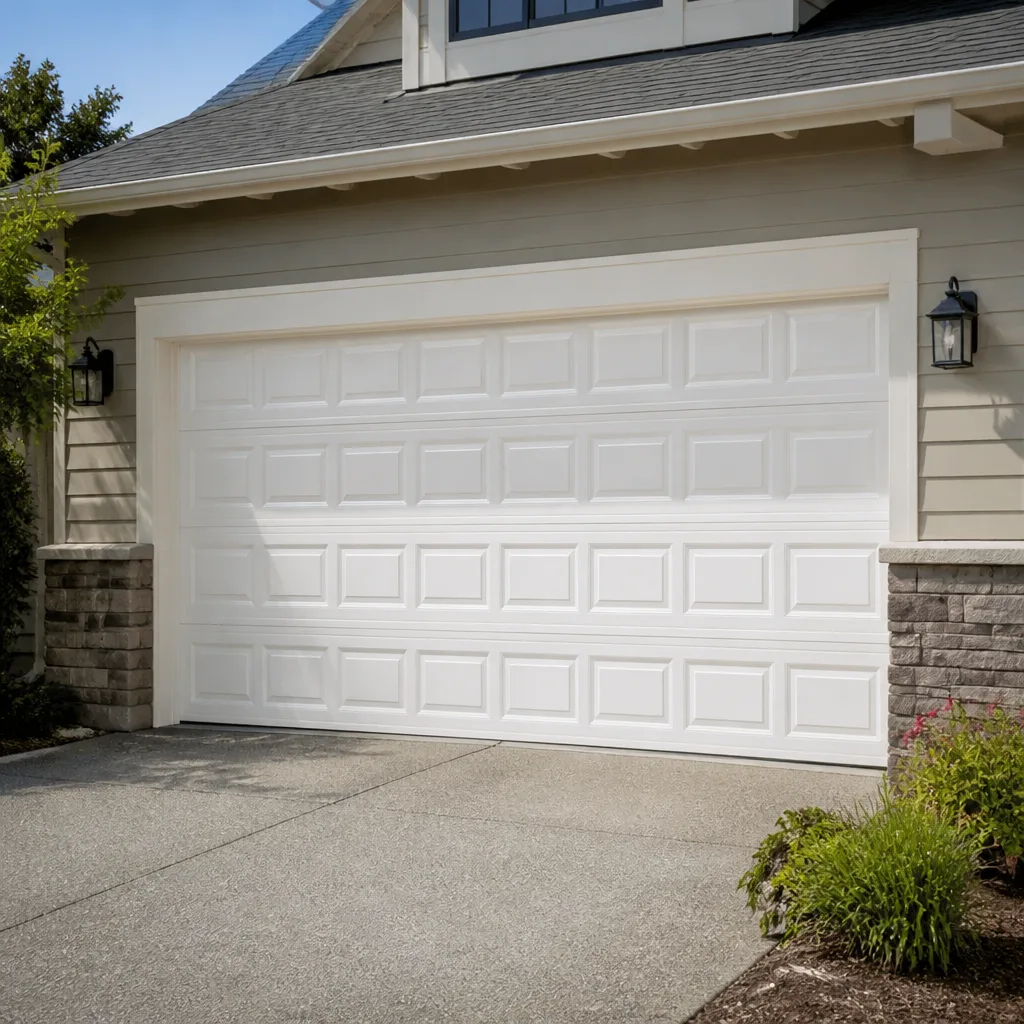 Raised-panel steel
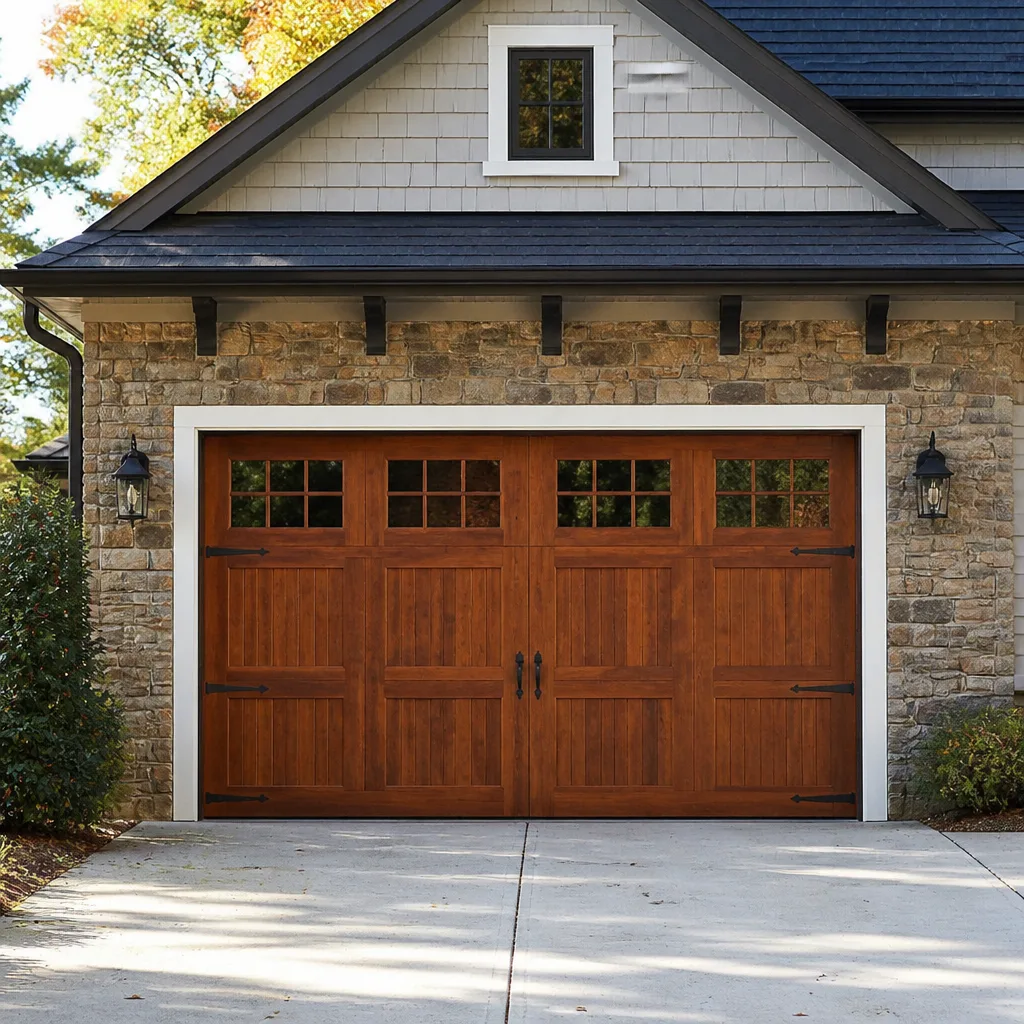 Carriage house
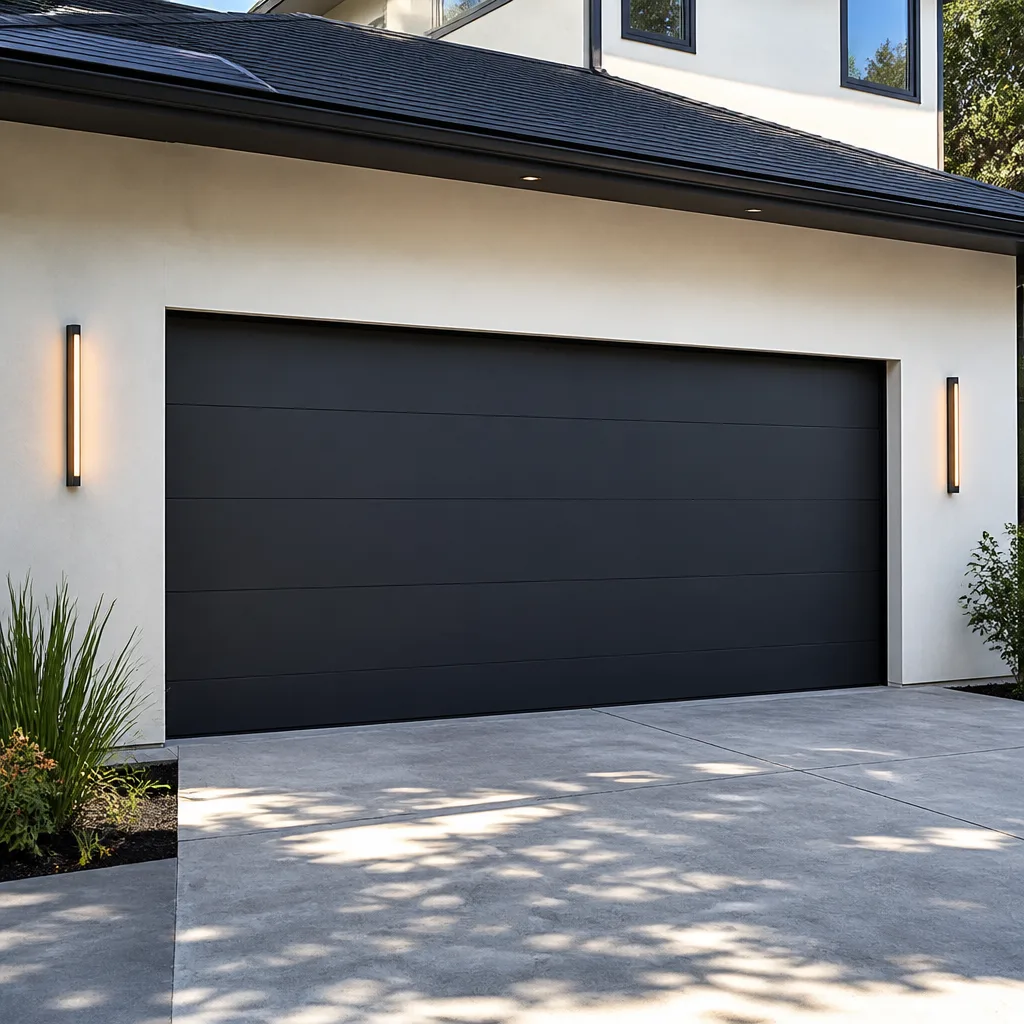 Modern flush
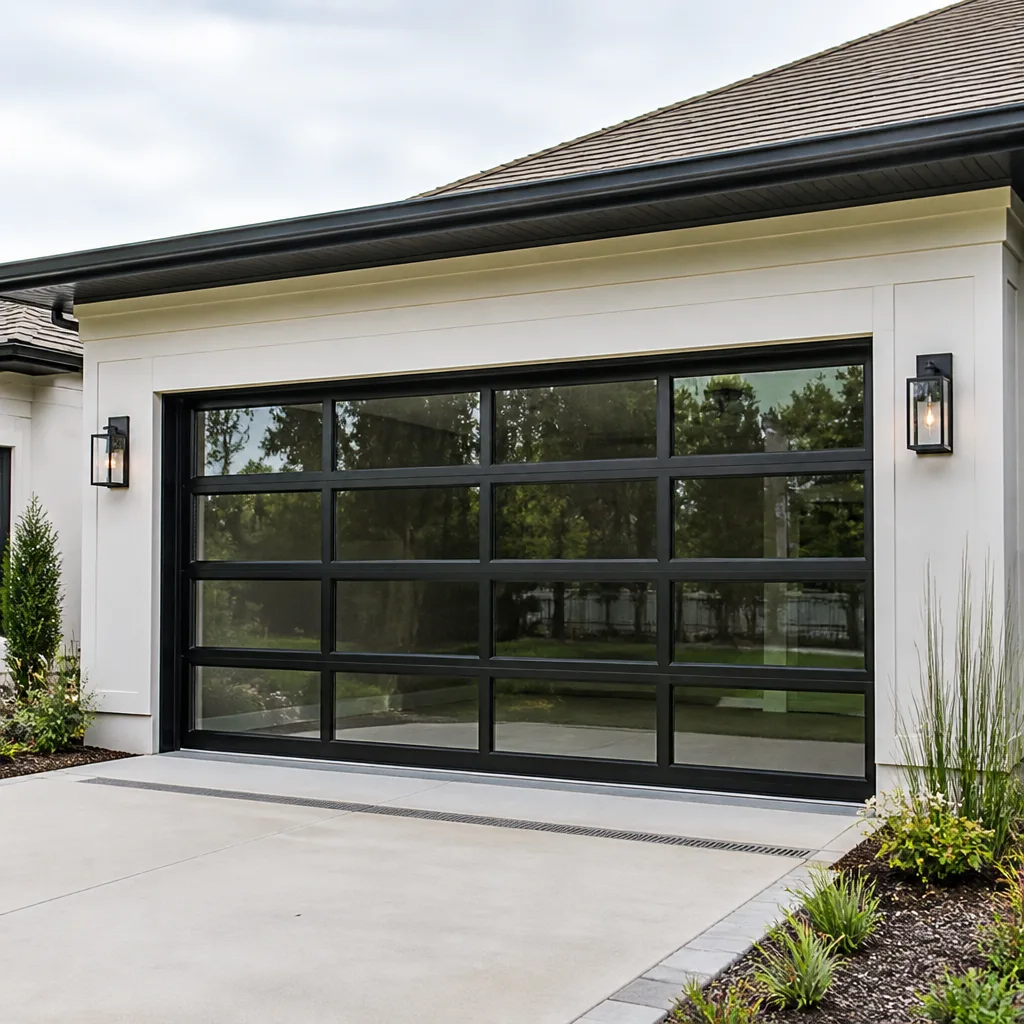 Full-view glass
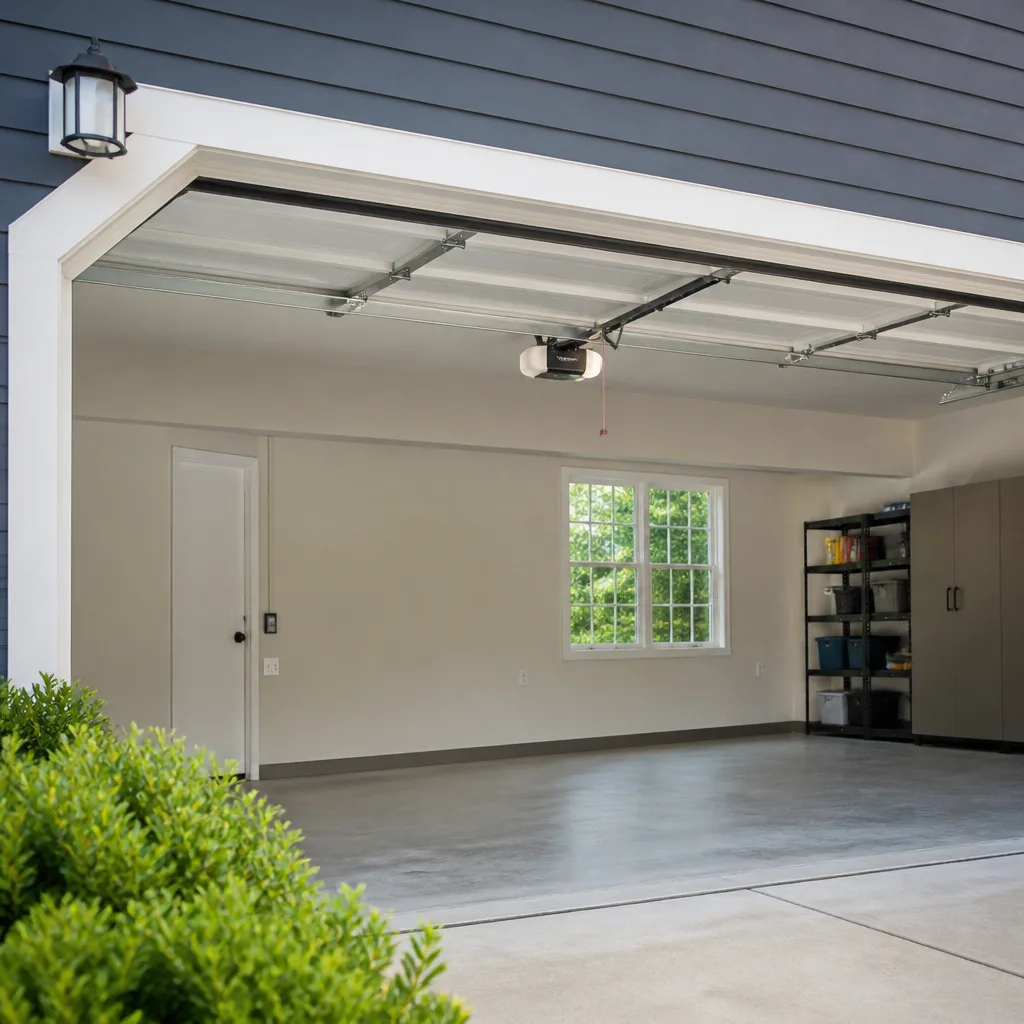 LiftMaster openers
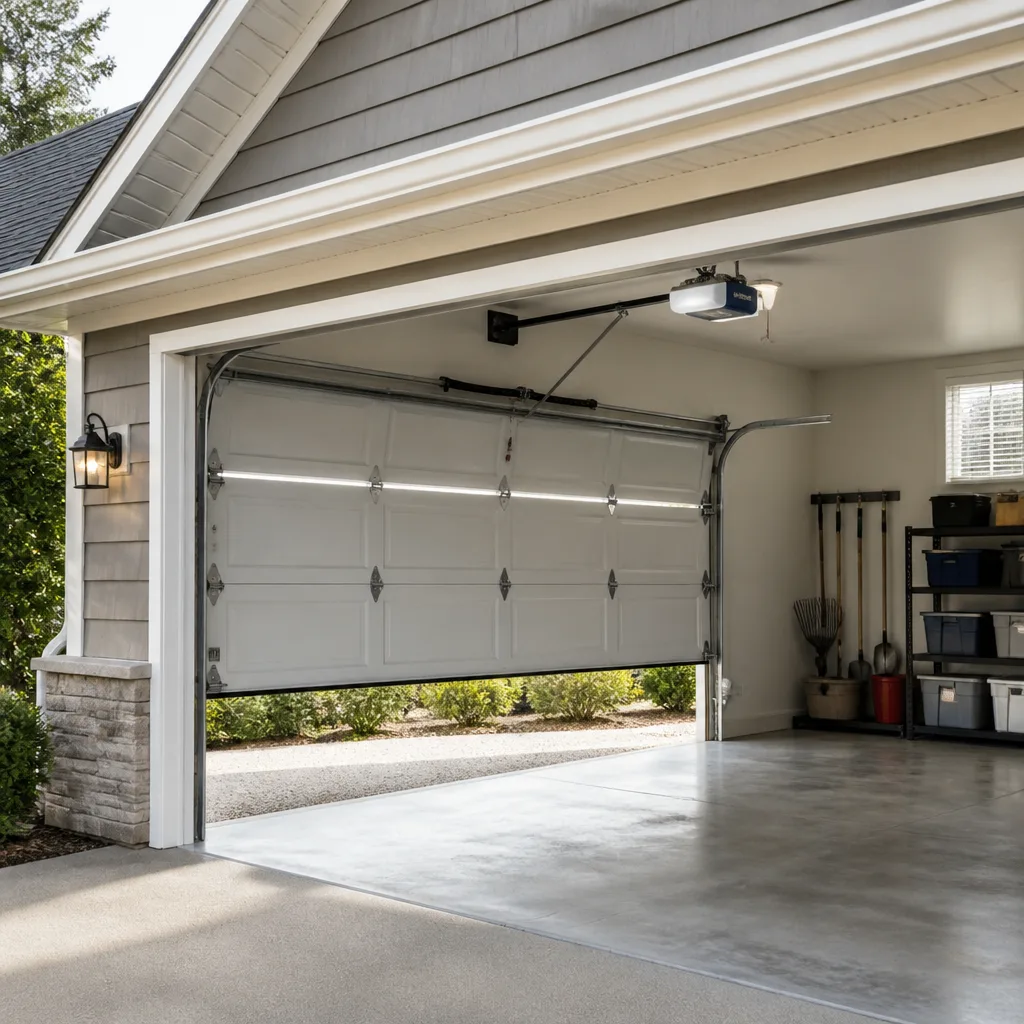 Chamberlain openers
Full 25-point door and opener safety check with every visit - springs, cables, rollers, tracks, and your LiftMaster or Chamberlain opener included
You get a price before we start. It does not change when the pro arrives.
Get your free estimateThe Complete Guide to Garage Doors in South Tampa
Most South Tampa homes built before 2002 were permitted under codes that predate Florida’s post-Hurricane Andrew wind-load mandates. That means the garage door hanging on the house today may be the single weakest structural point in a storm. It’s also the largest moving object in the home, the part most exposed to a humid subtropical climate, and the one component most homeowners never think about until a spring snaps. This guide covers what actually matters for garage doors in South Tampa: how the climate ages hardware, what wind ratings apply and how to check yours, why the housing stock creates odd opening sizes, and how to tell a specialist from a generalist.
Quick Answer
Garage doors in South Tampa need three things most national guides ignore: hardware rated for a humid subtropical climate, a wind-load rating that matches the home’s construction date, and a technician who works on the specific brand and opening size already in the garage. If your door was installed before 2002, verifying its wind rating is the most important step you can take. Everything else – springs, openers, tracks, panels – follows from there.
Styles & brands we work with
- Raised-panel steel
- Carriage house
- Modern flush
- Full-view glass
- LiftMaster openers
- Chamberlain openers
Table of Contents
- How South Tampa’s Climate Ages Garage Door Hardware
- Wind-Load Ratings and What South Tampa Homes Actually Need
- How to Verify Your Door’s Wind Rating
- Brand and Material Performance in the Tampa Bay Climate
- Bungalows, Townhomes, and Non-Standard Opening Sizes
- What “Full-Service Garage Door Company” Actually Means
- Why Springs Fail First – and Why They’re Nobody’s DIY Project
- When to Repair and When to Replace
How South Tampa’s Climate Ages Garage Door Hardware
South Tampa sits in a humid subtropical zone with long, warm, wet summers and mild winters. That pattern does something specific to garage door hardware that inland or northern markets never see: it keeps the air moist enough, for long enough, that bare steel and low-grade fasteners rust from the inside out. Springs, hinges, rollers, track brackets, and the bottom fixtures all live in that environment.
The practical effects show up in predictable places. Torsion and extension springs lose tension faster when humidity is high, because corrosion pits the wire surface and creates stress points. Tracks accumulate grime that stalls rollers. Wood door panels absorb moisture and swell at the edges, which throws off alignment. Steel panels with poor factory finishes start showing rust at the seams first, not the flats.
Winters here are mild enough that the door never gets a hard freeze to reset anything. Instead, the hardware just wears continuously, twelve months a year. What that means for a South Tampa homeowner:
- Inspect springs and cables at least twice a year for rust bloom or pitting.
- Wipe and lubricate hinges, rollers, and track with a product made for humid climates, not general-purpose oil.
- Watch the bottom section of steel doors for seam rust – it’s the earliest sign of finish failure.
- Keep the track clear of leaf litter and grit, especially if the door faces a mature oak canopy.
Hardware that would last a decade in a dry market often needs attention sooner here. That’s not a sales pitch; it’s how the climate treats untreated steel. If you’re noticing rust streaks, stiff rollers, or a door that no longer closes flush, that’s the point to schedule garage door repair before a small corrosion issue becomes a track or spring failure.
Wind-Load Ratings and What South Tampa Homes Actually Need
Wind-load ratings are the single most misunderstood part of garage doors in this market. The garage door is usually the largest opening in a home’s exterior envelope. If it fails in a storm, the pressure change can compromise the roof and structure. Florida’s building code has treated that seriously since the post-Hurricane Andrew reforms, but the exact requirement depends on when the home was built and where it sits relative to the wind-borne debris region.
Broadly, there are two categories a South Tampa homeowner will hear about:
- Standard wind-load rated doors – engineered and labeled for a specified design pressure. Common on homes built after the code reforms took effect.
- Impact-rated doors – tested to resist wind-borne debris as well as pressure. Required in the highest-risk zones, and increasingly specified voluntarily on newer construction.
The label is what matters. Every rated door carries a permanent label stating its design pressure rating and, where applicable, its impact rating. That label is the only reliable proof. A door that “looks heavy” or has extra struts is not the same thing as a rated door, and a retrofit bracing kit only counts if it’s rated for the specific door and opening.
Homes built before 2002 were permitted under earlier code cycles, so their original doors may carry no rating at all. That’s not automatically a problem, but it’s worth knowing. If you’re replacing the door anyway, specify a rated unit. If you’re keeping it, verification comes next.
How to Verify Your Door’s Wind Rating
You can confirm what you have without guessing. Here’s the process we walk homeowners through:
- Find the label. Look on the inside face of the door, on the end stiles, or on the bottom section. Rated doors carry a permanent label with the design pressure and manufacturer.
- Read the pressure rating, not the marketing name. The label gives a number in pounds per square foot. Match it against what your home’s construction date and location require.
- Check for the impact designation if applicable. Impact-rated doors carry a separate marking. If the label is missing, assume the door is unrated.
- Look at the hardware, not just the panel. A rated door needs its rated track, brackets, and reinforcement in place. A previous owner may have removed struts or swapped hinges.
- Call your city’s building department to confirm what your specific address requires. Requirements vary by construction date and zone, and the department is the authority.
If the label is gone, a technician can often identify the door by brand and model and cross-reference the rating from the manufacturer’s documentation. We work on Clopay, Amarr, Wayne Dalton, Raynor, and other major brands regularly, so identification is usually straightforward.
Brand and Material Performance in the Tampa Bay Climate
Nationwide brand comparisons rarely translate to this market. A door that performs well in a dry, mild climate can struggle here, and the reverse is true. What matters in South Tampa is how a given material and finish handles year-round humidity and sun exposure.
Steel
Steel is the most common choice, and it holds up well if the finish is intact. The weak points are seams, the bottom edge, and any field-cut or drilled area. A factory finish with a proper primer and topcoat is essential. Once rust starts at a seam, it spreads. Steel doors from Clopay and Amarr are widely installed here; quality varies more by finish specification than by brand name.
Aluminum
Aluminum resists rust inherently, which makes it a sensible choice for a humid climate, especially on full-view and glass-panel doors. It’s lighter, so wind-load reinforcement matters more. Aluminum is a good fit for the modern townhomes and renovations going up across South Tampa, where the design calls for glass and clean lines.
Wood and composite
Wood is the most climate-sensitive option. It swells, contracts, and needs regular sealing to survive a humid subtropical summer. Composite and faux-wood products hold up better but still want maintenance. On the older bungalows in Hyde Park and Palma Ceia, a wood door is often the right look – it just needs to be sealed and maintained.
On the opener side, brand fluency matters for service, not climate. LiftMaster and Chamberlain units dominate the market, and Genie is common too. When a board fails or a motor stalls, knowing the unit’s specific parts and programming is what gets it fixed in one visit rather than three.
Bungalows, Townhomes, and Non-Standard Opening Sizes
South Tampa’s housing stock is unusually varied for a single neighborhood. That variety has a direct effect on garage door work.
Take the blocks around Hyde Park, Palma Ceia, and Bayshore: many homes are 1920s bungalows with detached or rear-loaded garages built long before the standard sixteen-by-seven-foot opening became universal. Those garages often have narrower, lower, or uneven openings. A door replacement there isn’t a stock order; it’s a measurement, a custom build, and a careful fit.
Then there are the townhomes and infill construction from the last twenty years, which tend to use standard widths but with tighter clearances, often with low-headroom track configurations because the garage sits under living space. Those need a different opener and track setup than a detached garage.
What this means in practice:
- Measure the actual opening, not the nominal size. Width, height, and headroom all matter.
- Expect custom sizing on pre-war homes. A stock door won’t fit an opening built before standardization.
- Low-headroom installations need low-profile track and a compatible opener – a standard setup won’t work.
- Check clearances for the opener rail and door travel before ordering anything.
This is why measuring matters more in South Tampa than in a subdivision of identical homes. We measure the actual opening, not the size on a spec sheet. A free measure gives you a written price based on what’s really there. For a closer look at what’s involved in a new door, see our guide to garage door installation.
What “Full-Service Garage Door Company” Actually Means
The phrase “full-service” gets used loosely. In this trade it should mean one company handles every stage of a garage door’s life: repair, opener service, new installation, spring work, and parts supply. What separates a specialist from a generalist isn’t the marketing language – it’s whether the technician actually knows the hardware.
A general handyman touching a garage door as a side job typically carries generic tools, works from general knowledge, and may not know the difference in torque specifications between spring types or the wiring patterns on a specific opener board. A big-box installer is trained on their own product line and may not service what’s already hanging in the garage. Both can handle simple adjustments. Neither is the right call for a torsion spring, a mis-tensioned track, or an opener board that needs diagnosis.
A garage door specialist brings three things to the job:
- Brand fluency. We work on the brand already in your garage – LiftMaster, Chamberlain, Genie, Clopay, Amarr, Wayne Dalton, Craftsman, and Raynor – so diagnosis and parts sourcing are direct, not a workaround.
- Tooling built for one trade. Spring winding bars, track gauges, torque tools, and opener diagnostics are standard equipment, not borrowed from a general kit.
- Service continuity. Repair, opener work, installation, springs, and parts are all handled under one company. One call covers it.
When you call a specialist, you’re paying for the diagnosis and the right part, not for a trial-and-error process. That’s the real difference between full-service and a generalist who also does garage doors.
Why Springs Fail First – and Why They’re Nobody’s DIY Project
Springs carry the full weight of the door. Every time the door opens and closes, the spring cycles through tension and release. Over thousands of cycles, the wire fatigues. In South Tampa’s humid air, corrosion accelerates that fatigue at the surface, where stress concentrates. When a spring finally breaks, it lets go with stored energy that can cause serious injury.
That’s why spring work is the one job we tell every homeowner to leave to a trained technician. Torsion springs are under extreme tension even when the door is down. The correct procedure requires the right winding bars, an understanding of how many turns the spring is rated for, and knowledge of which spring type the door uses. Getting it wrong can release the spring suddenly, damage the door, or injure the person standing there. Extension springs have their own hazards, including the risk of an unrestrained spring whipping when it fails.
What a homeowner should do instead of DIY:
- Stop using the door if you hear a loud bang from the garage or the door suddenly won’t lift.
- Keep the door closed and call for service. The door may be heavier than the opener can safely lift without spring tension.
- Don’t try to lift a door with a broken spring by hand. It can fall or crush.
- Don’t disconnect the opener and let the door down manually – it can slam.
Spring repair is a core specialty for us, not a reluctant add-on. Whether it’s a torsion spring on a newer door or an extension spring on an older South Tampa garage, we handle the diagnosis, the correct replacement spring, and the safe installation. If you suspect a spring problem, that’s the time to call (833) 696-2185. We answer 24/7. Fast dispatch from 7am to 7pm, Sunday through Friday, and an exact quote before any work starts.
When to Repair and When to Replace
Most repair decisions come down to three questions: how much of the door is failing, whether a rated door is worth installing anyway, and what the door’s overall condition is after years in a humid climate.
Repair makes sense when the failure is isolated. A single spring, a broken opener board, a bent hinge, a track that’s out of alignment, or a failed roller – all are repair jobs. The door structure is sound, and the cost of repair is a fraction of replacement.
Replacement tends to be the better call when:
- The door is unrated and predates 2002 in a home where wind-load rating matters.
- Multiple sections show seam rust or structural corrosion.
- The panels are warped or moisture-damaged beyond realignment.
- Repeated spring failures suggest the door is out of balance or the springs are undersized.
- The look of the door no longer fits the home after a renovation.
The right choice isn’t always the most expensive one. Sometimes a new rated door is the actual value, especially if the old one offers no wind protection. But sometimes a spring and a set of rollers gets a solid door back to full function. We’ll tell you which it is, in plain terms, before any work starts.
Common Mistakes to Avoid
- Assuming the original door is rated because the home is newer. Construction date is the starting point, not the answer. Check the label or call the building department before assuming anything.
- Using a general handyman for spring or track work. Spring tension and track alignment are not generalist jobs. A mistake here can injure someone or damage the door.
- Ignoring rust at the seams. In South Tampa’s humidity, seam rust on a steel door spreads quickly. Catch it early with a touch-up, or it becomes a section replacement.
- Ordering a stock door for a pre-war bungalow. Older South Tampa garages rarely match modern standard sizes. Measure the actual opening first.
- Letting the opener lift a door with a broken spring. The opener isn’t built to carry the door’s weight. Running it without spring tension can burn out the motor or strip the gear.
- Skipping the written estimate. Any reputable company puts the price in writing before work starts. If the quote is verbal-only, ask for it in writing.
- Choosing a door on brand name alone. Finish and rating matter more than the logo in this climate. Specify the finish and the pressure rating, then choose the brand.
See the difference
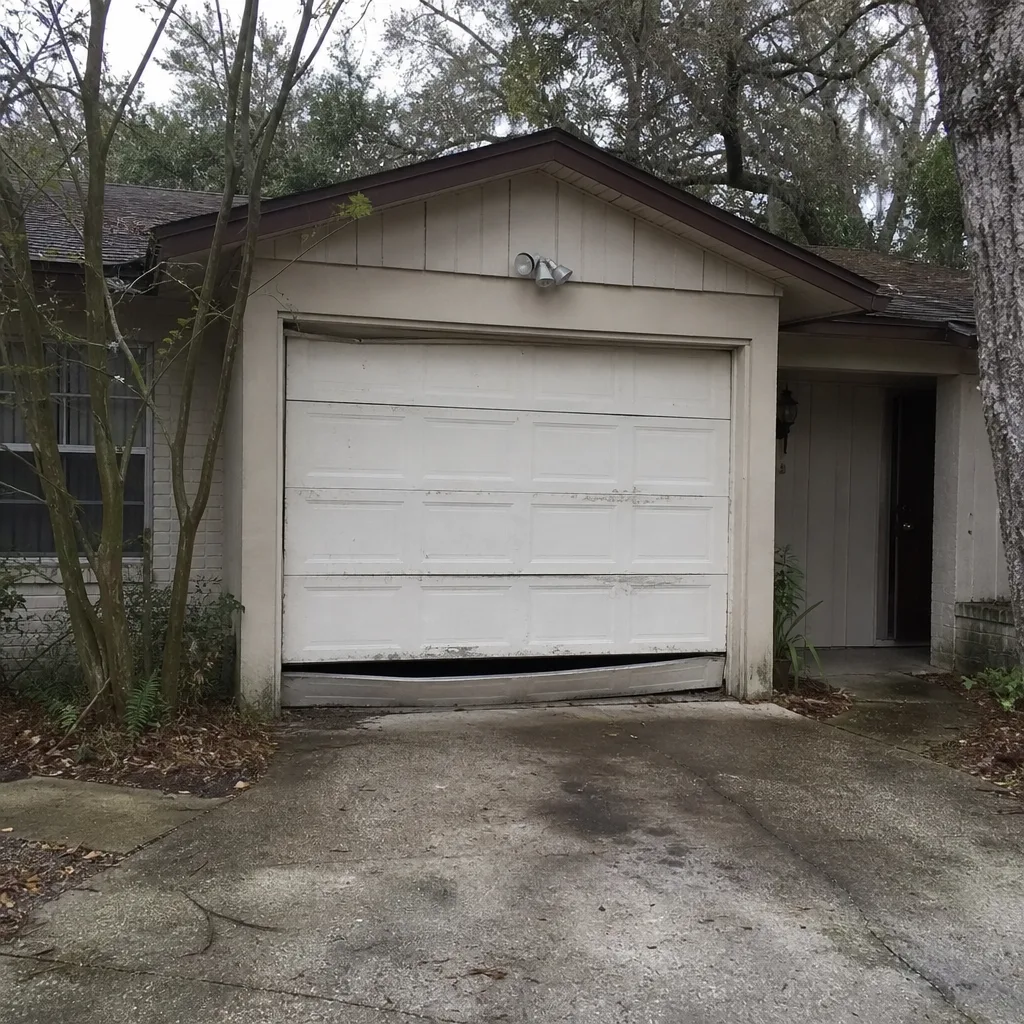 Before
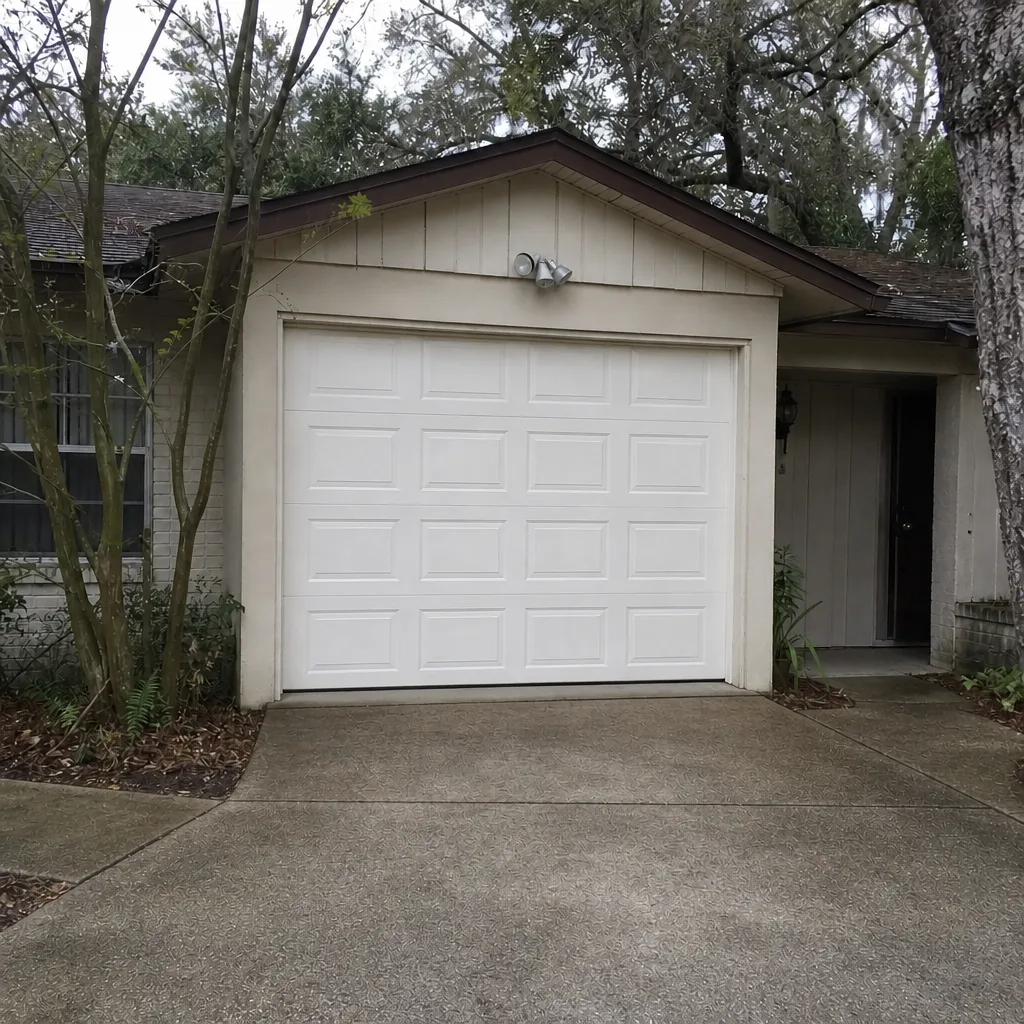 After
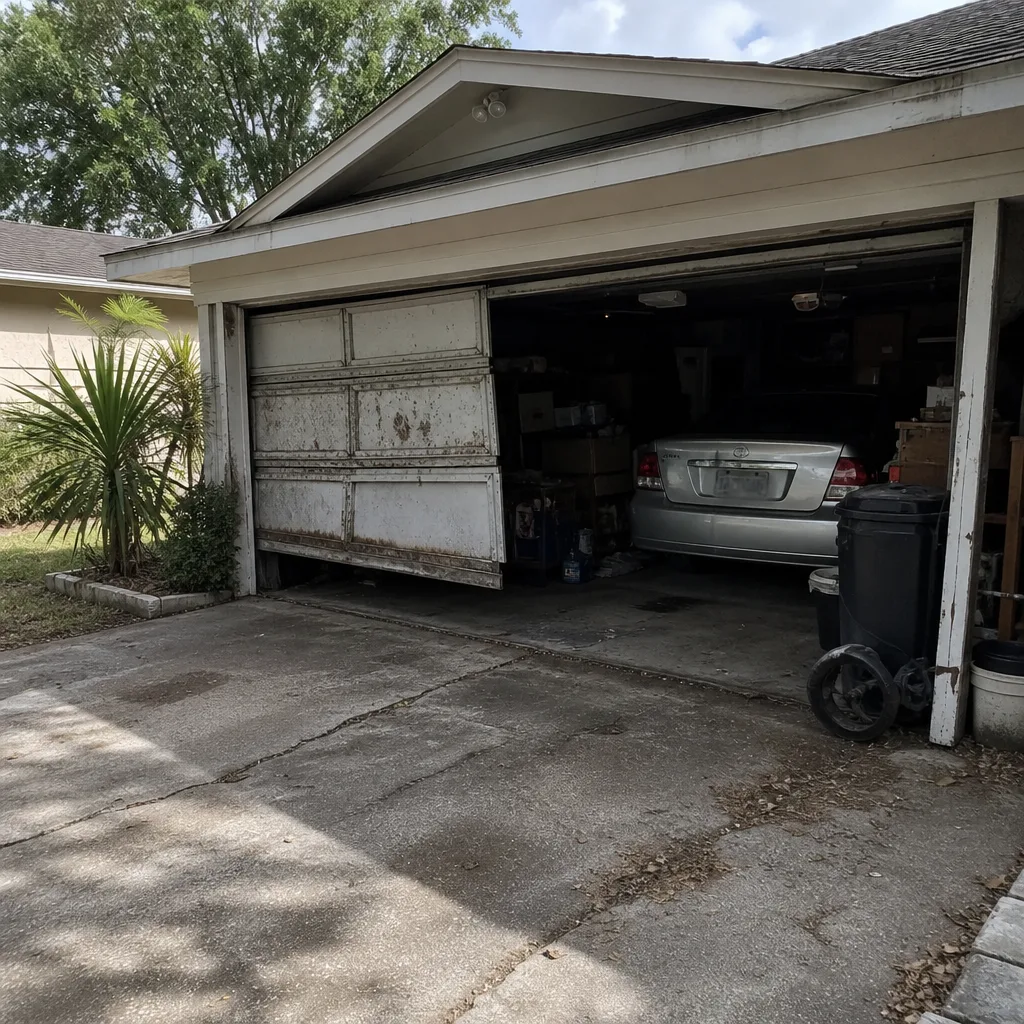 Before
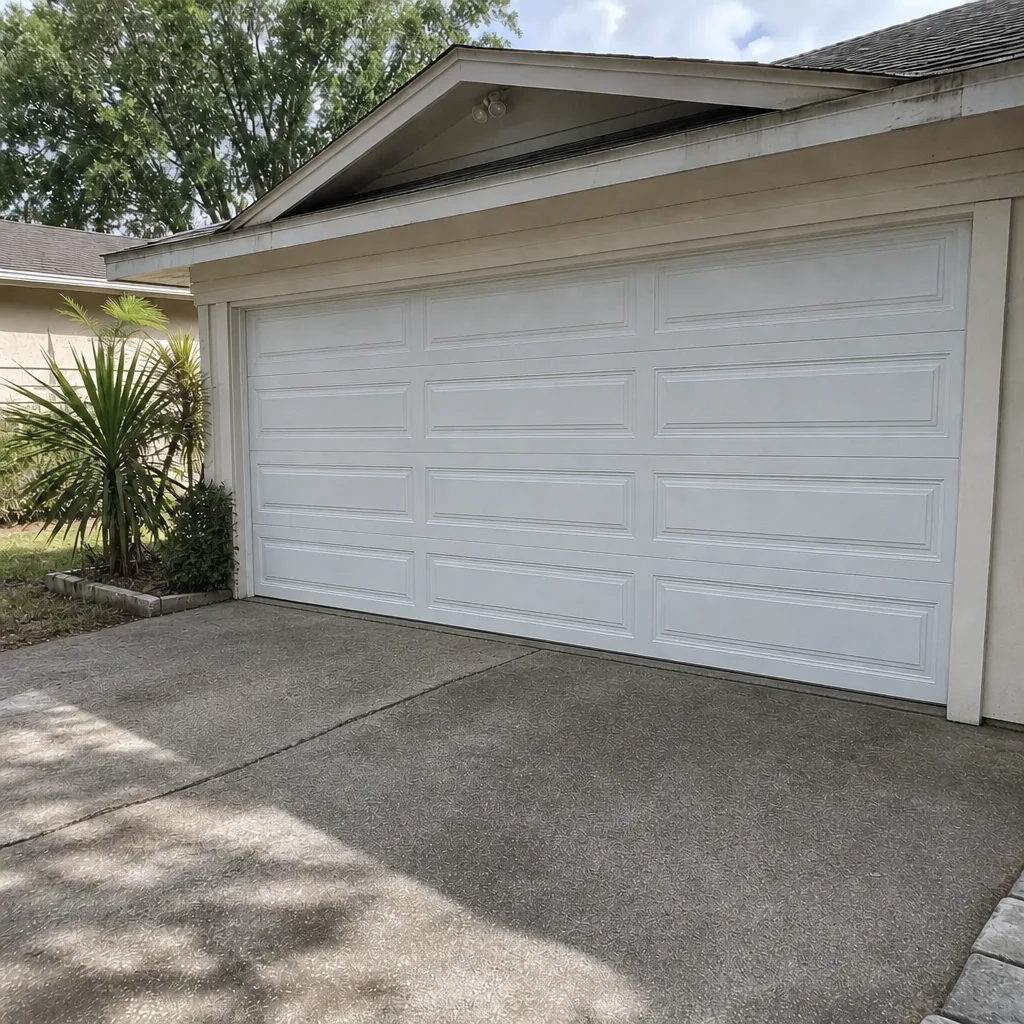 After
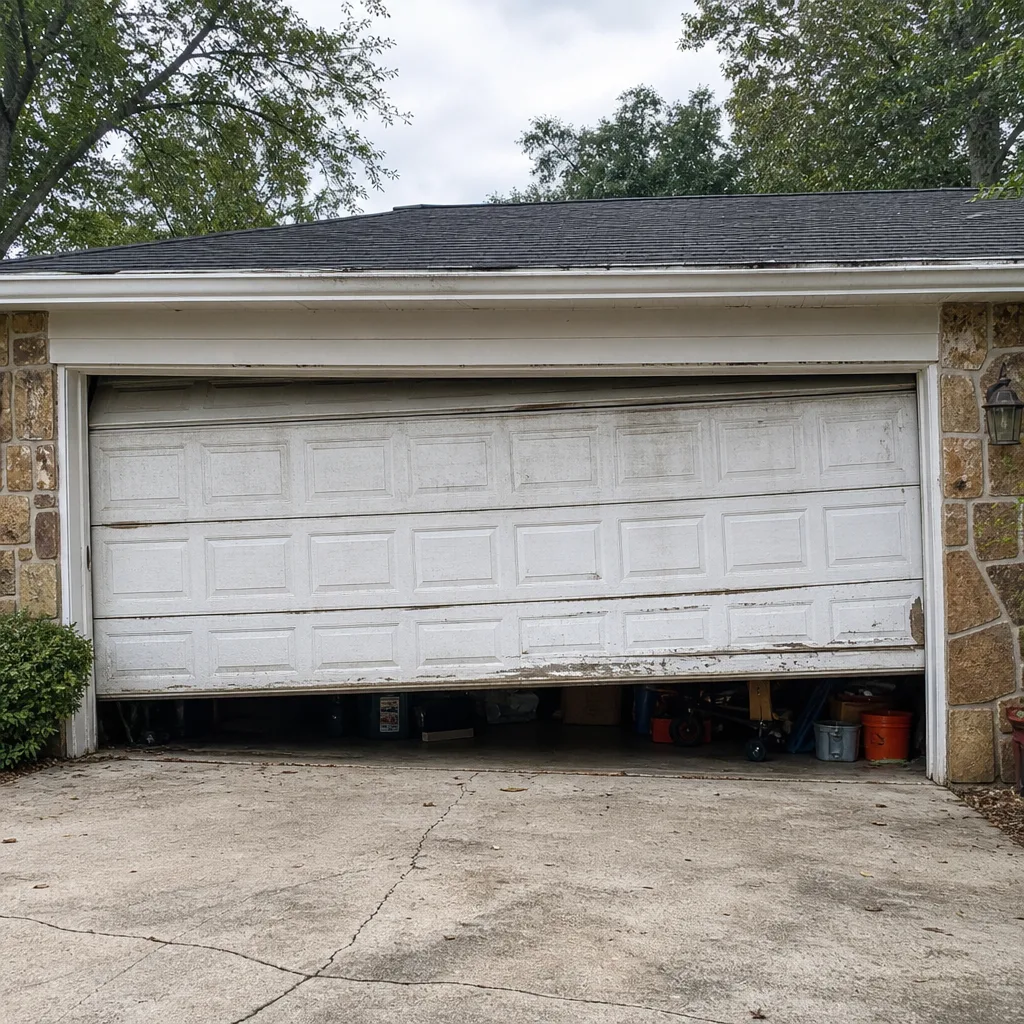 Before
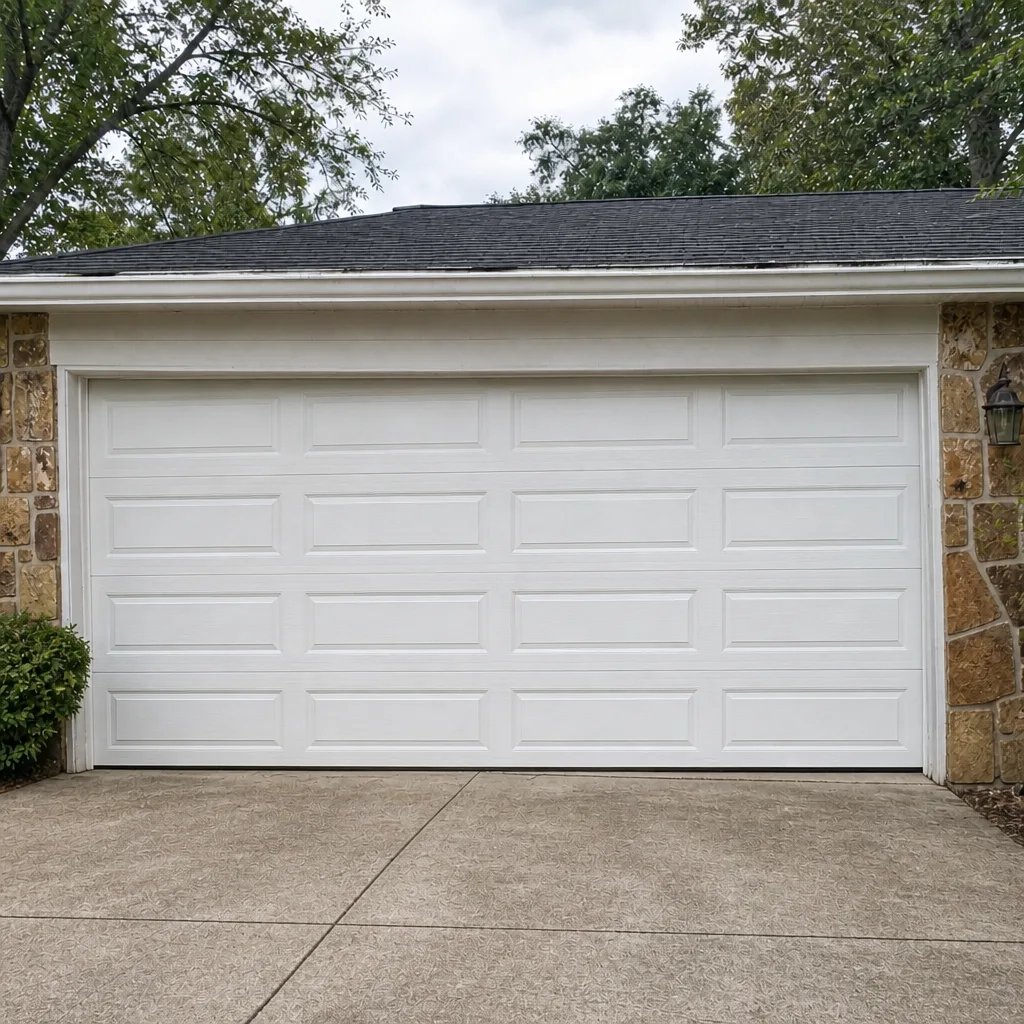 After
When to Call a Professional
Call a professional for anything involving springs, cables, or track alignment – those are the parts that can hurt you or break the door. Call when the door won’t open or close fully, when the opener runs but the door doesn’t move, when the door goes up crooked, or when you hear grinding or popping. Call before a storm season if the wind rating is unverified and the home predates 2002. And call when you’re planning a replacement and want an accurate measure and a written price rather than a guess.
Garage Door Repair South Tampa offers free estimates in South Tampa – call (833) 696-2185. We answer 24/7. Fast dispatch from 7am to 7pm, Sunday through Friday. Same-day service is often available for repair calls, and the price is quoted and agreed before any work starts.
Frequently Asked Questions
It depends on when your home was built and where it sits relative to the wind-borne debris region. Homes permitted after Florida’s post-Hurricane Andrew code reforms generally have rated doors; homes built before 2002 may not. Call your city’s building department with your address to confirm what applies, and check the label on the inside of the door. If the label is missing, a technician can usually identify the door by brand and model.
Springs are rated by cycles, not years, but South Tampa’s year-round humidity accelerates corrosion and shortens spring life compared to drier markets. Inspect springs twice a year for rust or pitting, and replace them when they show visible damage or the door stops balancing. Never attempt to replace a spring yourself – torsion springs are under extreme tension and require a trained technician.
Higher year-round humidity is the main reason. South Tampa’s moist air keeps steel surfaces in a corrosion-friendly condition for more of the year, so uncoated fasteners, seam edges, and low-grade springs rust sooner. A factory finish in good condition slows this down; damaged paint or bare metal accelerates it. Regular lubrication and prompt touch-up of any rust spot make a real difference.
For simple remote programming or a basic adjustment, maybe. For diagnosis of a failed board, a stripped gear, or a motor that runs but won’t lift the door, a garage door specialist is the better call. Openers from LiftMaster, Chamberlain, and Genie each have specific parts and diagnostic procedures. A technician who works on those units regularly usually fixes it in one visit.
Yes. Older South Tampa homes – especially bungalows around Hyde Park and Palma Ceia – often have non-standard openings. We measure the actual opening, including width, height, and headroom, and order a door built to fit. There’s no need to modify the garage to fit a stock door unless you want to.
The written estimate is the price. We quote per job after inspecting the door, and we agree the price with you before any work starts. If we find something during the job that genuinely changes the scope, we stop and talk to you before proceeding. There’s no surprise invoice at the end.
The Bottom Line
Garage doors in South Tampa face conditions most national guides don’t account for: year-round humidity that ages hardware faster, wind-load requirements that hinge on construction date, and a housing mix that makes standard sizing unreliable. If you take one thing from this guide, make it this: verify your door’s wind rating if the home predates 2002, inspect springs and hardware twice a year for corrosion, and use a specialist for springs, tracks, and opener diagnosis rather than a generalist. The right part and the right technician cost less than the wrong repair done twice. Whether you need a repair, a new opener, or a full replacement, one call covers it – and the price is in writing before work starts.
Call (833) 696-2185 for a free estimate. We answer 24/7. Fast dispatch from 7am to 7pm, Sunday through Friday. For opener issues specifically, our garage door opener repair team handles LiftMaster, Chamberlain, Genie, and Craftsman units directly. For everything else, start with Garage Door Repair South Tampa and we’ll point you to the right service.
Written by the team at Garage Door Repair South Tampa.