
Last updated November 22, 2026
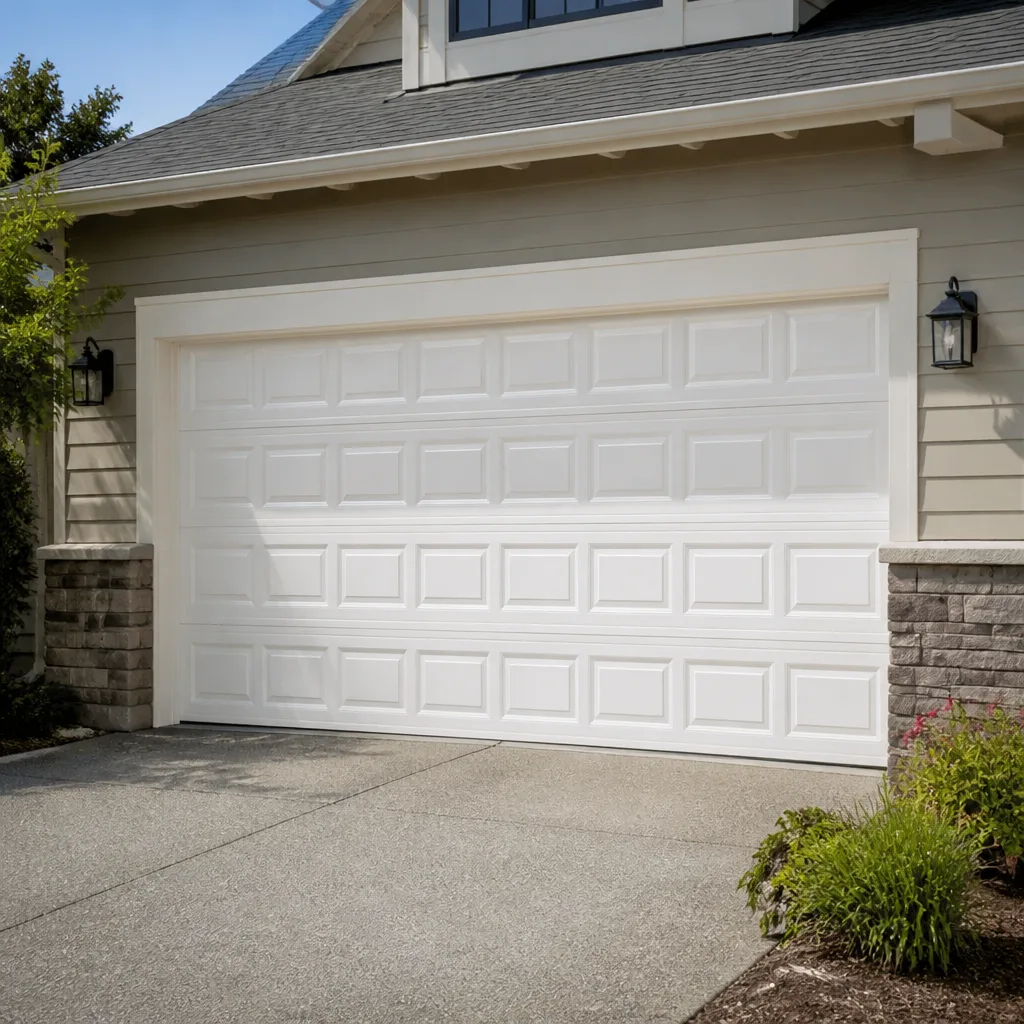 Raised-panel steel
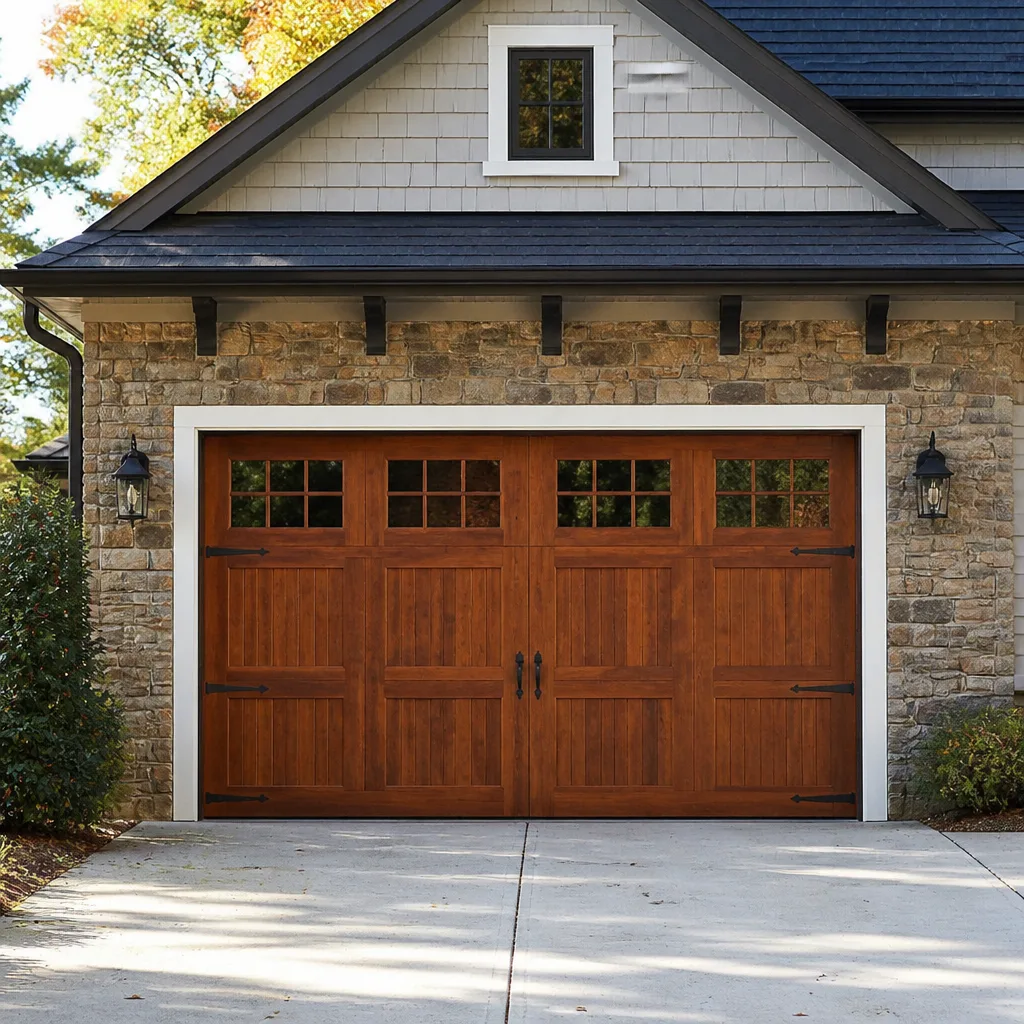 Carriage house
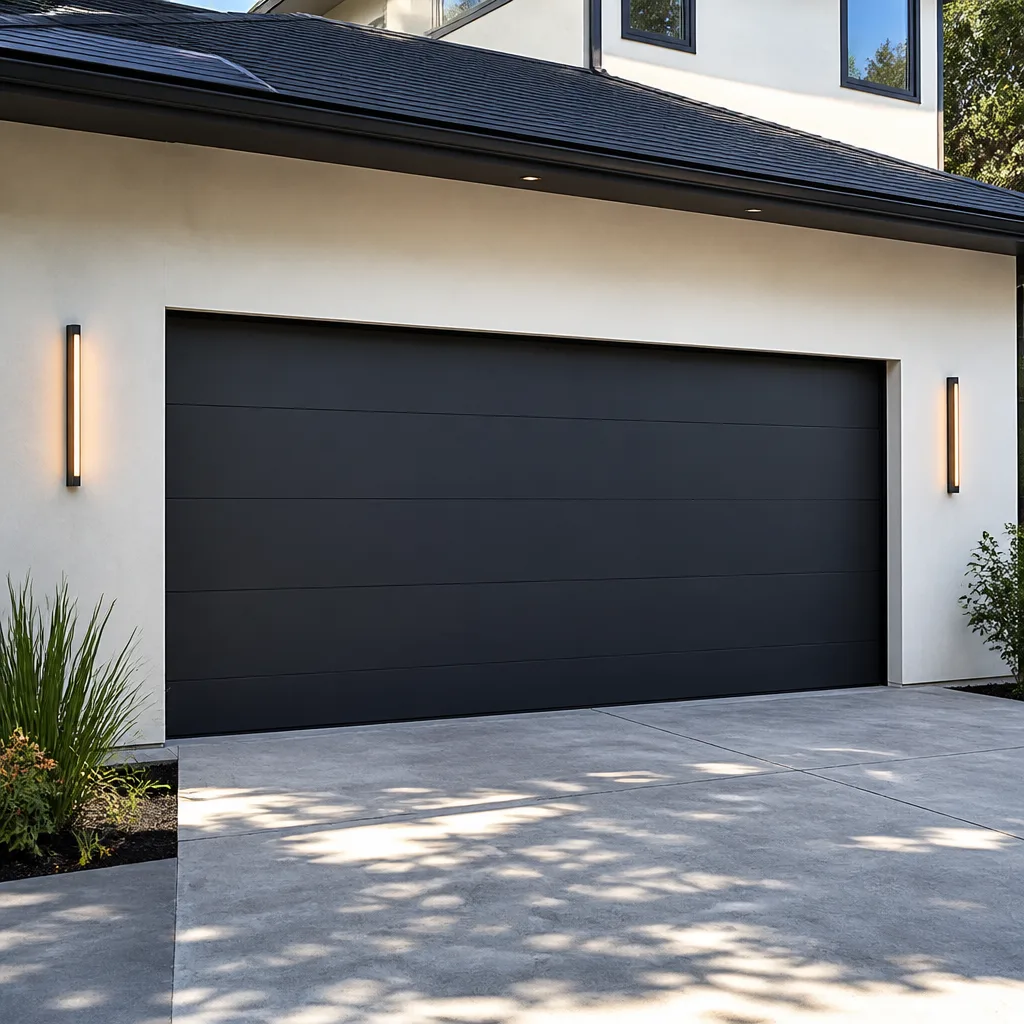 Modern flush
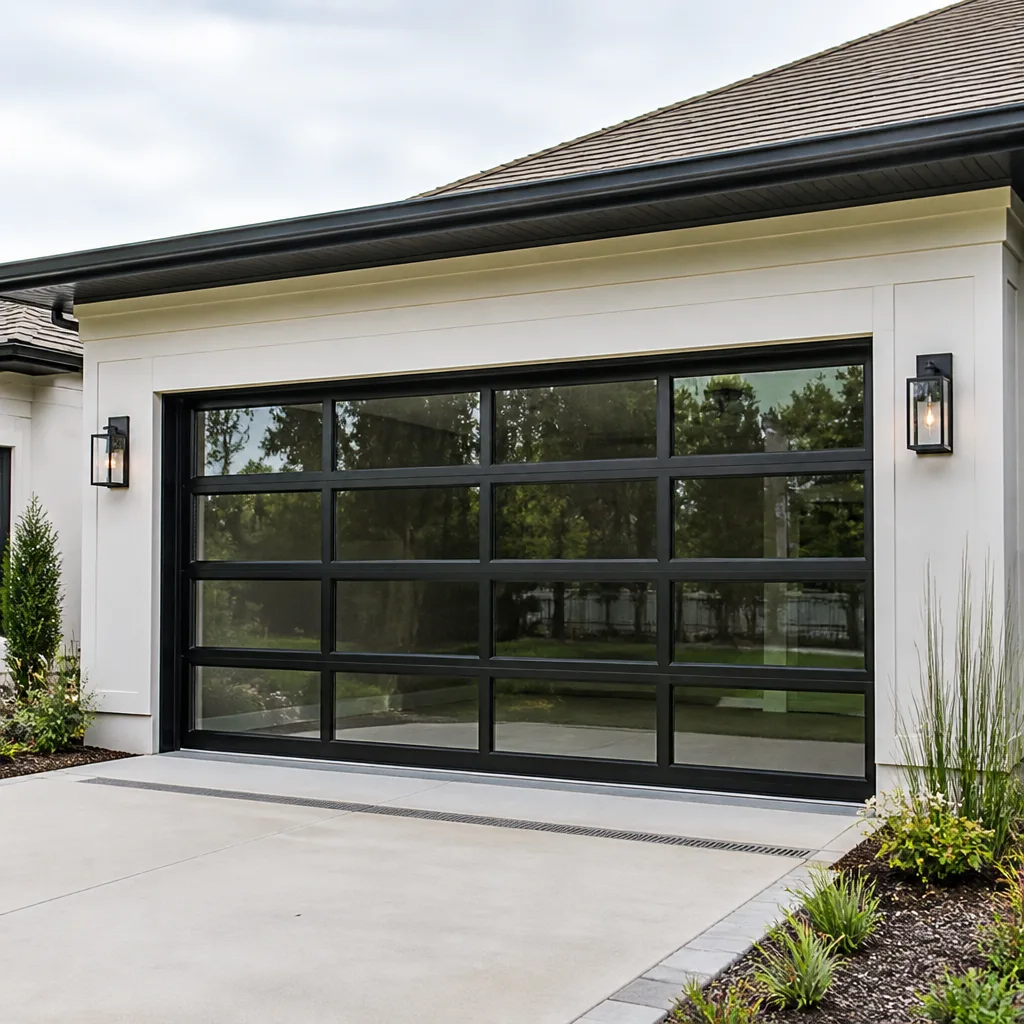 Full-view glass
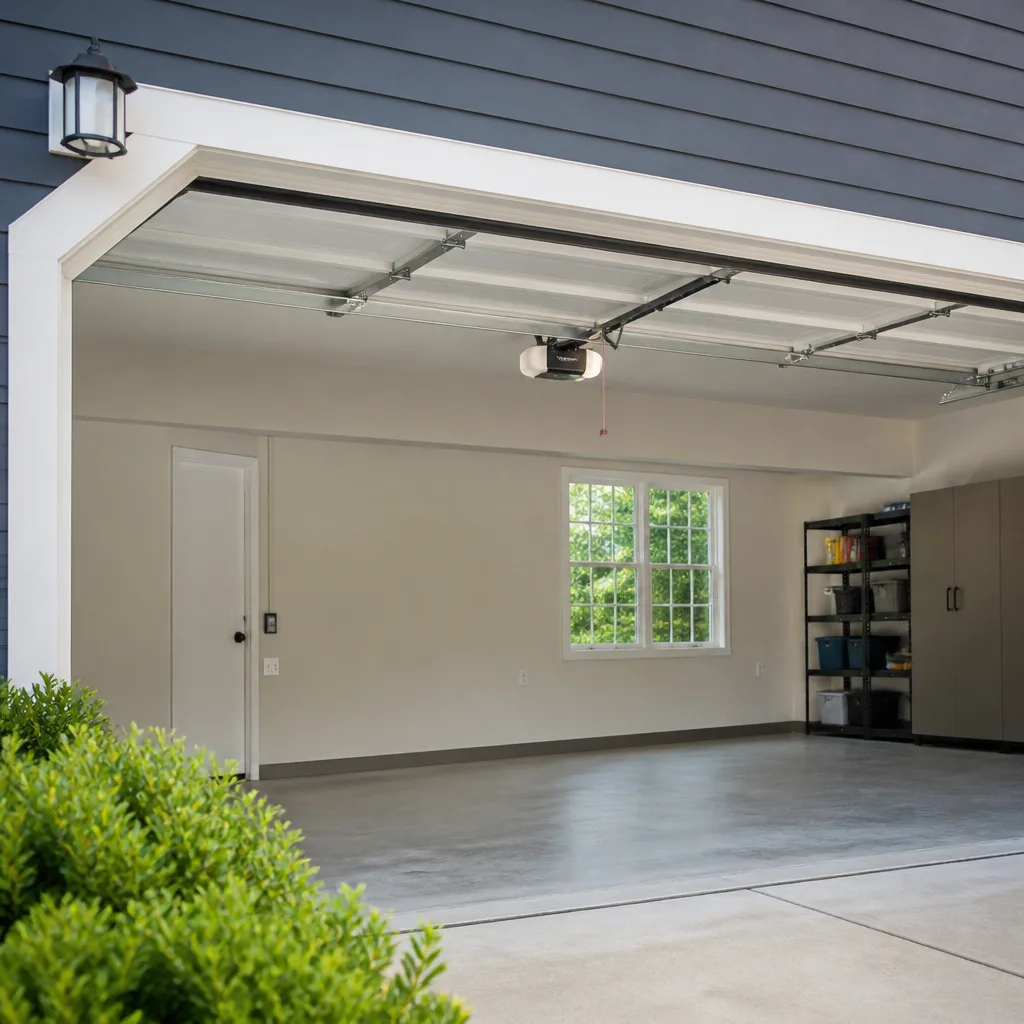 LiftMaster openers
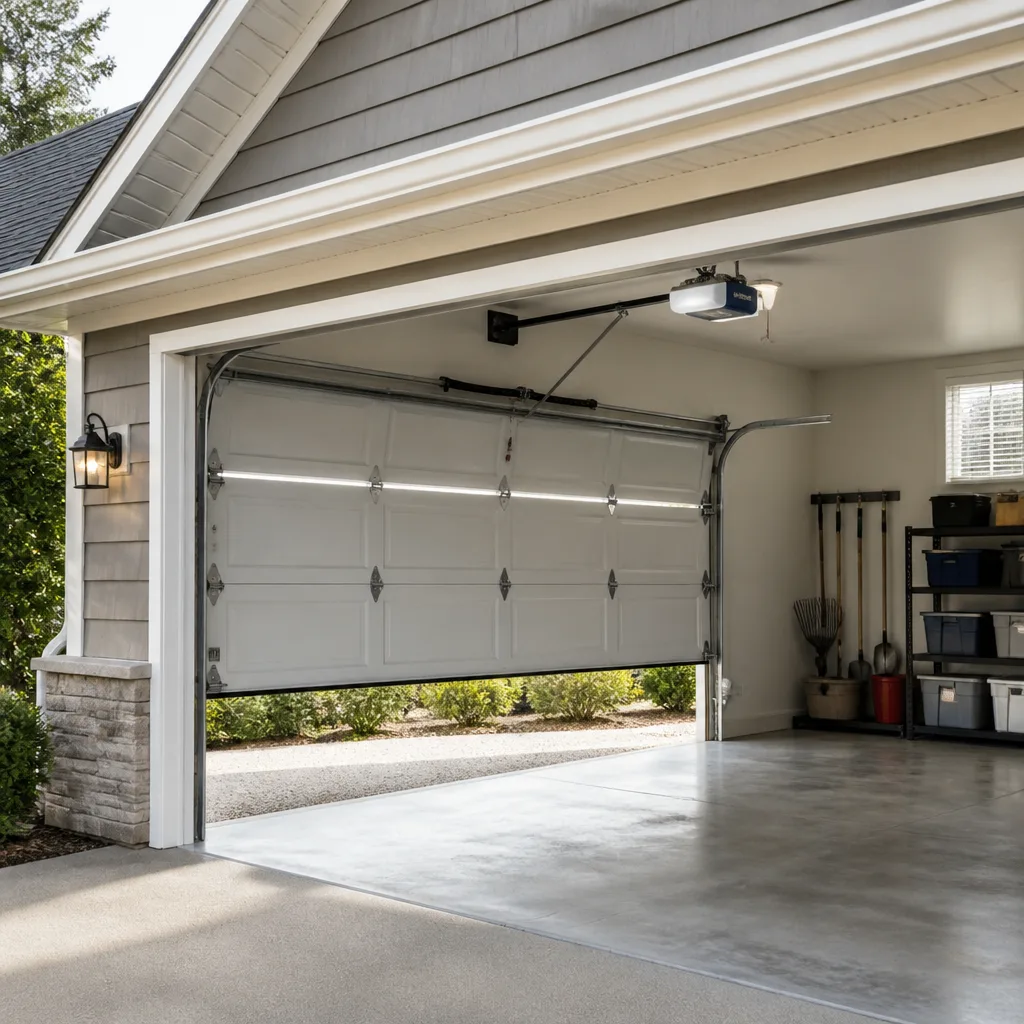 Chamberlain openers
Full 25-point door and opener safety check with every visit - springs, cables, rollers, tracks, and your LiftMaster or Chamberlain opener included
You get a price before we start. It does not change when the pro arrives.
Get your free estimateChoosing the Right Garage Door Brand: A Buyer’s Guide for South Tampa
Most garage door brand comparisons are written for a national audience. They rank doors on color options, smart-home features, and price per square foot, then declare a winner. That ranking falls apart in South Tampa, where the same door has to hold against hurricane-season wind loads, survive humid Gulf air, and match the look of homes that sit a few feet above the bay. The brand that wins a consumer magazine review may be the wrong answer for a waterfront property. We’re going to walk you through how the eight most-installed brands actually differ on the things that matter here: wind-load ratings, hardware that resists corrosion, warranty terms, and whether the parts you’ll eventually need are stocked nearby or a month out. By the end you’ll know how to read a certification label, how to match a brand tier to your home type, and how to spot a proposal that won’t pass inspection.
Quick Answer
The right garage door brand for a South Tampa home is the one that offers a wind-load rated panel line matching the design wind speed your address requires, uses corrosion-resistant hardware and springs, and has parts distribution close enough to reach you after a storm. Aesthetics matter, but on a Davis Islands waterfront home the wind rating and hardware come first; on an inland bungalow two miles from the water, you have more room to weigh looks and budget against durability. Buy the door that meets the code for your address and holds up to the air, not the one with the best marketing.
Styles & brands we work with
- Raised-panel steel
- Carriage house
- Modern flush
- Full-view glass
- LiftMaster openers
- Chamberlain openers
Table of Contents
- Why Brand Choice Matters More in South Tampa Than Anywhere
- The Eight Most-Installed Brands, Compared on What Matters Locally
- How to Read a Wind-Load Certification Label
- Steel vs. Aluminum vs. Fiberglass Panels in South Tampa Air
- The Parts Availability Factor
- Matching Brand Tier to Home Type
- Pairing a Door With the Right Opener
- Common Mistakes to Avoid
Why Brand Choice Matters More in South Tampa Than Anywhere Else
In most of the country a garage door is a cosmetic and functional purchase. In South Tampa it’s a structural one. The region sits in a high-wind zone, and the door opening is one of the largest and most vulnerable parts of a home’s envelope during a storm. A door that isn’t rated, anchored, and installed to the right wind-load standard can fail exactly when it’s most needed. That failure isn’t just a repair bill. It’s a breach of the house.
Brand matters because wind-rated systems are engineered, tested, and certified by the manufacturer, not invented in the field. A door brand that sells a certified wind-load line gives your contractor a tested assembly to install: panels, reinforcement, track, and anchors designed to work together as one rated system. A brand without that line means your contractor is improvising reinforcement, and the door may never have a valid certification label no matter how it’s installed.
South Tampa adds a second pressure: air quality. The humid, salt-laden environment near the bay works on every steel fastener, hinge, roller, and spring in the door. Two doors of identical design can have very different service lives depending on how they treat corrosion. That’s a brand decision – the hardware spec, the finish system, the availability of stainless or galvanized components – more than an installer decision.
Put those two together and brand choice in South Tampa becomes a climate and wind-load engineering decision. Reviews written in a climate with no hurricane exposure won’t tell you which of these brands is which. We’re going to.
The Eight Most-Installed Brands, Compared on What Matters Locally
Roughly eight brands dominate garage doors sold in South Tampa: LiftMaster, Chamberlain, Genie, Clopay, Amarr, Wayne Dalton, Craftsman, and Raynor. If you’ve owned a home, you’ve met at least a few of these. They don’t compete on identical playing fields. Here’s how they differ on the four variables that matter here.
What to compare first
- Wind-load rated product lines. Ask any brand’s dealer which of its panels carry engineering certification for wind zones like South Tampa’s, and whether the line is standard stock or built to order. Some brands treat wind-rated panels as a normal part of the product catalog; others treat them as a special order that can extend lead times into hurricane season.
- Corrosion-resistant hardware. Look at hinges, rollers, and end plates. Stainless steel and high-grade galvanized hardware last noticeably longer in this air than painted carbon steel. Ask specifically about spring end fittings and bottom brackets, which are often hidden until they fail.
- Warranty coverage and what it actually says. Brand warranty terms vary widely, and the gaps matter. Read the sections covering finish, hardware, and torsion springs, and note whether the warranty is voided by coastal exposure. Some warranties exclude certain environments entirely.
- Local parts footprint around Tampa Bay. A brand with strong distribution in the region moves a repair from two weeks to two days. A brand stocked nowhere locally means a storm backlog hits you directly, because the distributor is short, the installer is short, and everyone is waiting.
How the brands tend to differentiate
LiftMaster and Chamberlain share a manufacturing parent, which is why their opener platforms and accessories feel familiar. LiftMaster builds a deep line of premium openers and integrated accessories; Chamberlain is the same engineering at a different price and feature tier. Genie is strongest in value-priced openers and has broad parts distribution. On doors, Clopay and Amarr both offer certified wind-rated panel lines, though their stocked versus special-order status for specific sizes changes from dealer to dealer around South Tampa. Wayne Dalton covers a wide range of models and is very common on existing homes here. Craftsman doors and openers are widely installed on older South Tampa homes, and you’ll find the parts shelf for them at different distributors than the other names. Raynor has a strong commercial and residential rated-door history with good regional support.
None of that tells you which brand to buy. It tells you which questions to ask when a contractor proposes a brand. For the openers themselves, our garage door opener repair page covers how each of those systems fails and how we diagnose them.
How to Read a Wind-Load Certification Label
Every garage door sold into a wind zone should carry a permanent certification label on the door or a tag attached to it. That label is the proof that a tested assembly met a specific design wind speed under a specific installation method. If there’s no label, you don’t have a rated door regardless of what the sales sheet says.
The label typically shows:
- Design wind speed. The wind speed in miles per hour that the assembly was certified to. This has to meet or exceed the design speed required for your address.
- Positive and negative pressures. Doors are tested against inward and outward pressure. The negative pressure figure is the critical one in a hurricane – that’s the door being pulled out away from the house.
- Anchor type and spacing. Rated systems specify the anchors, embeds or brackets required to hit the label’s rating. Use the wrong anchor and the certification no longer applies.
- Configuration. The label is valid for one door size, one panel arrangement, and one set of reinforcement components. A door that’s been modified in the field, even resized, may lose certification.
How to verify what a contractor proposes
- Ask the contractor which certified model they’re proposing and for a copy of the manufacturer’s engineering data for that specific size.
- Compare the rated design wind speed on that data against the required design wind speed for your property. If they can’t show you the number, that’s your answer.
- Ask for the label in writing – manufacturer name, model, certified assembly component list.
- Once the door is installed, find the label physically attached to the door and confirm the model and rated wind speed match what you were sold.
- Verify the anchor method matches the manufacturer’s rated installation instructions. If the tacks or brackets don’t match the spec, the rating is void.
Your city’s building department is the right authority for the exact required design wind speed at your address, and a permitted installation will be inspected against those requirements. Never assume a rating because a door has extra reinforcement or heavy-duty hinges – the label is the proof.
Want the full picture on installation requirements? Our garage door installation page shows what a compliant install involves, including the anchor and reinforcement details.
Steel vs. Aluminum vs. Fiberglass Panels in South Tampa Air
Panel material determines service life more than any other choice after wind rating. Here’s how each performs in the humid, salt-influenced air around South Tampa, with realistic expectations for a maintained door.
Steel
Steel is the most common panel material in South Tampa and offers the widest range of wind-rated options. It’s strong, affordable, and takes paint well. Its weakness is corrosion: any scratch, dent, or failed edge seal becomes a starting point for rust, which creeps under the paint faster in high humidity. Steel doors with a good finish and stainless hardware typically last 15 to 20 years in this climate with regular maintenance. The rating matters more than the gauge – a rated 26-gauge panel outperforms an unrated 24-gauge panel in a storm.
Aluminum
Aluminum resists corrosion far better than steel and holds up to damp air with very little attention. The trade-off is that aluminum is softer, so it dents more easily and shows impact damage. Full-view aluminum doors with glass panels are popular on modern South Tampa homes, but they have to be specifically rated if you want wind protection – not every full-view line is, and the framing and glazing matter. Expect 20 to 25 years with occasional panel or hardware attention, and check the rated line before you buy glass panels in this zone.
Fiberglass
Fiberglass panels resist corrosion entirely and are lightweight. The catch is that thin fiberglass can crack under impact, and some fiberglass doors lack the wind-rated configurations available in steel. Older fiberglass doors also fade in strong sun and lose finish. If you choose fiberglass, confirm the exact model is available in a rated assembly for South Tampa, and expect 12 to 20 years depending on finish and panel thickness.
Bottom line on material
- Best corrosion resistance: fiberglass and aluminum.
- Best impact resistance and availability in rated configurations: steel.
- Longest service life in this climate with maintenance: aluminum, but check the rating.
- Hardware matters as much as panel material: stainless or galvanized hinges, rollers, and brackets roughly double the useful life of the metal around them.
No panel material survives unmaintained. Cleaning the door periodically with fresh water and touching up scratches will extend any of these well past the expected range.
The Parts Availability Factor
This is the variable almost no brand comparison mentions, and it’s the one that hurts after a storm. When a major weather event moves through Tampa Bay, every garage door contractor in the region is backlogged at once, and the difference between a one-week repair and a two-month wait often comes down to whether the part needed is already in a distributor’s local warehouse or has to be manufactured and shipped.
Brands with deep local distribution – a distributor in the Tampa Bay area holding common panels, springs, hinges, rollers, and opener parts – recover from a storm faster. Brands with a thin or single-channel distribution footprint can leave you waiting for a specific panel, an opener gear set, or a proprietary hinge that no one has in stock. The door still has to be lifted, the track reopened, and the house re-secured; waiting on the exact manufacturer part can be painful when it’s the only compliant option.
That’s why we treat parts sourcing as its own service, not an afterthought. Having the right part for a given brand beats substituting a generic one that doesn’t fit. It reduces return visits, protects the manufacturer’s rating, and gets you back to normal instead of waiting on a back-ordered item.
What to ask when choosing a brand
- Which distributor in the Tampa Bay area stocks this brand, and how far away is it?
- Are the door’s hinges, rollers, springs and opener parts common enough to find locally when they fail?
- Does the manufacturer stock replacement panels or do they build to order?
- Is there a proprietary part on this model that only the factory supplies?
If two brands are close on wind rating and warranty, the brand with the better local parts footprint is the better door for South Tampa.
Matching Brand Tier to Home Type
South Tampa is not one market. It’s a set of neighborhoods with very different wind exposure and architectural character, and the tier of door that makes sense in one can be wrong in another.
Waterfront and near-bay homes
On Davis Islands, along the Bayshore, and in parts of the Beach Park area, the emphasis is wind rating, hardware corrosion resistance, and a finish that holds up to constant moisture. Here, spending up on a certified rated line with stainless hardware is the sensible choice. Aesthetic restraint also matters – a modern clean-lined steel or full-view aluminum door in a rated configuration fits the architecture. We generally steer buyers toward brands with strong wind-rated catalogs and reliable local parts. The cost of the door is a fraction of the cost of a failure.
Inland and interior South Tampa neighborhoods
A bungalow in Virginia Park, Palma Ceia, or Hyde Park a couple of miles in from the bay has lower direct exposure – but it’s still inside the same code zone and still faces the same humid summer air. The tier that makes sense here often means steel in a rated configuration, standard finishes, and a focus on the long-term durability of the hardware rather than the highest wind-load premium. Aesthetics here lean toward traditional carriage styles, and Clopay and Wayne Dalton both offer classic looks that fit the neighborhood architecture.
Rentals and investment properties
When the door needs to hold up with minimal attention from a tenant, the priorities are simple operation, common parts, and a brand with easy local repair access. Favor brands with broad distribution and widely available openers like LiftMaster or Genie, where any local tech can find parts quickly.
New builds and gut renovations
On new construction, the wind-load rating isn’t negotiable – it’s part of the design. That steers you to brands that publish rated assemblies for the size your opening needs, with a stocked line. Confirm the rated size before finalizing plans, and remember the required lead time for a rated door can be longer than the door you saw on the showroom floor. It’s a different product.
Pairing a Door With the Right Opener
The door and the opener are the two halves of the same system, and the brand pairing matters. Openers are rated for door weight and size; a rated door with extra reinforcement weighs more than a standard panel, and a builder-grade opener may be undersized for it. Budget for the opener to match the door, not just to fit the opening.
LiftMaster, Chamberlain, Genie, and Craftsman cover most of the openers installed on South Tampa homes. Each has its own repair profile – battery-backup models behave differently during storms and outages, and chain-drive versus belt-drive units have different noise and wear characteristics. If the opener fails, repairing an existing unit and keeping the same platform is often the smarter choice than a full swap, because the parts and accessories already fit.
When the opener does need attention – an unresponsive motor, a remote that won’t pair, a sensor that trips on its own – that falls under our garage door opener repair work and can usually be traced to a specific component. Replacing the whole opener to fix one part is rarely necessary, and knowing the difference is what single-trade specialization is for. Springs, which do the heavy lifting, are a separate and more dangerous component, covered on our page for garage door repair.
Common Mistakes to Avoid
- Buying on aesthetics alone. A beautiful door that lacks a rated assembly for your address fails the inspection and the storm. Confirm the wind rating before you fall in love with finishes.
- Assuming every brand’s wind-rated option is stock. Some brands treat rated panels as standard; others build to order, and the difference can put you past hurricane season. Ask about lead time in writing.
- Skipping the label at install. If the certification label isn’t on the door or the documentation, you can’t prove the door meets code. Verify it and keep the manufacturer data with your home records.
- Ignoring the hardware spec. Buyers focus on panels and forget hinges, rollers, and brackets. Painted carbon steel hardware fails quickly in South Tampa air. Insist on stainless or galvanized.
- Choosing a brand with no local distribution. A door from a brand with no Tampa Bay parts footprint is fine until the exact panel you need isn’t there after a storm. Local availability is a real selection criterion.
- Pairing an undersized opener. A rated, reinforced door is heavier. An opener sized for a standard panel will burn out early. Match it to the door’s weight and the manufacturer’s spec.
- Letting a generalist touch the springs. Torsion and extension springs store enormous energy and can cause serious injury. This is not a job for a handyman or a homeowner; it’s a specialist repair.
See the difference
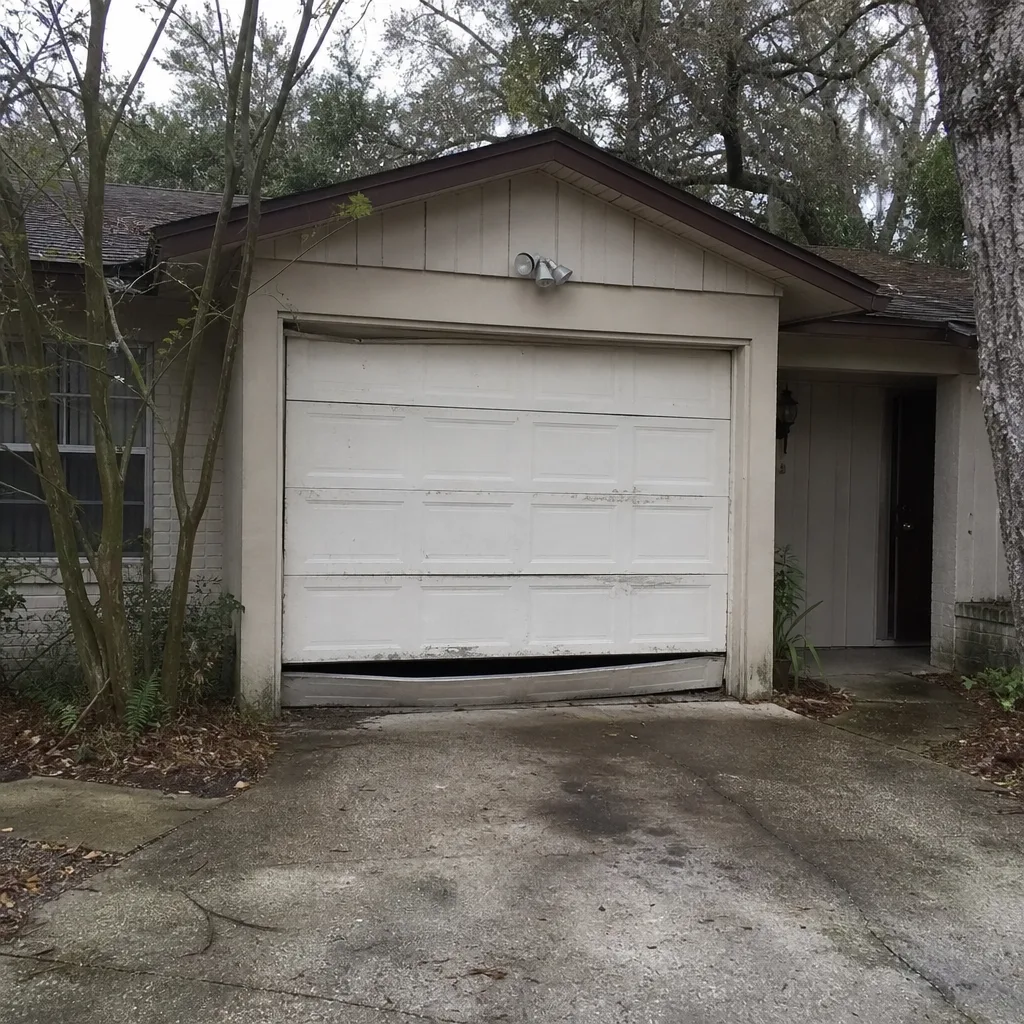 Before
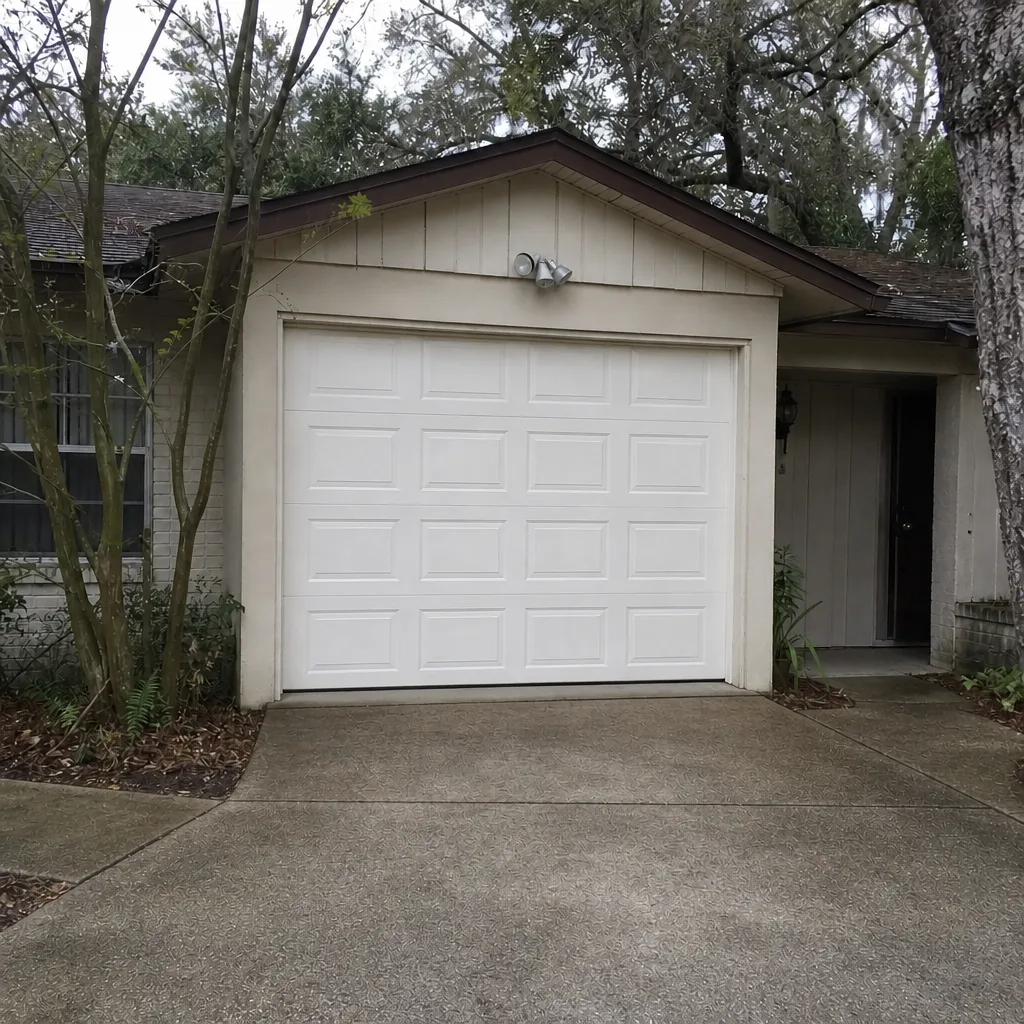 After
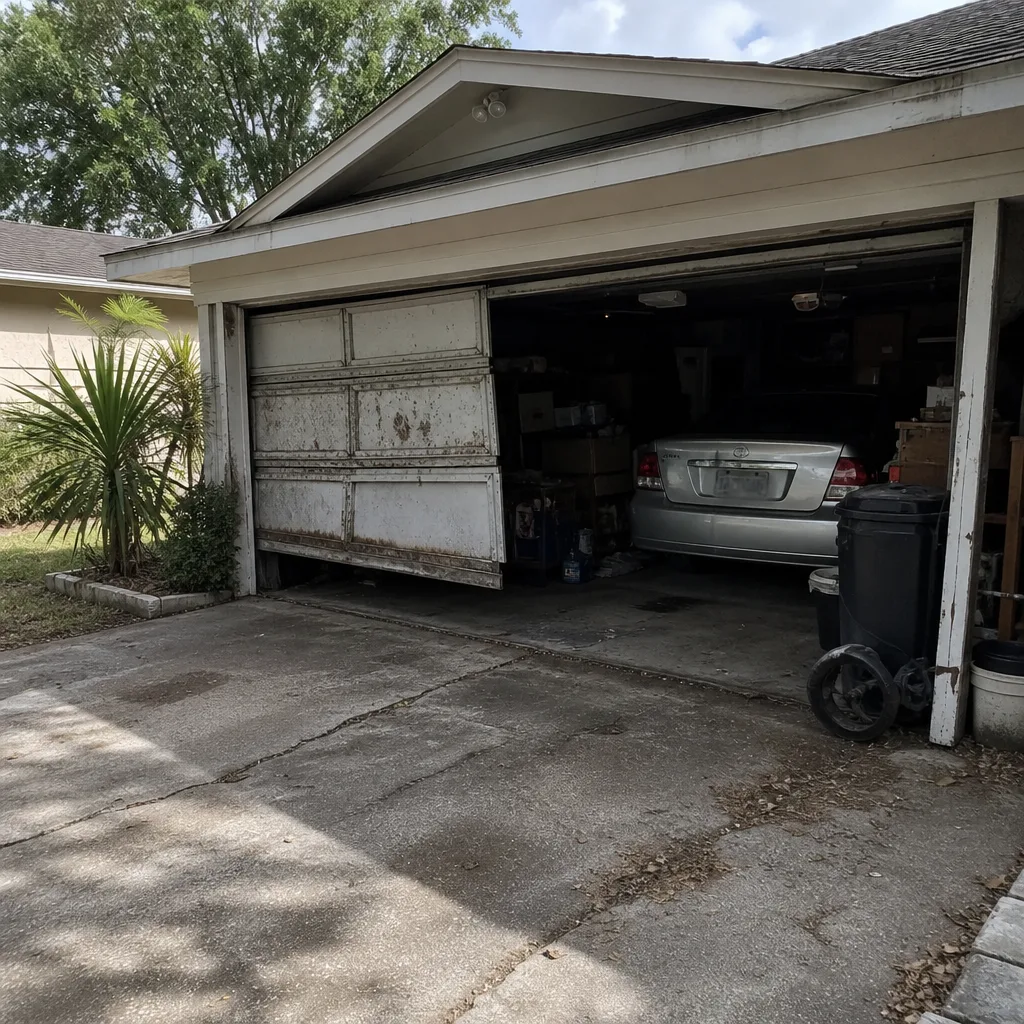 Before
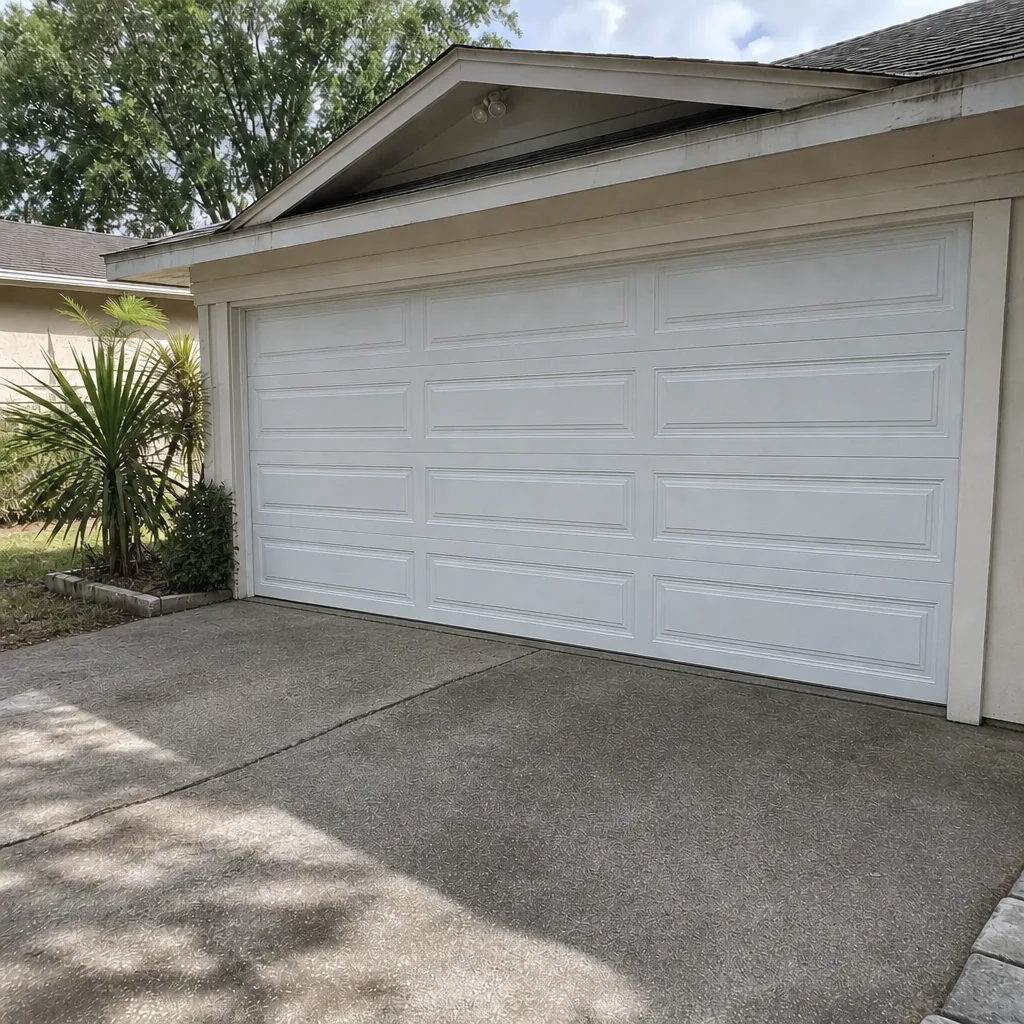 After
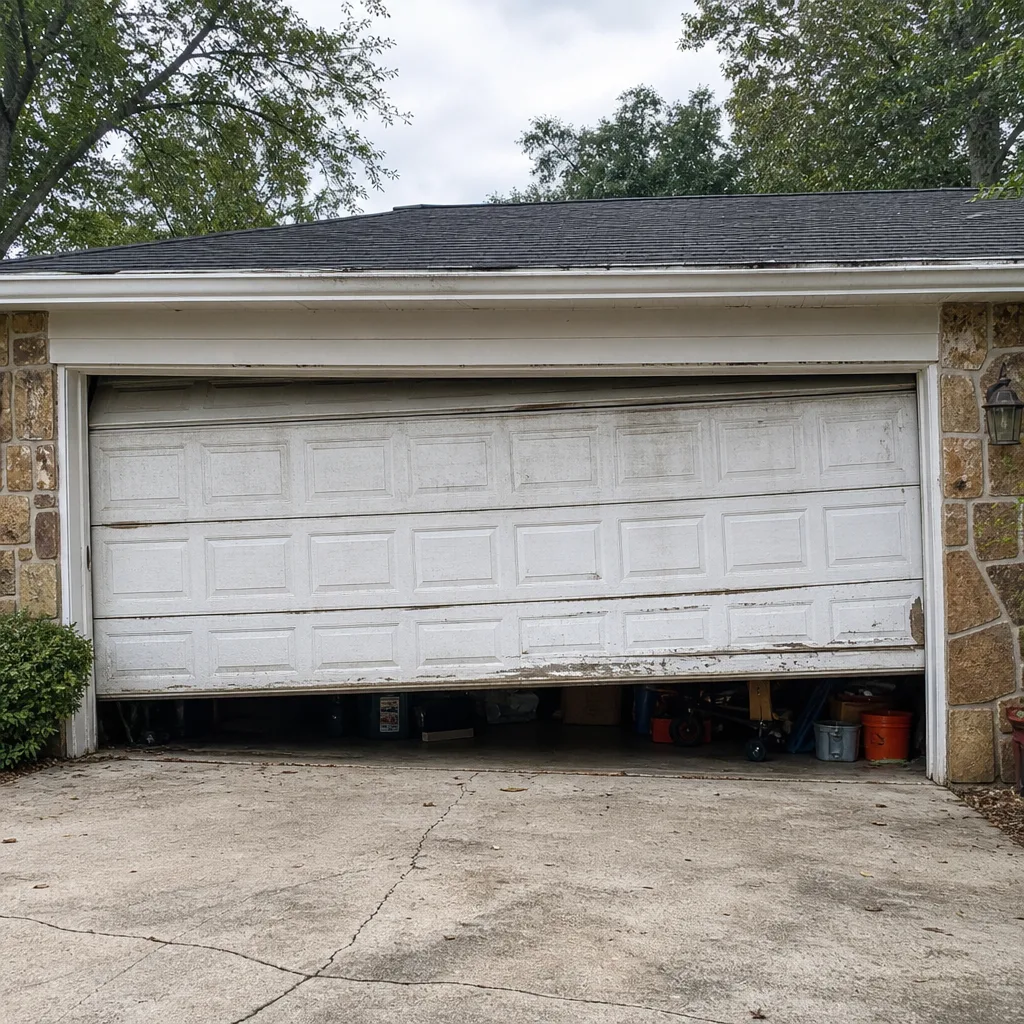 Before
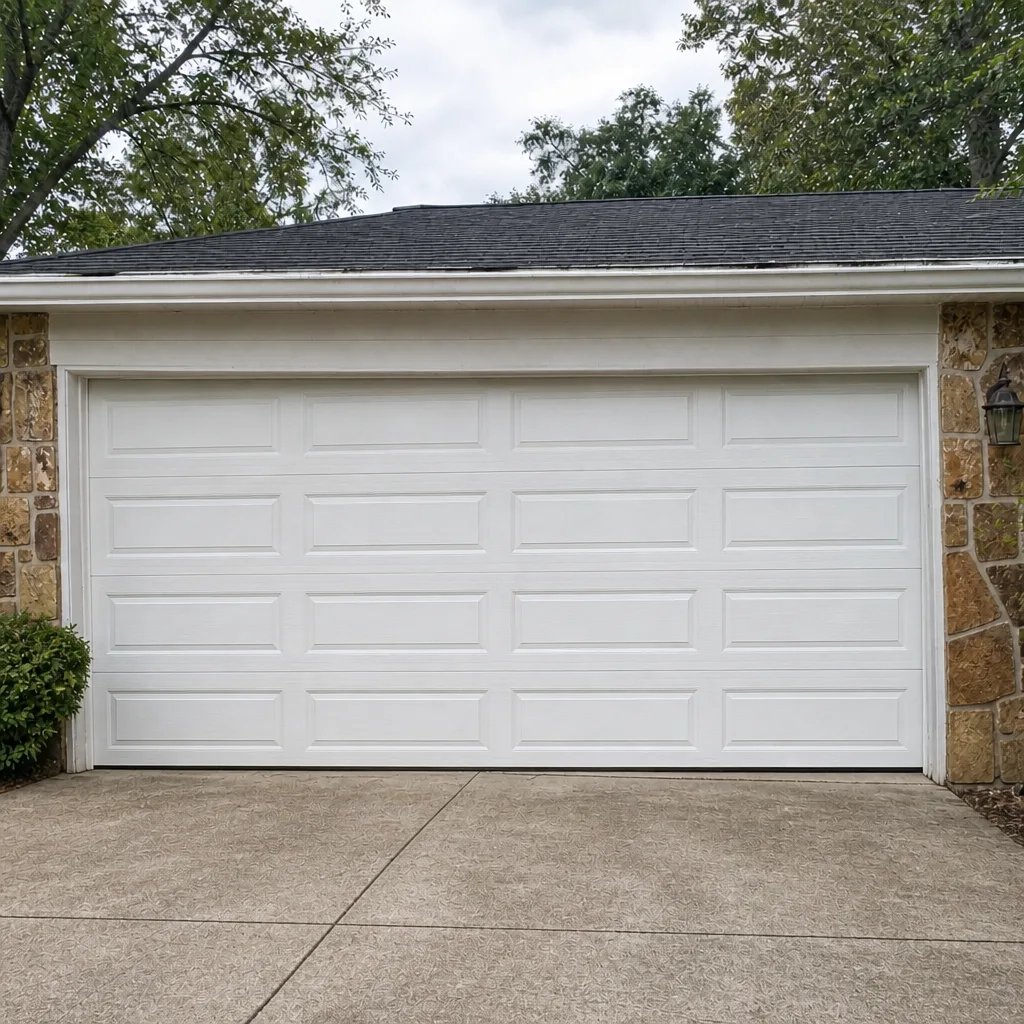 After
When to Call a Professional
Some garage door work is tune-up level. Some is genuinely dangerous. Call us if a spring is broken or making a loud bang, if the door is hanging off its track, if the opener runs but the door doesn’t move, or if the door is sagging, crooked, or binding. Call us before you buy a new door and want a compliant, rated project planned – a free measure and a written price beats a showroom impulse. And call us if you’ve been told the whole door has to be replaced when a single part would do; we source parts for the eight brands we work on rather than pushing a full replacement.
Garage Door Repair South Tampa offers free estimates in South Tampa – call (833) 696-2185. We answer 24/7. Fast dispatch from 7am to 7pm, Sunday through Friday, and we’re closed Saturday. The price is quoted and agreed before any work starts, and the written estimate sets the final price. No invoice surprises.
Frequently Asked Questions
There’s no single best brand for South Tampa – the answer depends on your address. The right door is one that offers a certified wind-rated assembly matching your property’s design wind speed, uses corrosion-resistant hardware, and has strong local parts distribution. On the waterfront, prioritise the wind rating; inland, you have room to weight aesthetics and budget.
Several of the major brands – including Clopay, Amarr, and Raynor – publish certified wind-rated product lines, but the specific sizes and whether they’re stocked or special-order vary by dealer. Ask for the manufacturer’s engineering data for the exact size you need and confirm the design wind speed meets your address. Call (833) 696-2185 and we can walk you through what’s proposed for your property.
Garage door repair cost in South Tampa depends entirely on the part and the brand. Prices are quoted per job by a written estimate after we’ve seen the door and identified the failure, so there’s no flat number to guarantee until we know what’s wrong. Call (833) 696-2185 for a free estimate.
For repair calls we offer same-day service when the schedule allows, with fast dispatch from 7am to 7pm, Sunday through Friday. We answer 24/7, and a call outside dispatch hours is booked into the next opening. For new installations, we don’t promise same-day – a new door has to be measured, ordered, and scheduled. Call (833) 696-2185 and we’ll find the soonest slot.
The written estimate sets the final price. We quote and agree the price before any work starts, so the number you’re quoted is the number you pay for the agreed scope. If we find something different once we’ve looked, we tell you before doing anything. Call (833) 696-2185 for a free estimate.
Yes. Our technicians have up to 12 years of experience and work with the hardware already in your home across LiftMaster, Chamberlain, Genie, Clopay, Amarr, Wayne Dalton, Craftsman, and Raynor – we don’t force a generic workaround onto a brand we know. The local pro is licensed and insured as their state requires. If you’re unsure what brand you have, we can identify it during a diagnostic visit.
The Bottom Line
Choosing a garage door brand for a South Tampa home starts with the label, not the showroom. Match a certified wind-rated assembly to the design wind speed your address requires, insist on stainless or galvanized hardware that survives the humid air, read the warranty for coastal exclusions, and ask about local parts distribution before you sign. Material choice then decides your service life: steel for the best rated-configuration availability, aluminum for corrosion resistance, fiberglass only in a confirmed rated line. Match the tier to your neighborhood and the door’s exposure. If a brand gets the wind rating, hardware, warranty, and parts footprint right, it’s the right door.
Written by the team at Garage Door Repair South Tampa.