
Last updated November 22, 2026
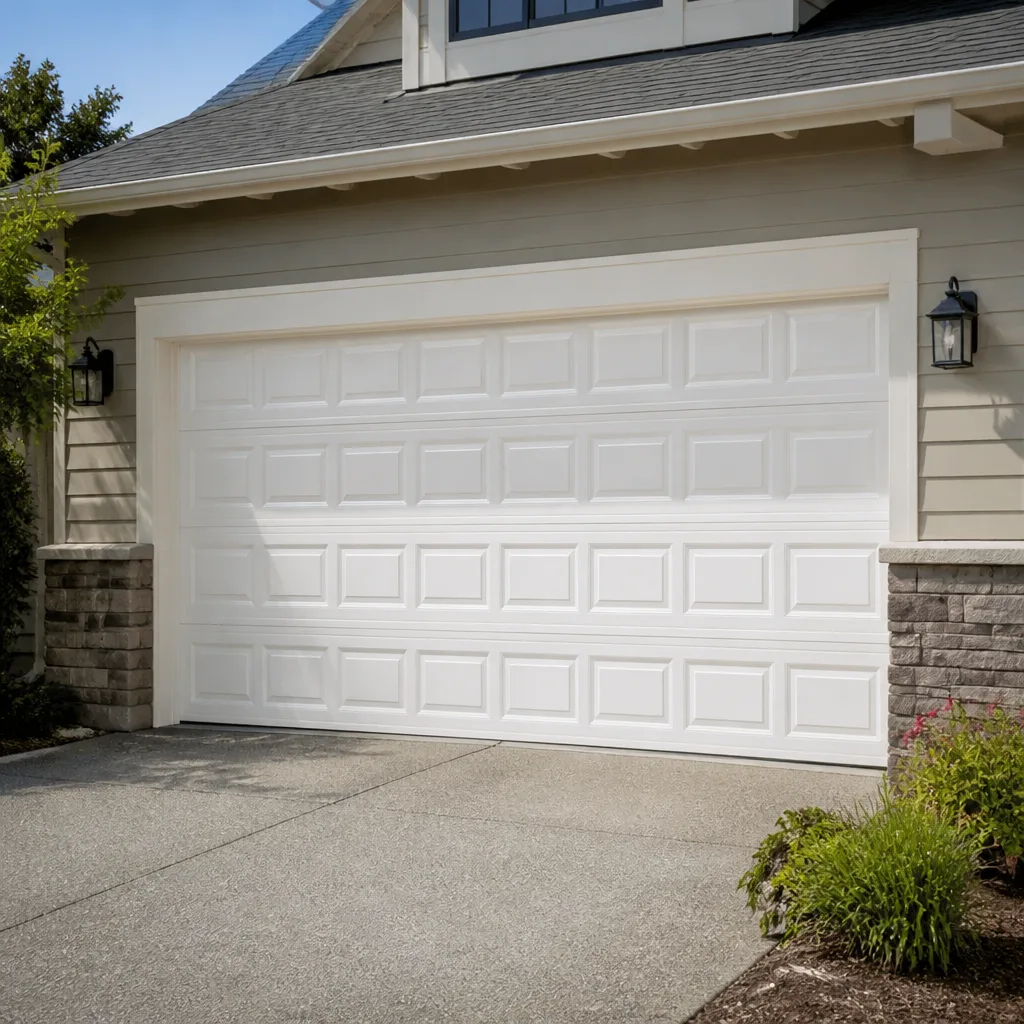 Raised-panel steel
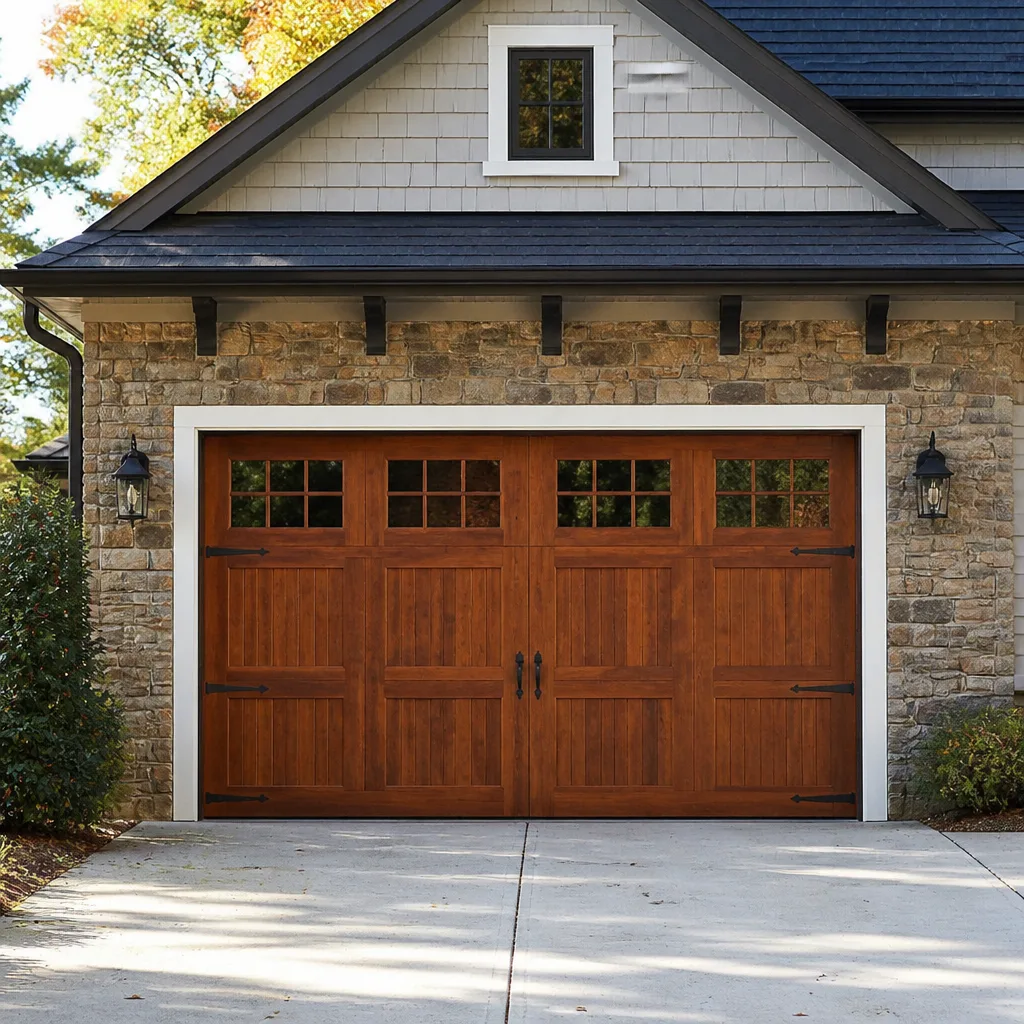 Carriage house
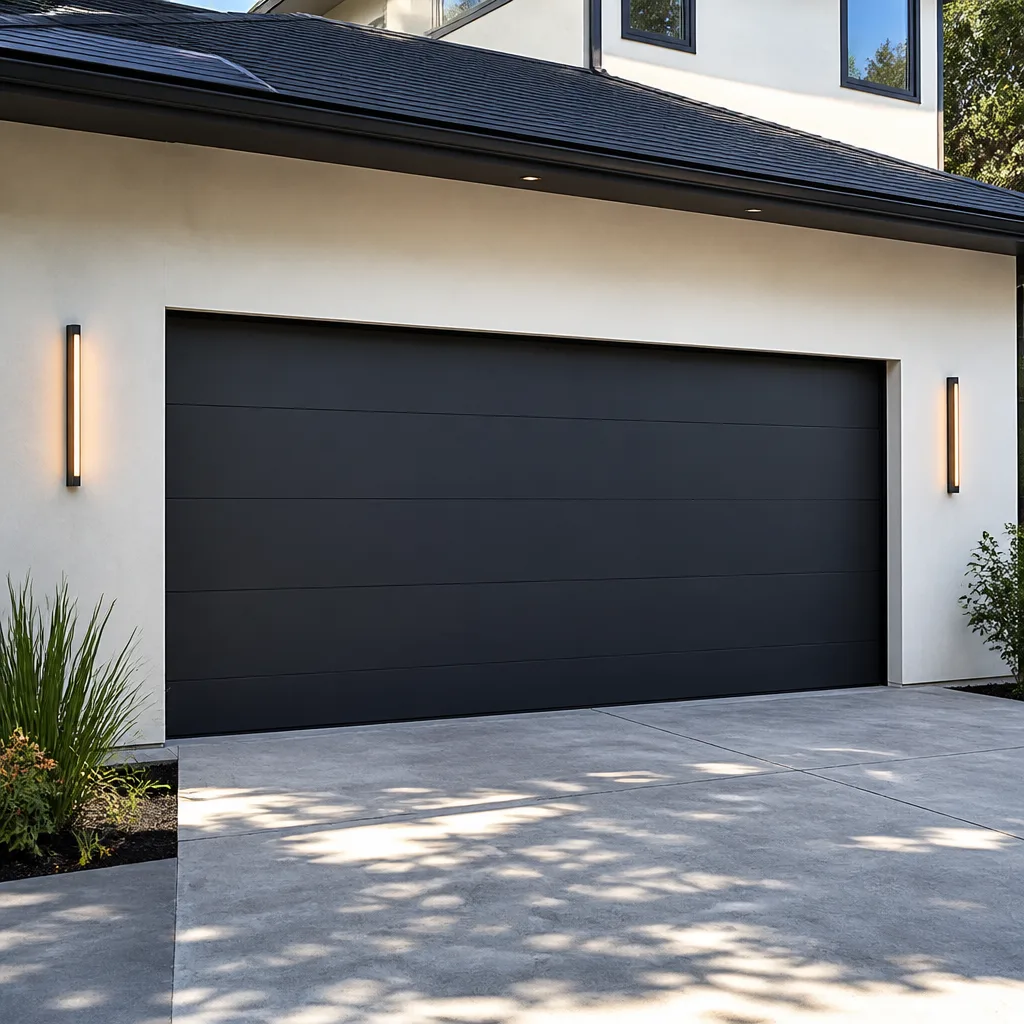 Modern flush
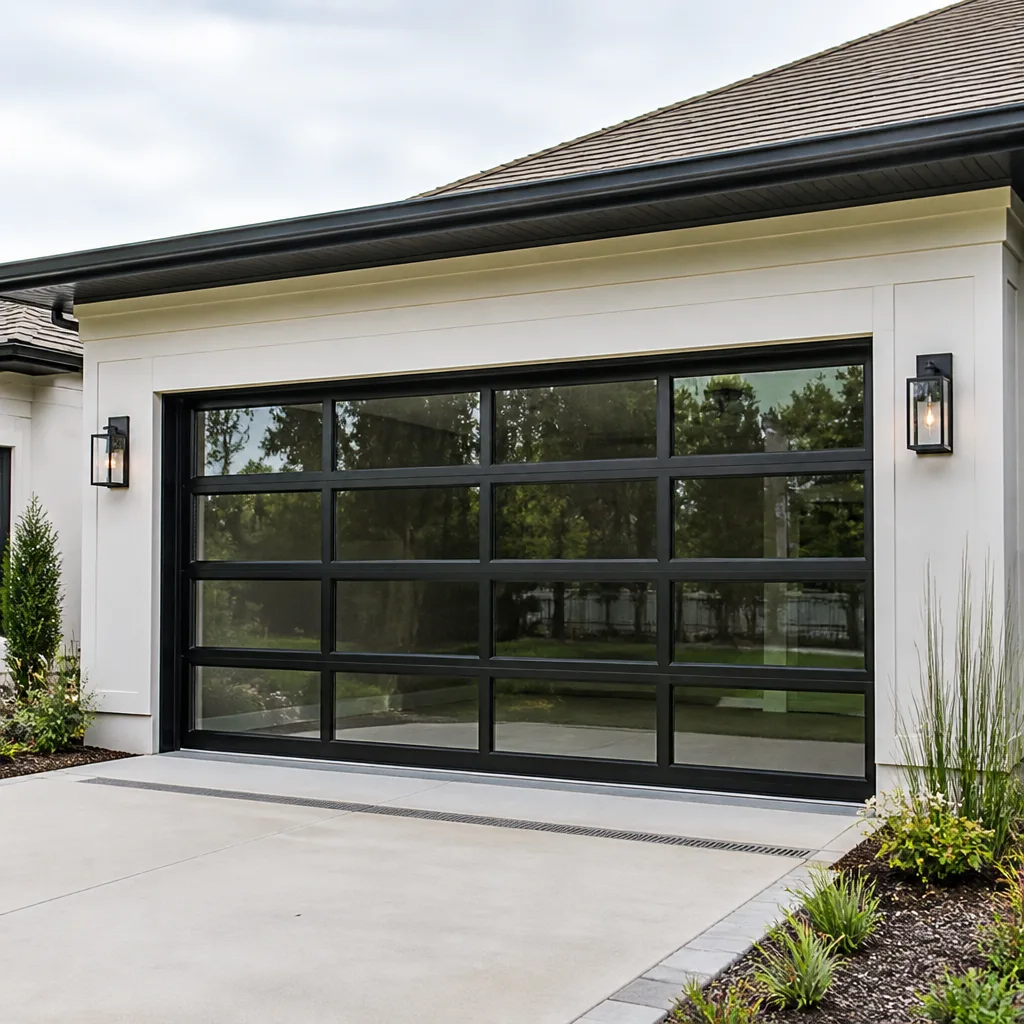 Full-view glass
 LiftMaster openers
 Chamberlain openers
Full 25-point door and opener safety check with every visit - springs, cables, rollers, tracks, and your LiftMaster or Chamberlain opener included
You get a price before we start. It does not change when the pro arrives.
Get your free estimateGarage Door Repair Maintenance Schedule: What to Do and When
The standard manufacturer recommendation to lubricate your garage door once a year was written for a climate with four distinct seasons. South Tampa doesn’t have those. What we have is heat, humidity, and a stretch of hurricane season that puts real stress on every moving part of a door. When homeowners in South Tampa follow the generic checklist, their springs and cables can sit untouched through months of conditions that quietly age metal and dry out lubricant. This guide lays out a maintenance schedule built for this climate specifically: what to check each month, which lubricants belong on which parts, how to test your spring balance without putting yourself in danger, and when to stop patching and start planning a replacement.
Quick Answer
A garage door in South Tampa should be inspected monthly, lubricated every three to four months instead of annually, and given a full hardware check in May before hurricane season and again in October after the summer humidity peaks. The annual manufacturer schedule assumes a mild, four-season climate; South Tampa’s heat and humidity cycle through metal parts faster, so the calendar here is tighter. Springs, cables, rollers, and hinges all need attention on a shorter interval than the manual suggests.
Styles & brands we work with
- Raised-panel steel
- Carriage house
- Modern flush
- Full-view glass
- LiftMaster openers
- Chamberlain openers
Table of Contents
- Why a South Tampa Maintenance Schedule Looks Different
- The South Tampa Month-by-Month Maintenance Calendar
- Which Lubricant Goes on Which Part (and Why WD-40 Is a Mistake)
- How to Test Spring Tension Balance Safely
- The Hardware Torque Check: Concrete vs. Paver Driveways
- Component Lifespan Benchmarks for South Tampa Conditions
- Brand-Specific Maintenance Notes
- Proactive Replacement vs. Reactive Repair
Why a South Tampa Maintenance Schedule Looks Different
Garage door manufacturers write their maintenance intervals for a national average. That average includes climates where temperatures swing from freezing to hot every year, and where humidity drops low enough that condensation on metal is a seasonal event rather than a daily one. South Tampa sits in a subtropical zone where the air holds moisture most of the year and temperatures stay warm enough that lubricants break down on a faster clock than they would up north. When a manual says “lubricate annually,” it’s assuming the lubricant will hold its film for twelve months. In South Tampa, heat and humidity work on that film continuously, and by month six or seven it may already be thinning on high-friction points like rollers and hinges.
The other factor unique to this region is hurricane season. From late spring through fall, doors in South Tampa face wind-driven rain and pressure changes that stress every seal, track, and panel. A door that hasn’t been checked for loose hardware or worn weatherstripping going into that season is a door that’s more likely to fail when the weather turns. That’s why the schedule below front-loads a thorough inspection in May, before the season ramps up, and adds a second pass in October once the worst of the summer humidity has passed.
None of this means the manufacturer’s manual is wrong. It means the manual was written for a different place. South Tampa homeowners get better results from a schedule that matches the actual conditions their door lives in. We’ve worked on doors across the area, from older homes with original hardware to newer builds with current-model openers from brands like LiftMaster and Chamberlain, and the pattern holds: doors here benefit from more frequent, lighter-touch maintenance rather than the once-a-year deep service the manual describes.
The South Tampa Month-by-Month Maintenance Calendar
This calendar is built around the two anchors that matter most in South Tampa: the May pre-hurricane inspection and the October post-summer corrosion check. Everything else fills in around those.
- January – Balance and safety check. Test the door’s balance (instructions below), check the auto-reverse safety feature, and look over the photo-eye sensors on your opener. This is a low-effort month; the goal is catching anything that shifted over the cooler, drier stretch.
- February – Roller and hinge lubrication. Apply the correct lubricant to rollers, hinges, and the torsion bar bearings. Skip the springs if they’re already coated; over-lubricating springs attracts grit.
- March – Track inspection and cleaning. Wipe down the tracks, check for bends or debris, and confirm the door rolls smoothly without binding. In South Tampa, pollen and dust collect in tracks faster than most people expect.
- April – Weatherstripping and seal check. Look at the bottom seal and the perimeter weatherstripping for cracks, hardening, or gaps. This is your last easy window before the rainy season to replace worn seals.
- May – Pre-hurricane full inspection. This is the big one. Check every bolt, hinge, and bracket for tightness, inspect springs and cables for wear, test the opener’s force settings, and confirm the door closes flush against the frame. Address anything loose or worn now, before storm season.
- June – Opener check. Test the manual release, confirm the safety reverse works, and listen for unusual sounds from the opener motor. If you have a belt-drive Genie or a chain-drive LiftMaster, this is a good time to check belt or chain tension.
- July – Cable and drum inspection. Look at the cables for fraying and the drums for even winding. Don’t touch the cables themselves; just observe and note anything that looks off.
- August – Lubrication refresh. The mid-summer heat and humidity will have thinned the February lubricant. Reapply to rollers and hinges.
- September – Post-storm damage check. After any significant weather, walk the door and check for panel dents, track misalignment, and seal damage. South Tampa sees enough wind-driven rain that this check earns its place every year.
- October – Post-summer corrosion check. This is the second major anchor. Inspect springs, cables, hinges, and the bottom bracket for any sign of rust or corrosion. Clean and treat as needed. This is also the right month to schedule a professional inspection if you’ve noticed anything concerning.
- November – Hardware torque check. Re-tighten bolts and brackets that may have vibrated loose over the year. More on this below.
- December – Year-end review and planning. Look back at what you noted through the year. If springs or cables are showing wear, start budgeting for proactive replacement rather than waiting for a failure.
This calendar isn’t a rigid rulebook; it’s a structure. Some South Tampa homeowners will find their door needs more frequent attention in certain months depending on age, brand, and how often the door cycles. But the May and October anchors should stay fixed, because they align with the conditions that stress a door most in this climate.
Which Lubricant Goes on Which Part (and Why WD-40 Is a Mistake)
The most common homeowner mistake we see is spraying WD-40 on the springs and calling it maintenance. WD-40 is a solvent and light penetrating oil, not a lubricant built for the loads a garage door carries. It displaces moisture temporarily, but it also strips away the heavier lubricant that should be protecting the spring, and it evaporates relatively quickly. On a torsion spring in South Tampa’s heat, that leaves bare metal exposed to humidity within weeks. The result is accelerated wear, not protection. This is one of the reasons we treat spring work as a core part of what we do rather than an afterthought; springs are the component most often damaged by well-intentioned but wrong maintenance.
Here’s the correct pairing of lubricant to component:
- Rollers (nylon or steel): A silicone-based or lithium grease spray. Apply to the roller stem and bearing, not the roller surface that contacts the track.
- Hinges: White lithium grease or a garage-door-specific lubricant. A small amount at each hinge pivot point is enough.
- Torsion bar bearings and center bearing plate: Light machine oil or a lithium grease. These carry the spring’s rotational load and need consistent lubrication.
- Track: No lubricant. Tracks should be clean and dry. Lubricant on a track attracts grit that wears the rollers.
- Springs: A purpose-made garage door spring lubricant, applied sparingly. Avoid WD-40 entirely. If the spring already has a factory coating, leave it unless it’s visibly dry.
- Opener rail and chain (if chain-drive): Chain lubricant or white lithium grease, following the opener manufacturer’s guidance for your specific LiftMaster, Chamberlain, Genie, or Craftsman model.
Frequency matters as much as product choice. In South Tampa’s humidity, we recommend re-lubricating high-friction points every three to four months rather than annually. That’s roughly three to four applications a year instead of one, which sounds like more work but takes only a few minutes each time.
How to Test Spring Tension Balance Safely
A balanced door should stay put when you let go of it halfway up. If it slams down or drifts up, the springs are out of balance, and that’s a sign to stop testing and call a professional. The balance test below is a check, not a repair; it tells you whether the door is working correctly, and it never requires you to touch the springs themselves.
- Close the door fully and disconnect the opener. Pull the manual release cord (usually red) so the door is on manual operation only. Never test balance with the opener engaged.
- Lift the door by hand to about waist height. Use the bottom section or a handle, not the springs or cables. Lift smoothly and slowly.
- Let go and observe. A balanced door stays roughly where you released it, or drifts only slightly. A door that drops quickly means the springs have lost tension. A door that rises on its own means the springs are over-tensioned.
- Repeat the 4-foot lift test. From the closed position, lift the door about four feet and release. The same pass/fail criteria apply. If the door won’t hold position at roughly four feet, the spring balance is off.
- Reconnect the opener only after the door passes. If the door fails either test, leave it disconnected and call a professional. A door with failing springs should not be operated by the opener, because the opener will fight the imbalance and wear out faster.
One critical safety note: never attempt to adjust, remove, or replace torsion springs yourself. Torsion springs are under extreme tension, and a sudden release can cause serious injury. This is the single most dangerous component on a garage door, and it’s why spring repair is something we handle directly rather than something we’d ever walk a homeowner through. If your balance test fails, that’s the point to call a trained technician, not the point to grab a wrench. For general garage door repair needs, we can diagnose the balance issue and recommend whether the springs need replacement or just adjustment.
The Hardware Torque Check: Concrete vs. Paver Driveways
Bolts and brackets on a garage door vibrate loose over time. How fast depends partly on what your driveway is made of, and in South Tampa, that varies a lot from neighborhood to neighborhood. Homes with poured concrete driveways tend to transmit more high-frequency vibration through the door frame each time the door opens and closes, because concrete is rigid and doesn’t absorb much. Homes with paver driveways often see slightly less of that particular vibration pattern, though pavers bring their own settling issues over time.
What this means for maintenance: if you have a concrete driveway, check bolt tightness more often, particularly on the hinges, the bottom bracket, and the track mounting brackets. The vibration that transmits through concrete can loosen these faster than you’d expect. On paver driveways, pay attention to whether the driveway itself has settled unevenly, because an uneven surface can cause the door to sit off-level and put extra stress on one side of the hardware.
What to check at each torque pass:
- Hinge bolts: These loosen fastest. Check every hinge, especially the ones near the bottom and middle of the door.
- Track mounting brackets: Loose brackets let the track shift, which causes the door to bind.
- Bottom bracket: This carries cable tension. If it’s loose, don’t tighten it yourself; call a professional, because the cable is under load.
- Opener mounting bolts: Check where the opener attaches to the ceiling and to the door arm.
- Center bearing plate bolts: These hold the torsion bar. Snug is fine; don’t overtighten.
Do this check at least twice a year, ideally at the November mark in the calendar above and again in May before hurricane season. If you notice a bolt that keeps loosening even after tightening, that’s a sign of a deeper issue and worth a professional look.
Component Lifespan Benchmarks for South Tampa Conditions
National lifespan estimates assume a moderate climate. In South Tampa’s heat and humidity, several components wear faster than the national average, which means homeowners should plan for proactive replacement a bit earlier than a generic guide suggests. Here’s how the components compare:
- Torsion springs: National estimate is roughly 10,000 cycles. In South Tampa, heat and humidity can shorten usable life, so we recommend planning for replacement earlier if the door cycles frequently, for example a household that opens and closes the door several times a day.
- Extension springs: National estimate is similar cycle-wise but often shorter in years. In this climate, watch for corrosion at the hook ends, which is where failures usually start.
- Cables: National estimate is 10 to 15 years. In South Tampa’s humidity, inspect annually for fraying and rust, and expect to replace on the earlier end of that range if the door sees heavy use.
- Rollers: National estimate is 5 to 10 years for steel, longer for nylon. Humidity and grit in the tracks accelerate wear here; nylon rollers hold up better in this climate.
- Hinges: National estimate is 10 to 15 years. Loose hardware and vibration shorten that, so homes with concrete driveways should check more often.
- Weatherstripping and bottom seal: National estimate is 3 to 5 years. In South Tampa, sun and heat harden the rubber faster, so expect the shorter end of that range.
- Opener: National estimate is 10 to 15 years. Heat in an attached garage can shorten motor life, so proper ventilation and periodic checks help.
The practical takeaway: if your door is approaching the upper end of these ranges and you live in South Tampa, start budgeting for proactive replacement rather than waiting for a failure at an inconvenient moment. A spring that fails on a Sunday morning is a much bigger disruption than a spring you replaced on a scheduled basis. For a full replacement, our garage door installation service covers new doors from brands like Clopay, Amarr, and Wayne Dalton, matched to your opening and your home’s style.
Brand-Specific Maintenance Notes
Maintenance is broadly the same across brands, but a few details vary by manufacturer. We work with eight of the most widely installed brands, and here’s what to keep in mind for a few of them:
- LiftMaster and Chamberlain: Both are part of the same family of openers, and their maintenance schedules are similar. Check the belt or chain tension annually, and test the safety reverse monthly. Parts are widely available, which makes garage door opener repair on these brands straightforward.
- Genie: Belt-drive Genie openers tend to run quietly but need the belt checked for wear at the annual mark. Screw-drive models need the rail lubricated per the manual.
- Clopay and Amarr: Door hardware on these brands is generally robust, but the bottom seal and perimeter weatherstripping still need annual replacement in South Tampa’s heat.
- Wayne Dalton: Some models use a proprietary track and hinge system, so replacement parts need to match the model. Our parts service exists specifically so homeowners can source the right part instead of a near-match.
- Craftsman and Raynor: Older Craftsman openers are common in South Tampa homes; replacement parts for discontinued models can be harder to find, so a proactive check is worth it before a failure. Raynor doors use standard hardware, which makes maintenance simpler.
Knowing which brand is in your garage matters because it determines which parts fit and which maintenance steps apply. If you’re not sure what you have, the model number is usually on a label inside the opener housing or on the door’s bottom section.
Proactive Replacement vs. Reactive Repair
The maintenance schedule above is designed to catch problems early, and that’s the whole point. A door that gets regular lubrication, torque checks, and seasonal inspections will last longer and fail less often than one that gets attention only when something breaks. But maintenance has limits. At some point, the cost of repeated repairs exceeds the cost of a planned replacement, and the schedule helps you see that point coming.
Signs it’s time to plan for replacement rather than another repair:
- The door is on its second or third set of springs and the panels are showing wear or rust.
- The opener is old enough that parts are hard to source, and repairs are becoming frequent.
- The door is out of balance even after spring replacement, which can indicate a bent track or worn hardware throughout.
- You want a different style, insulation level, or material, and the current door doesn’t meet your needs.
For day-to-day repairs, we can usually diagnose and fix the issue quickly. For a full replacement, the process is a bit different: we measure, order the door, and schedule installation, with a written price agreed before any work begins. Whether you’re repairing or replacing, the price is quoted and confirmed before we start, so there’s no surprise on the invoice.
Common Mistakes to Avoid
- Using WD-40 on springs and hinges. It’s a solvent, not a lubricant. It strips protective grease and leaves metal exposed to South Tampa’s humidity.
- Following the annual lubrication schedule from the manual. In this climate, three to four applications a year is more realistic for high-friction points.
- Ignoring the May pre-hurricane inspection. Storm season stresses doors, and loose hardware or worn seals found in May are cheap to fix; found in September, they can mean a bigger repair.
- Adjusting torsion springs yourself. This is the most dangerous part of the door. Leave spring work to a trained technician, and be wary of any guide that walks you through a DIY spring adjustment.
- Skipping the balance test because the door “seems fine.” A door can look fine and still be out of balance, which wears out the opener faster and stresses the springs.
- Over-tightening bolts. Snug is correct; overtightening can strip threads or crack brackets, especially on older hardware.
- Waiting for a failure before replacing aging components. If springs or cables are near the end of their expected life, plan the replacement rather than waiting for it to break.
See the difference
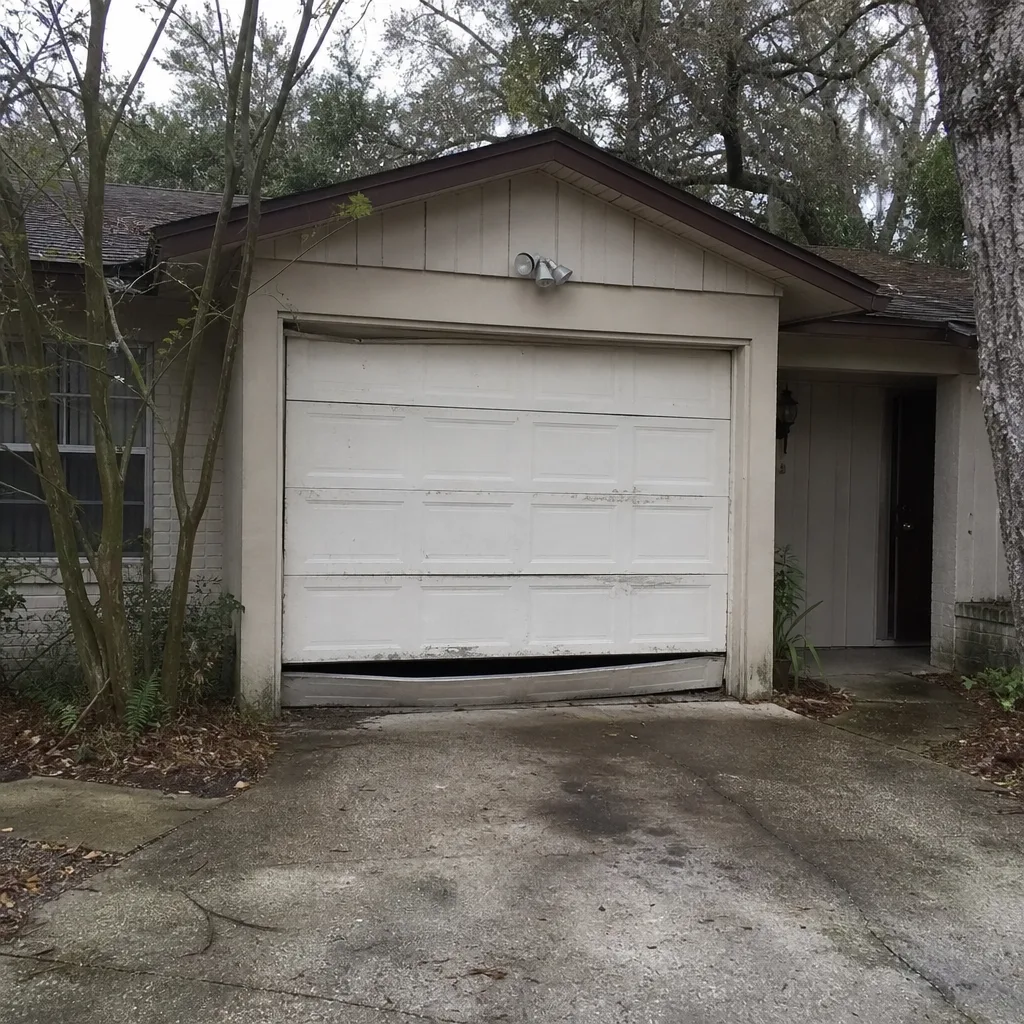 Before
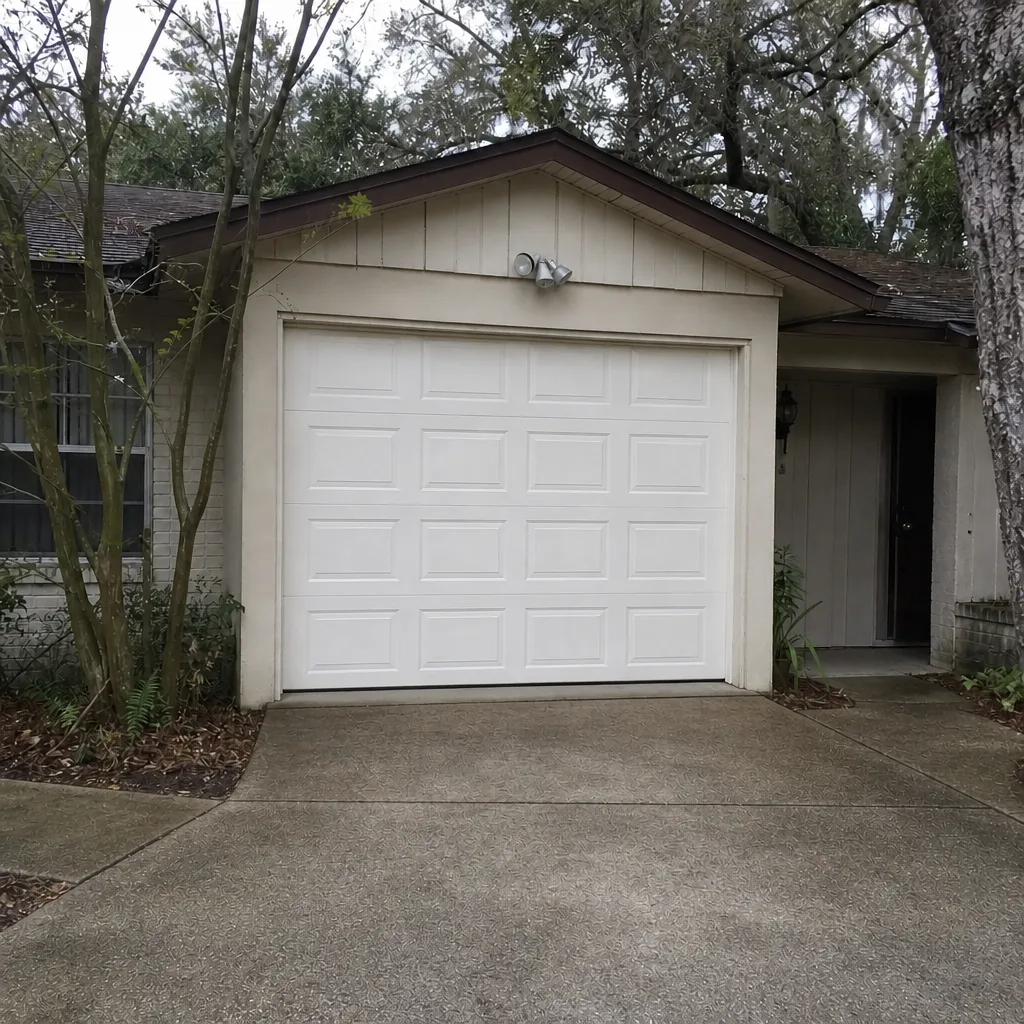 After
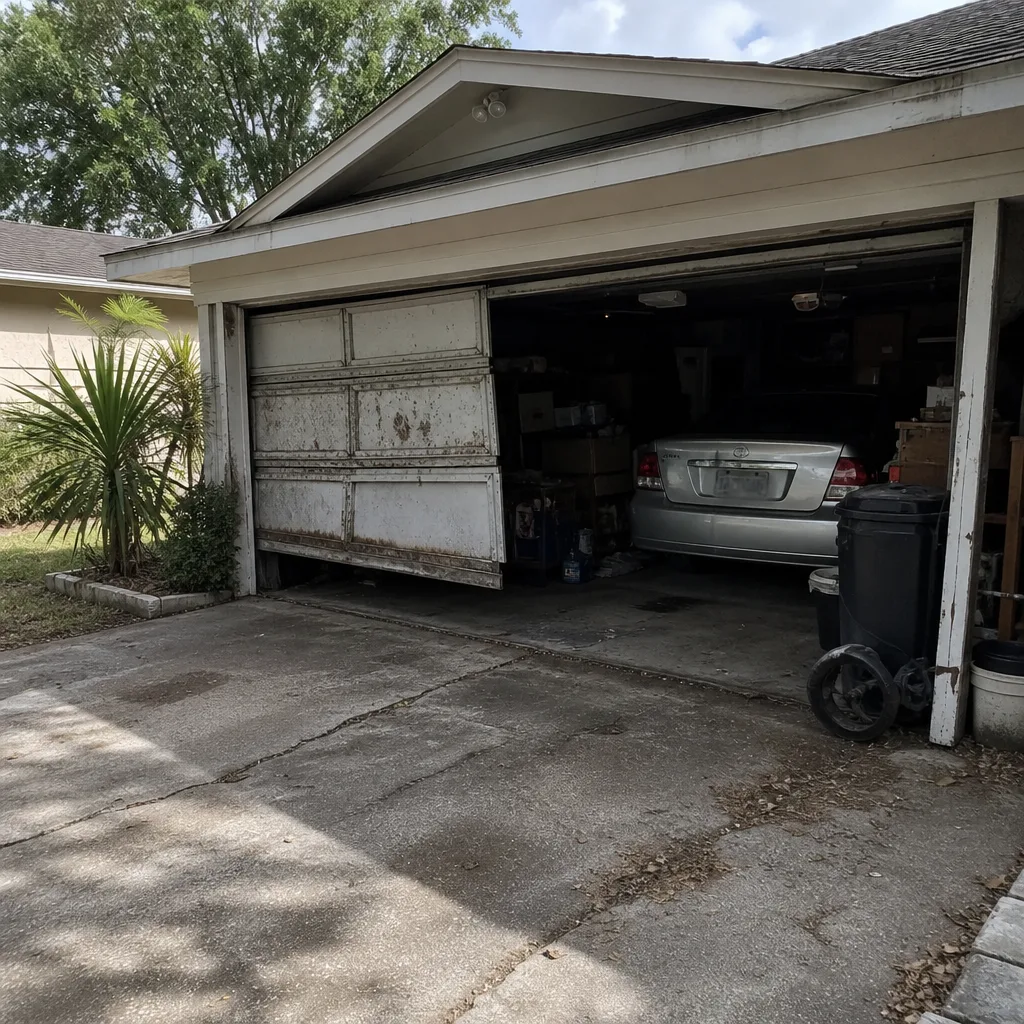 Before
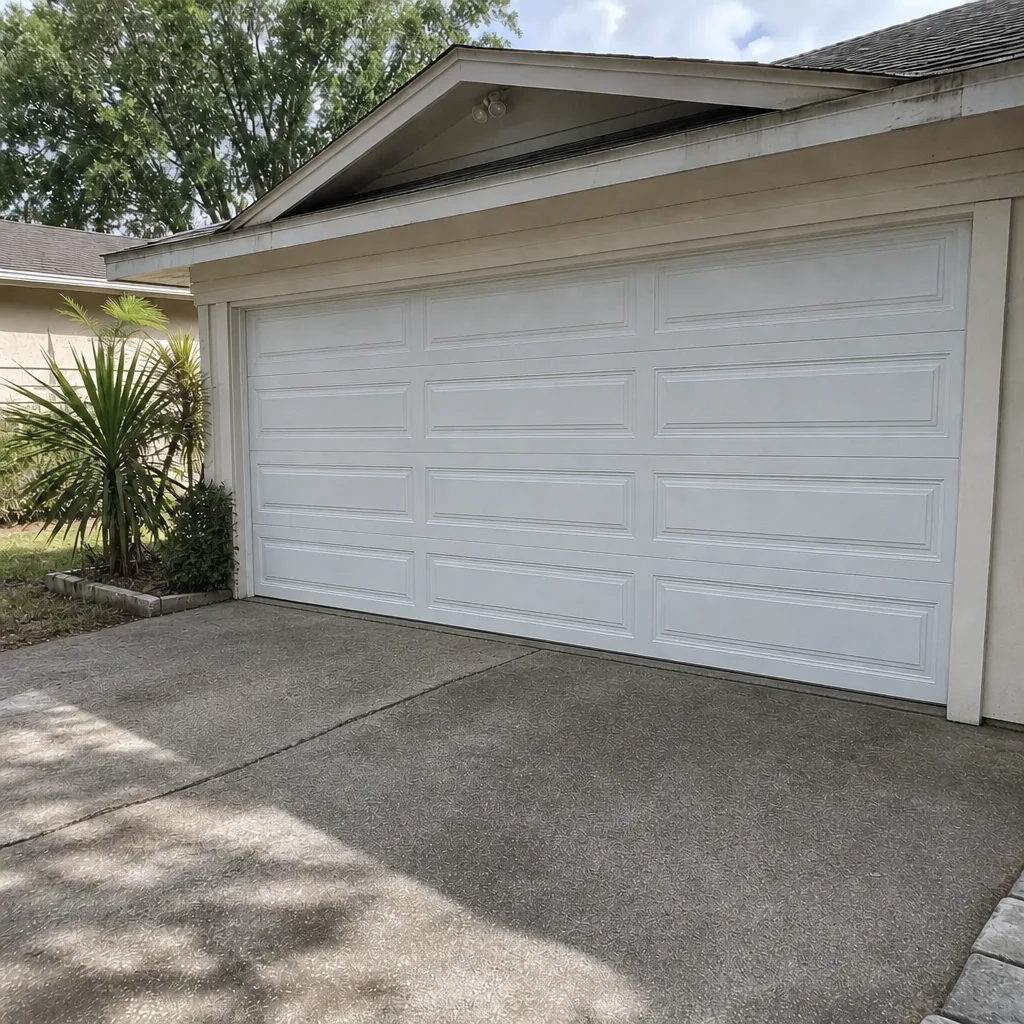 After
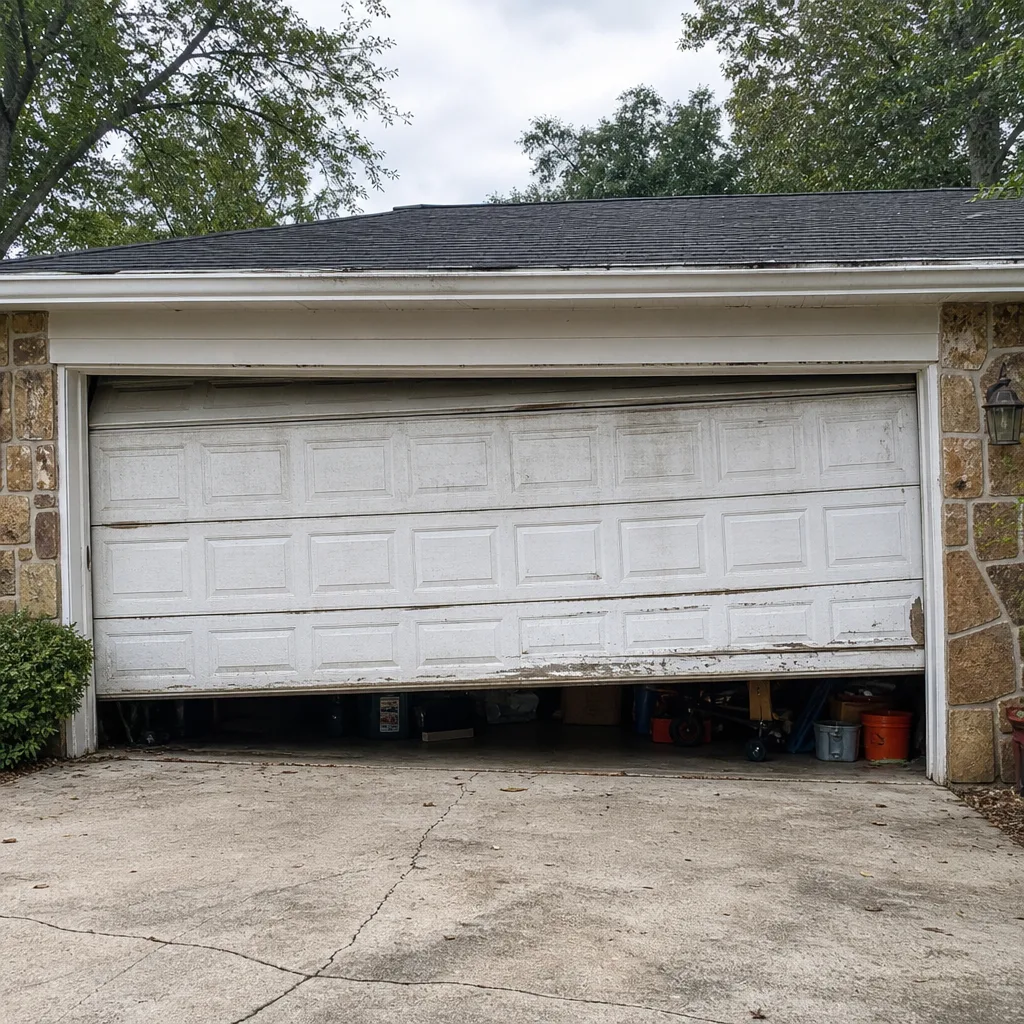 Before
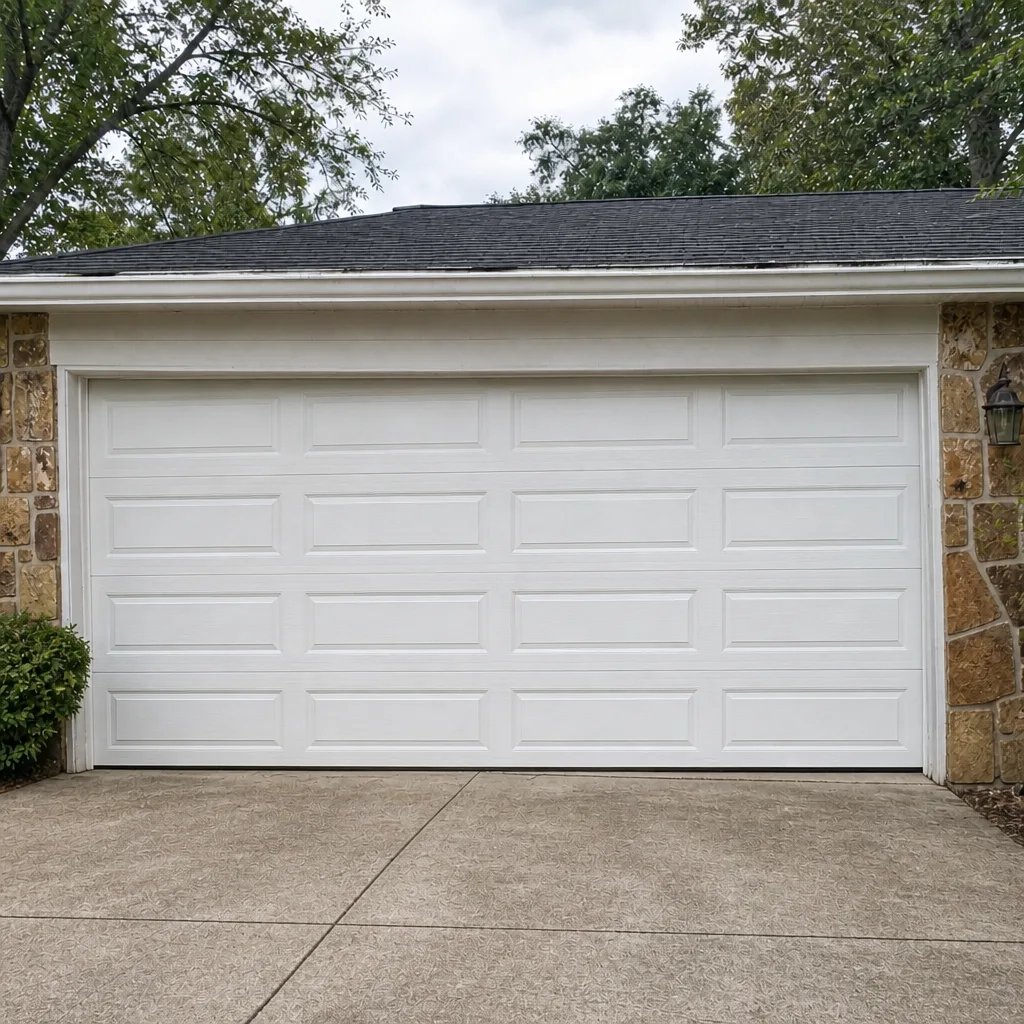 After
When to Call a Professional
Some maintenance is safe to do yourself: lubrication, visual inspection, tightening accessible bolts, and the balance test described above. Other work needs a trained technician. Call a professional if your balance test fails, if you see frayed or rusted cables, if the door is off its track, if the opener doesn’t respond or reverses unexpectedly, or if you hear popping or grinding from the springs. Spring repair in particular is a job for a specialist, and it’s one of the reasons we focus exclusively on garage doors rather than working across multiple trades.
Garage Door Repair South Tampa offers free estimates. If you’re not sure whether a noise or a wobble is serious, it’s worth having someone look. Call (833) 696-2185. We answer 24/7. Fast dispatch from 7am to 7pm, Sunday through Friday. Our technicians have up to 12 years of experience, and we work on the brand already in your garage, whether that’s LiftMaster, Chamberlain, Genie, Clopay, Amarr, Wayne Dalton, Craftsman, or Raynor. For a broad look at what we cover, see Garage Door Repair South Tampa.
Frequently Asked Questions
Every three to four months, rather than the once-a-year schedule most manuals recommend. South Tampa’s heat and humidity break down lubricant faster than a four-season climate does, so high-friction points like rollers and hinges need more frequent attention. Use white lithium grease or a silicone-based lubricant on hinges and rollers, and a purpose-made spring lubricant on springs. Avoid WD-40.
Yes, you can test balance safely, but you should never adjust or replace springs yourself. Disconnect the opener, lift the door to about waist height, and let go. A balanced door stays put; one that drops or rises needs professional service. The 4-foot lift test works the same way: lift about four feet, release, and see if the door holds. If it doesn’t, stop and call a professional.
Using WD-40 on springs and hinges instead of a proper lubricant. WD-40 is a solvent that strips protective grease and evaporates, leaving metal exposed to humidity. In South Tampa, that accelerates corrosion and shortens spring life. The second most common mistake is skipping the pre-hurricane inspection in May and not checking hardware again after summer.
If the door has had multiple spring replacements, or the springs are near the end of their expected cycle life and show visible wear or rust, replacement is usually the better call. In South Tampa’s climate, corrosion on springs and cables is common, so if you see rust at the hook ends or fraying on the cables, don’t wait. A failed spring can leave you unable to open the door at all.
Yes, slightly. Concrete driveways transmit more vibration through the door frame, so bolts and brackets loosen faster. Check hinge and track bracket tightness more often, ideally at both the May and November checks. Paver driveways have their own issue: settling can put the door slightly off-level, which stresses one side of the hardware.
Leave the door disconnected from the opener and don’t operate it. A door with failing springs puts extra stress on the opener and can be dangerous. Call a professional for diagnosis and repair. We offer free estimates on spring and balance issues, and our technicians can tell you whether adjustment or replacement is the right call.
We recommend it. A May inspection catches loose hardware, worn weatherstripping, and early spring wear before storm season stresses the door. It’s a small check that can prevent a much bigger repair later. If you’ve noticed any unusual sounds or movement when the door operates, that’s a good reason to schedule a look.
The Bottom Line
The manufacturer’s annual maintenance schedule was written for a climate that doesn’t match South Tampa. Here, heat and humidity age lubricant and metal faster, and hurricane season adds its own stress. The schedule that works here is simpler in structure but tighter in frequency: daily visual checks, monthly balance and safety tests, lubrication every three to four months instead of once a year, a major inspection in May before storm season, and a corrosion and hardware check in October. Springs and cables deserve the most caution; never adjust them yourself. If the door is showing wear, plan for replacement rather than waiting for a failure. A well-maintained door lasts longer, fails less often, and costs less to own.
If you’d like help building a maintenance routine for your door, or you’ve noticed something that needs a closer look, Garage Door Repair South Tampa is here. Call (833) 696-2185. We answer 24/7. Fast dispatch from 7am to 7pm, Sunday through Friday. Estimates are free, and the price is set per job by a written estimate before any work starts.
Written by the team at Garage Door Repair South Tampa.