
Last updated November 22, 2026
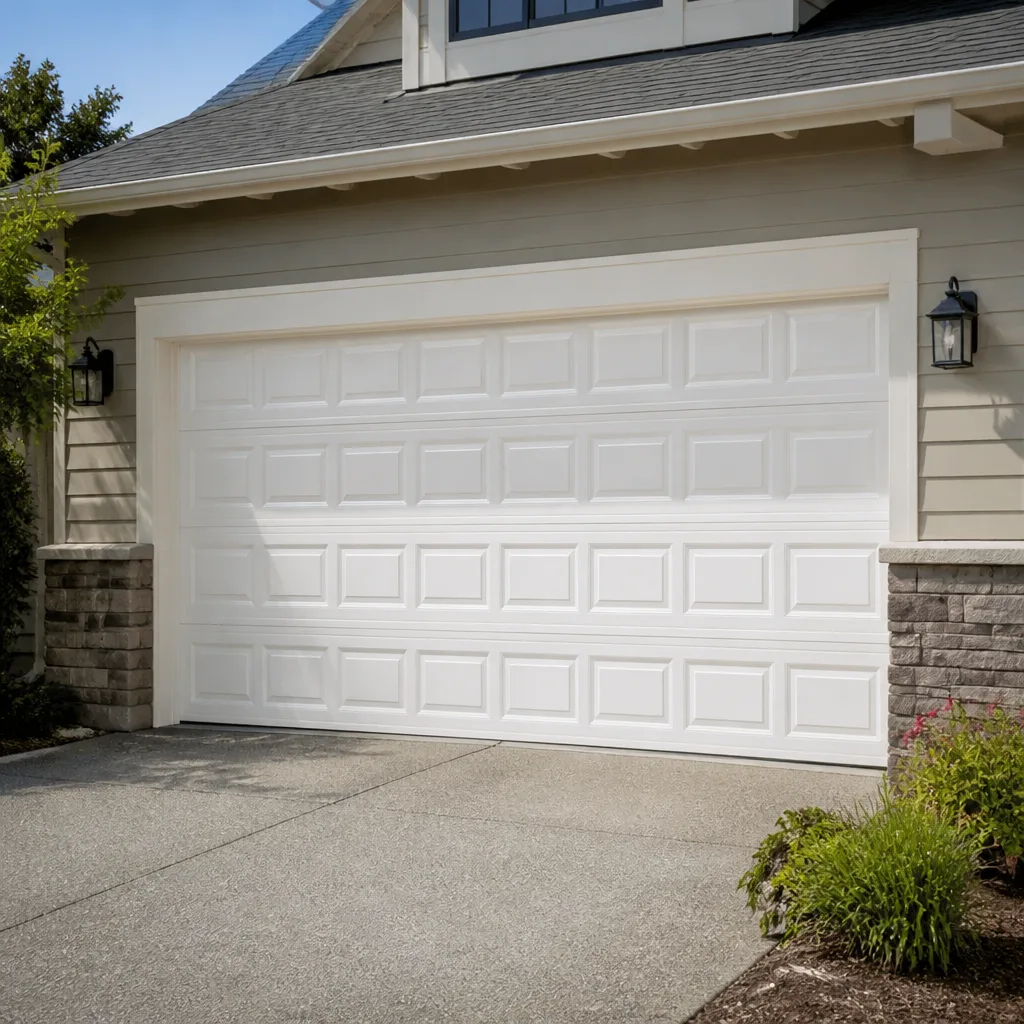 Raised-panel steel
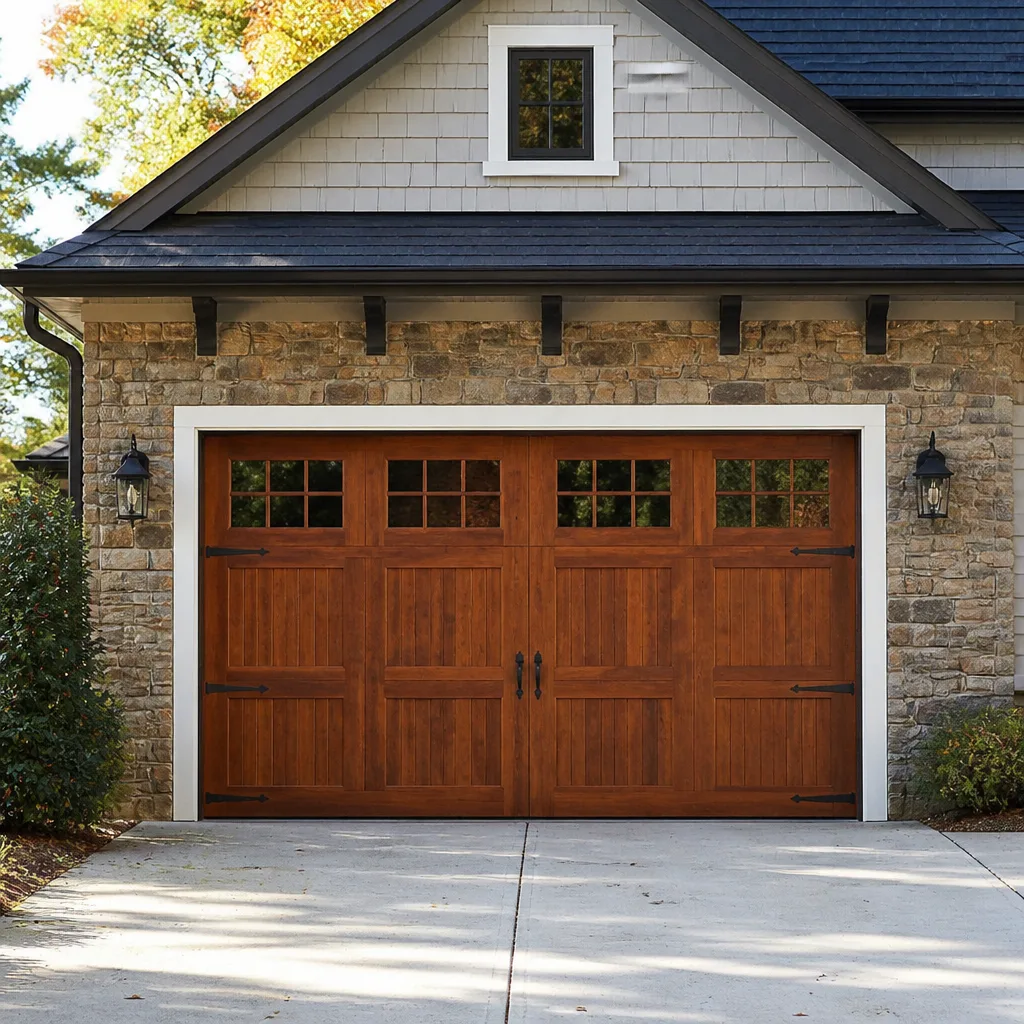 Carriage house
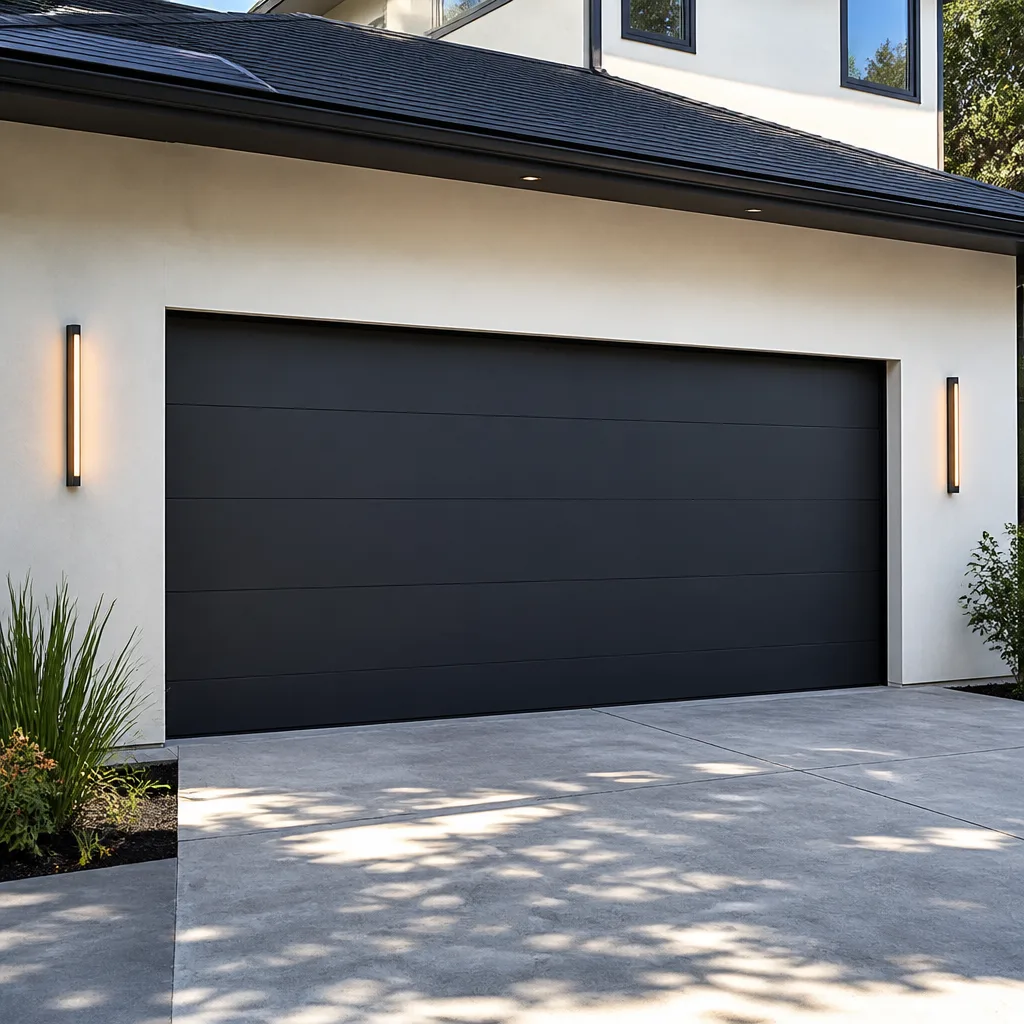 Modern flush
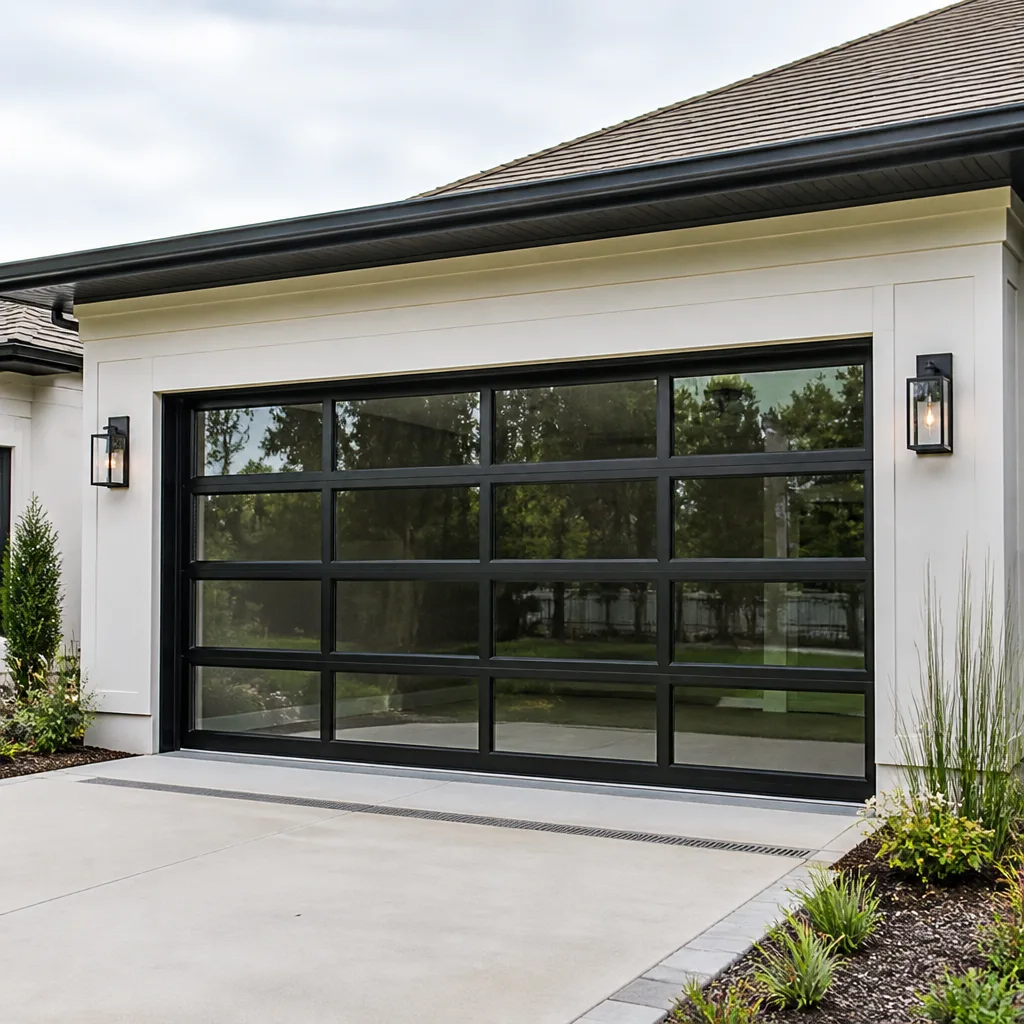 Full-view glass
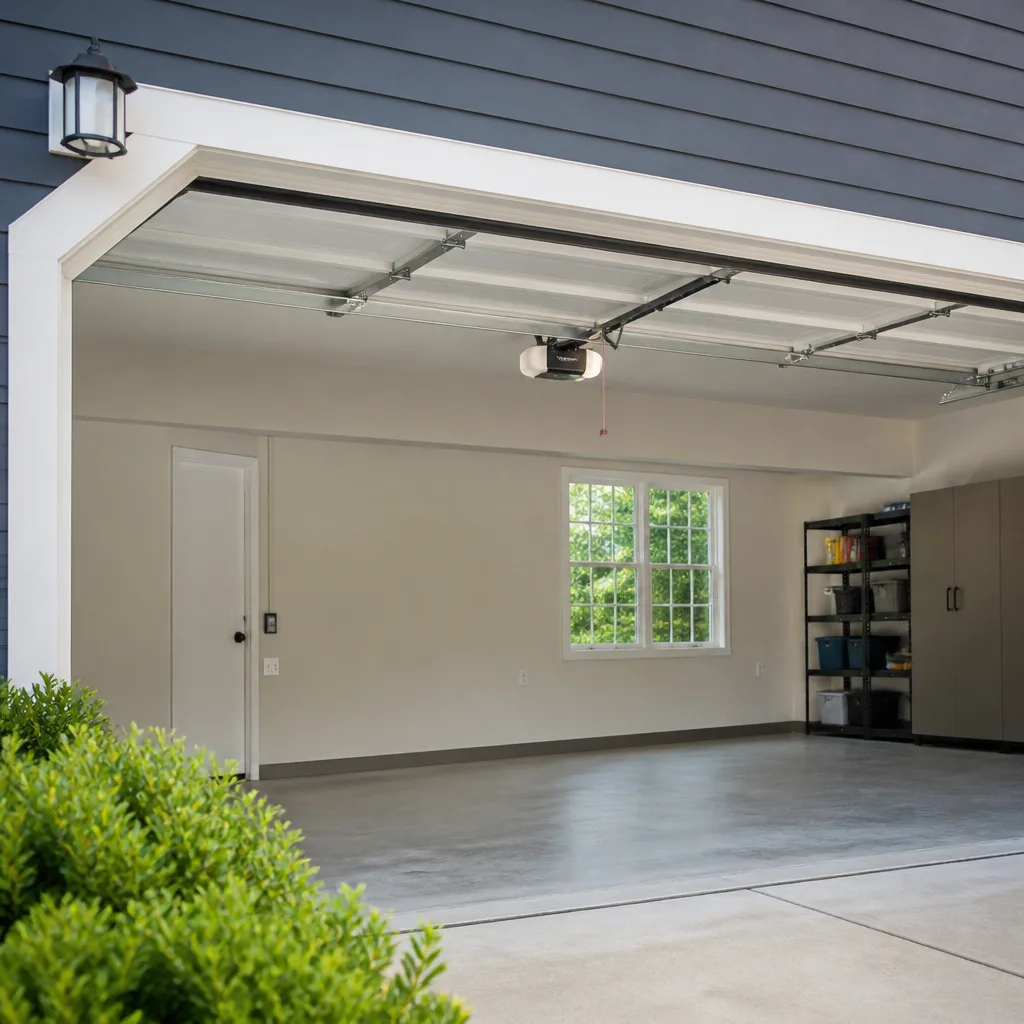 LiftMaster openers
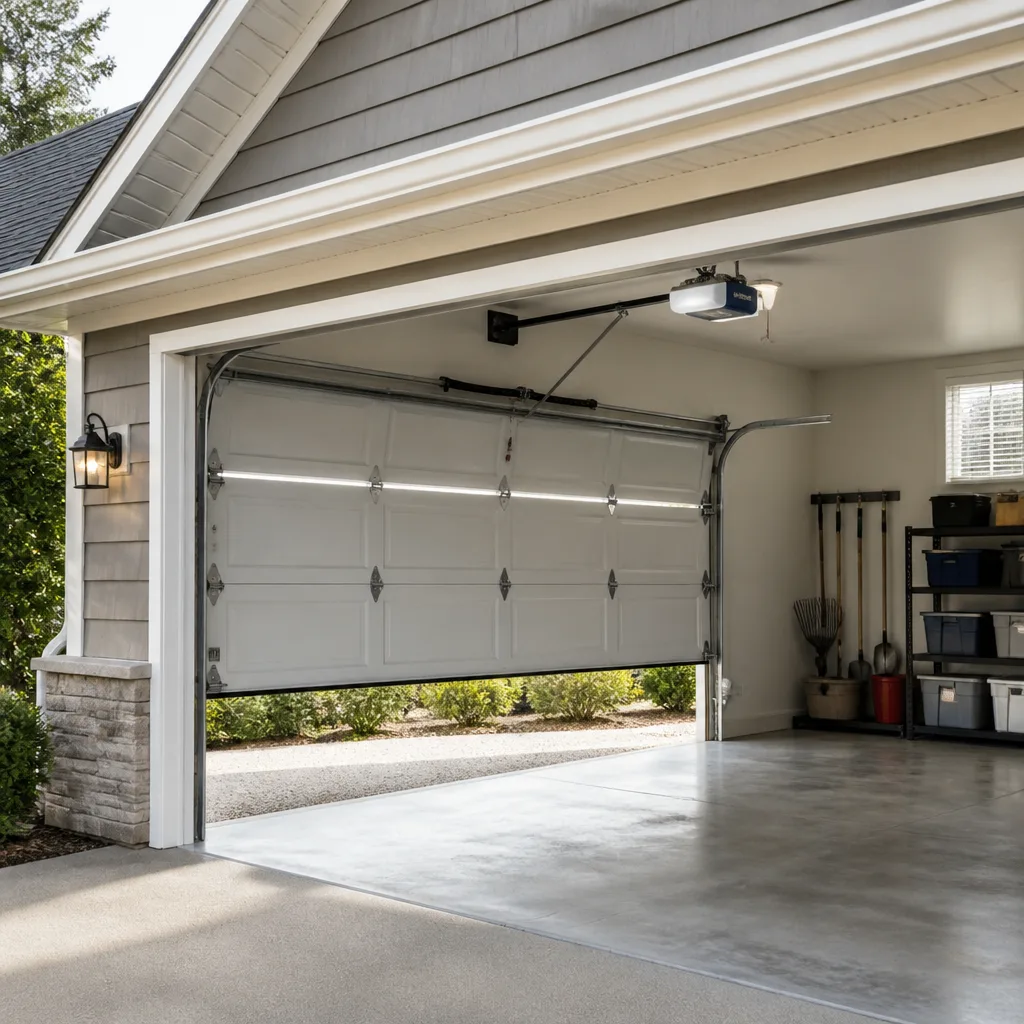 Chamberlain openers
Full 25-point door and opener safety check with every visit - springs, cables, rollers, tracks, and your LiftMaster or Chamberlain opener included
You get a price before we start. It does not change when the pro arrives.
Get your free estimateGarage Door Repair Troubleshooting in South Tampa: Common Problems and How to Fix Them
The door that “just stopped working” overnight almost never failed overnight. In South Tampa, humidity sits heavy in the air most of the year, and it works on springs, cables, tracks, and opener electronics quietly for months before something visibly gives. What looks sudden is usually the last chapter of a slow story. That matters for troubleshooting, because the symptom you notice first is rarely the part that actually failed. This guide maps symptoms to root causes like a diagnostic chart, so you can tell the difference between a five-minute fix and a call-the-tech situation. Our technicians have up to 12 years of experience, and we work on LiftMaster, Chamberlain, Genie, Clopay, Amarr, Wayne Dalton, Craftsman, and Raynor hardware every day.
Quick Answer
Most garage door problems in South Tampa trace back to one of six root causes: springs, cables, tracks, the opener motor, the logic board, or the safety sensors. Match your symptom to the category, and the answer usually tells you whether it’s a stop point or a safe adjustment. Anything involving high-tension springs or cables is always a professional job. Call (833) 696-2185 for a free estimate. We answer 24/7, with fast dispatch from 7am to 7pm, Sunday through Friday.
Styles & brands we work with
- Raised-panel steel
- Carriage house
- Modern flush
- Full-view glass
- LiftMaster openers
- Chamberlain openers
Table of Contents
- The Symptom-to-Cause Matrix: Six Failure Categories
- Broken Spring or Snapped Cable? How to Tell Without Touching Anything
- Why South Tampa Humidity Makes Safety Sensors False-Trigger
- What the Sound Tells You: Grinding, Popping, and Straining Hum
- Tracks, Rollers, and Doors Off Their Line
- Opener Motor and Logic Board: Electronics Failures That Look Mechanical
- The Hard Stop Points: What Never to Attempt on High-Tension Parts
- What Repair Costs in South Tampa and How to Book
The Symptom-to-Cause Matrix: Six Failure Categories
Every garage door failure falls into one of six categories, and each one has its own signature in South Tampa. Springs handle the actual lifting weight. Cables connect the spring system to the door. Tracks guide the door’s path. The opener motor provides force. The logic board runs the opener’s brain. The safety sensors watch the doorway. When you know which category your symptom belongs to, you know whether you’re looking at a quick adjustment or a hazard.
Here’s how to map what you’re seeing:
- Door won’t lift at all, opener hums but nothing moves: usually springs. The motor is trying to lift a door with no counterbalance, and it can’t.
- Door hangs crooked or one side drops: usually a cable. The door is no longer balanced left to right.
- Door binds, scrapes, or jumps the track: usually tracks or rollers.
- Opener runs but the door only moves a foot or two: often the logic board or a safety sensor interrupting the cycle.
- Door reverses immediately after starting down: almost always a sensor false-trigger.
- Loud straining hum with no movement at all: the opener motor or its gear assembly, not the door itself.
South Tampa’s mild, humid air plays into all six. Humidity accelerates oxidation on springs and cables, and it builds up on opener electronics that sit in garages where airflow is limited. That means a door in a South Tampa garage often fails a little differently than a door in a drier part of the country. In our experience, sensors and spring hardware account for most of the diagnosis time, and the reason is almost always moisture rather than mechanical wear.
Broken Spring or Snapped Cable? How to Tell Without Touching Anything
You can tell a broken torsion spring from a snapped cable just by observing, without touching anything. A torsion spring is the horizontal coil mounted on the shaft above the door. An extension spring is the long coil that runs along each horizontal track. Both store enormous energy. A cable is the steel strand running along each side of the door.
Here’s the diagnostic:
- Look at the gap location. A torsion spring breaks with a clean gap, usually about a quarter wide, somewhere along its coil. Look for a visible split. A snapped cable shows as a dangling or coiled strand along the side, often near the bottom corner bracket.
- Watch the door behavior. A broken torsion spring usually means the door won’t lift at all, because the spring provided most of the lifting counterbalance. A snapped cable usually makes the door hang crooked, drooping on one side.
- Note whether the door is still balanced. Open the door halfway by hand, holding it firm. A door with a working spring assembly stays roughly in place. A door with a broken spring falls fast. Do not attempt this if the door feels dangerously heavy. Stop and call.
On Clopay and Amarr doors, both of which are common in South Tampa, the torsion spring tends to break near the winding cone at one end, because that end carries the tightest coil tension. On Wayne Dalton doors with the TorqueMaster system, the spring is enclosed and harder to inspect, so a technician usually confirms the failure. In either case, the visual gap and the door behavior together tell the story. Once you know which part failed, you’ll want the right part, and not the nearest substitute.
If you need help with the repair itself, our garage door repair page covers how we handle spring and cable work.
Why South Tampa Humidity Makes Safety Sensors False-Trigger
Humidity is the most common reason LiftMaster and Chamberlain safety sensors false-trigger in South Tampa. The sensors sit low on the door frame, aimed at each other across the opening, and each one has a small lens. In humid air, condensation and airborne dust combine in a thin film on those lenses. That film breaks the invisible beam, and the opener reads it as an obstruction, so it reverses the door or refuses to close it.
Before you call for service, work through this simple sequence:
- Wipe both lenses with a dry, lint-free cloth. Don’t spray cleaner directly on them.
- Check the indicator lights. Most sensors have a small LED. A solid light on both units usually means the beam is aligned and the lens is clean. A blinking or dark light points to misalignment or a genuine failure.
- Look for spiders and debris between the sensors on the floor, along the beam path.
- Check the sensor brackets. South Tampa heat and humidity can loosen the small screws over time, and a tiny shift breaks the beam.
If the lenses are clean, the lights are solid on both sides, and the door still reverses, the sensor itself may have failed. That’s a common failure point on LiftMaster and Chamberlain units, where the sensor housing can take on moisture after years in a humid garage. Replacement sensors are easy to source, and we keep them in stock. When your opener needs more than a sensor, our garage door opener repair team can diagnose it.
What the Sound Tells You: Grinding, Popping, and Straining Hum
The sound a failing door makes is one of the most reliable diagnostics we have, and it points directly to the failing component. Listen carefully next time you press the remote, then match the sound to the list below.
- Grinding, metal-on-metal: worn rollers or a dry torsion shaft. This is not urgent the first week, but it accelerates wear on tracks and bearings. Get it checked within a few weeks.
- A single loud pop, then nothing works: a spring has broken. Stop using the door entirely. This is the most urgent sound on the list.
- Popping or snapping that repeats: a cable slipping, or a roller jumping a track. Moderate urgency; don’t run the door repeatedly.
- A straining hum with no movement: the opener motor or its gear assembly is trying to lift a door that’s too heavy or stuck. It could be a spring failure, or it could be the opener’s own gear. Either way, cut power at the wall switch and call.
- Clicking that won’t resolve into motion: usually the logic board or a limit switch inside the opener.
- Squealing or squeaking as the door moves: dry rollers or hinges. Low urgency, but worth a lubrication check.
Based on those sounds, here’s how we rank urgency in South Tampa garages. A pop or a repeated snapping is a stop-use call. A strain hum is a stop-use call. Grinding is a schedule-it call. Squealing you can usually live with for a short time. When in doubt, stop.
Tracks, Rollers, and Doors Off Their Line
A door off its track is usually a track or roller problem, not a door problem. The tracks are vertical on each side and curve into the horizontal section. Rollers ride inside them. When a roller wears, its stem can pull out of the hinge, and when a track gets bent, the roller can jump free. South Tampa’s humidity plays a role here too: the steel tracks and rollers oxidize together, and a slightly roughened surface makes the roller more likely to bind.
What you can safely check without tools:
- Are the tracks visibly bent or kinked? Especially near the bottom corners and the horizontal curve.
- Is any roller out of the track? You can see the rollers through the open track. Don’t touch the door while you look.
- Is the door sitting level when fully closed? A gap on one side usually means a cable or roller issue, not a track issue.
A door off track is a hazard worth treating with respect. Don’t run the opener to see if it “corrects itself.” A door that binds and drops can bend the panel, and the panel replacement cost is much higher than the repair. Our guide to garage door repair goes into the repair steps, but the short version is: this is a professional job the moment the door leaves its track.
Opener Motor and Logic Board: Electronics Failures That Look Mechanical
Some of the most confusing calls we get in South Tampa are doors that look completely mechanical but turn out to be electronics. The opener runs, the door moves a few inches, then reverses. Or the opener clicks and nothing happens. Or it works from the wall switch but not the remote. Each of those patterns points to the opener, not the door.
Craftsman and LiftMaster openers share a lot of internal architecture, and both are common in South Tampa homes. The logic board runs the opener, handles the safeties, and talks to the remote. When the board fails, the symptoms mimic a sensor failure or a limit-setting problem. Here’s the sequence we use to separate them:
- Does the wall switch work when the remote doesn’t? If yes, the board is fine and the remote or its battery is the issue.
- Does the door work by hand when the opener is unplugged? If yes, the door hardware is fine. If no, look at the springs or the door balance first.
- Does the opener run for exactly a few seconds and stop? Often a limit switch or a travel setting, occasionally a logic board.
- Does it click without moving at all? Usually the motor or a capacitor, not the board.
If you get through those four and the answer points at the opener, the next step is a professional diagnostic. Our garage door opener repair team works on all the major brands in this lineup and can pull the specific part.
The Hard Stop Points: What Never to Attempt on High-Tension Parts
Springs and cables store enough energy to cause serious injury, and there is no middle ground on this. A torsion spring under tension can release suddenly with the force of the whole door. A cable under load can snap back and whip. No homeowner should attempt to adjust, remove, wind, unwind, or reattach those components, even to “just take a look.” The tools required, the tension involved, and the failure mode all mean this is a professional-only repair.
Here are the hard stop points, in plain mechanical terms:
- Never wind or unwind a torsion spring. It requires two winding bars and precise turns. If it releases while you’re holding it, the bar can swing hard enough to break a wrist.
- Never disconnect a cable under load. The stored energy travels back through the cable to the bottom corner bracket.
- Never remove the bottom bracket with the door down and the spring wound. The bracket holds the cable at full tension.
- Never run the opener when you hear a pop. The door will fall faster than you can react.
- Never stand under a door that has lost balance. Even a slow drop of several hundred pounds is dangerous.
Everything else on this guide is fair game for homeowner checks: cleaning sensors, listening for sounds, looking at track gaps, checking remotes. But the moment the diagnosis points to springs or cables, stop. When it’s time to fix it, our team handles garage door repair in South Tampa with the right tools and the right parts.
What Repair Costs in South Tampa and How to Book
Garage door repair in South Tampa typically runs between $150 and $450 for most common fixes, with spring and cable repairs at the higher end. A single torsion spring replacement typically costs around $180 to $340, and a matched pair usually gets replaced together, so a pair costs about twice that. Sensor replacement, roller replacement, and track adjustment usually land at the lower end of the range. The written estimate you get before any work starts sets the final price, so you’ll never get an invoice bigger than the quote.
A quick cost guide:
- Single torsion spring replacement: typically $180 – $340
- Matched pair of torsion springs: about twice the single-spring price
- Extension spring replacement: usually similar to torsion, depending on the door
- Cable replacement: typically in the $150 – $300 range per side
- Sensor replacement or realignment: typically at the low end of the range
- Roller replacement: typically the least expensive of the common repairs
These are typical estimates for the South Tampa market, not final prices. The written quote is always the price. And the quote comes before we start work, every time. If you’re weighing a repair against a new door, our garage door installation page walks through how to choose between the major brands. For a repair that’s a same-day job more often than not, the first thing to do is get the diagnosis right.
Common Mistakes to Avoid
- Running the opener after hearing a pop. A broken spring means the opener is lifting the full door weight, and it will fail too. Stop the door and call.
- Assuming a reversing door is always a sensor problem. Sometimes it’s the opener logic or a limit setting. A clean lens and solid sensor lights mean the next check is the opener, not the sensors.
- Using the opener remote to diagnose from inside the house. You can’t hear grinding or strain from the kitchen in a South Tampa garage. Go stand in the garage, press the wall switch, and listen.
- Replacing a door because a panel is bent. A bent track or a jumped roller can bend a panel, and the panel is usually replaceable. Get a diagnosis before you price a new door.
- Buying a sensor or roller off the shelf without checking the model. South Tampa has a lot of LiftMaster, Chamberlain, Genie, Clopay, Amarr, Wayne Dalton, Craftsman, and Raynor installs, and the part fit varies. Match the model to the part.
- Ignoring a slow, small gap at the top or bottom of the door. In humid South Tampa weather, small gaps grow as the hardware oxidizes. The small adjustment now saves a bigger repair later.
- Trying “just one look” at a torsion spring. The hard stop rule covers it. Springs and cables are never a look-at-it job.
See the difference
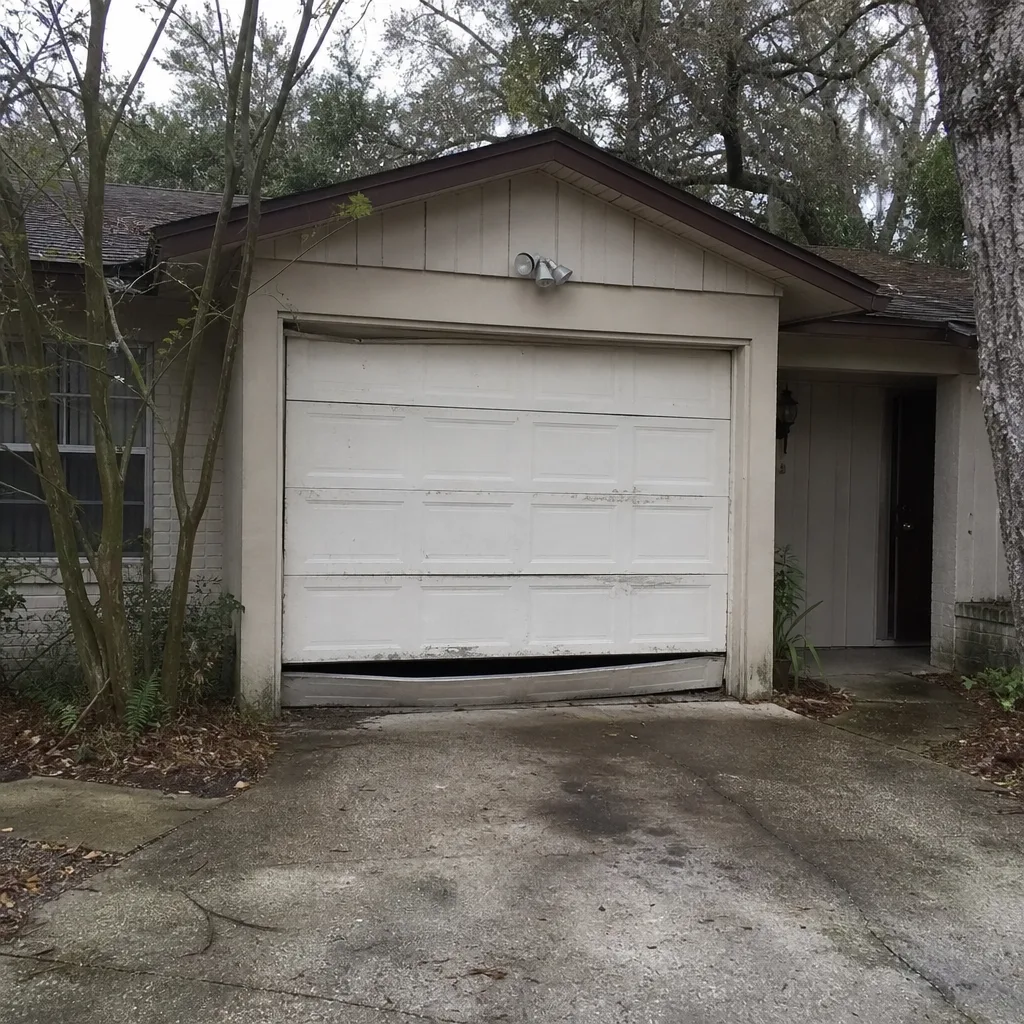 Before
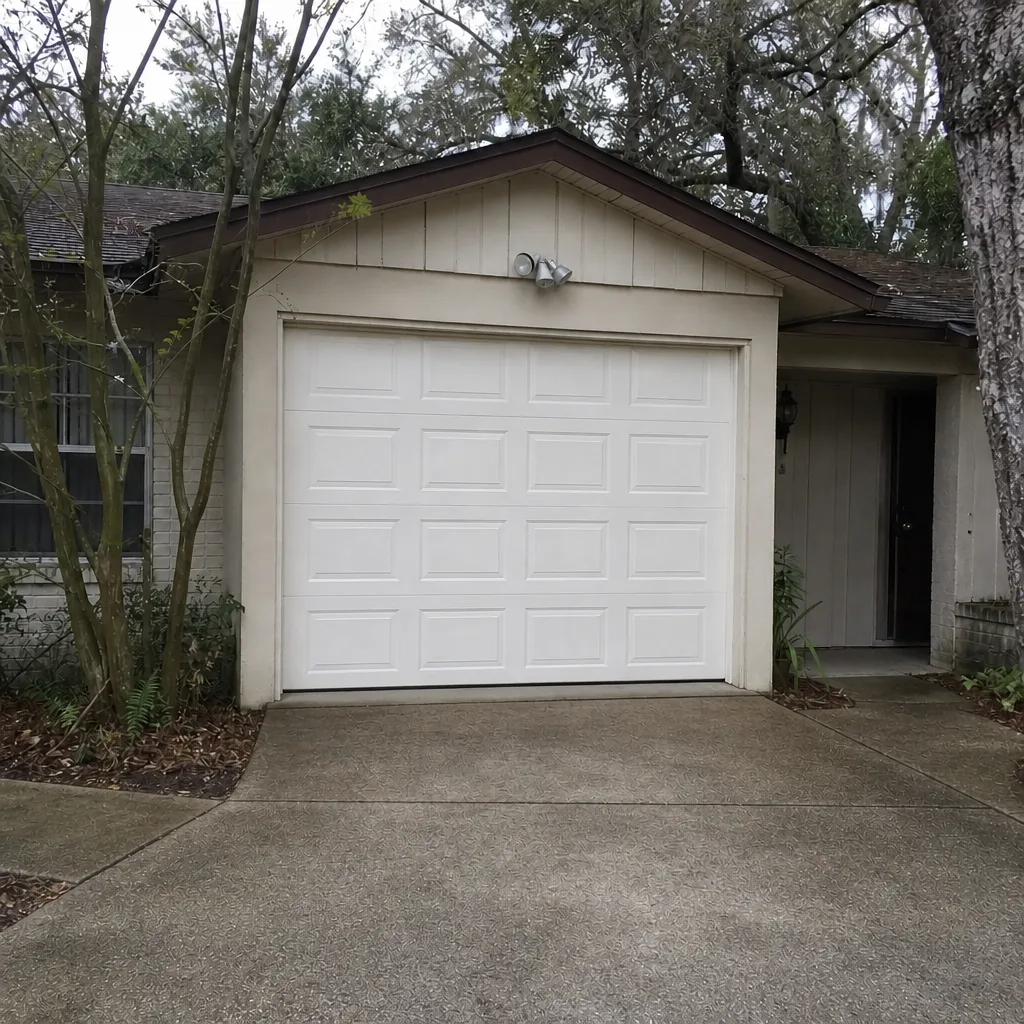 After
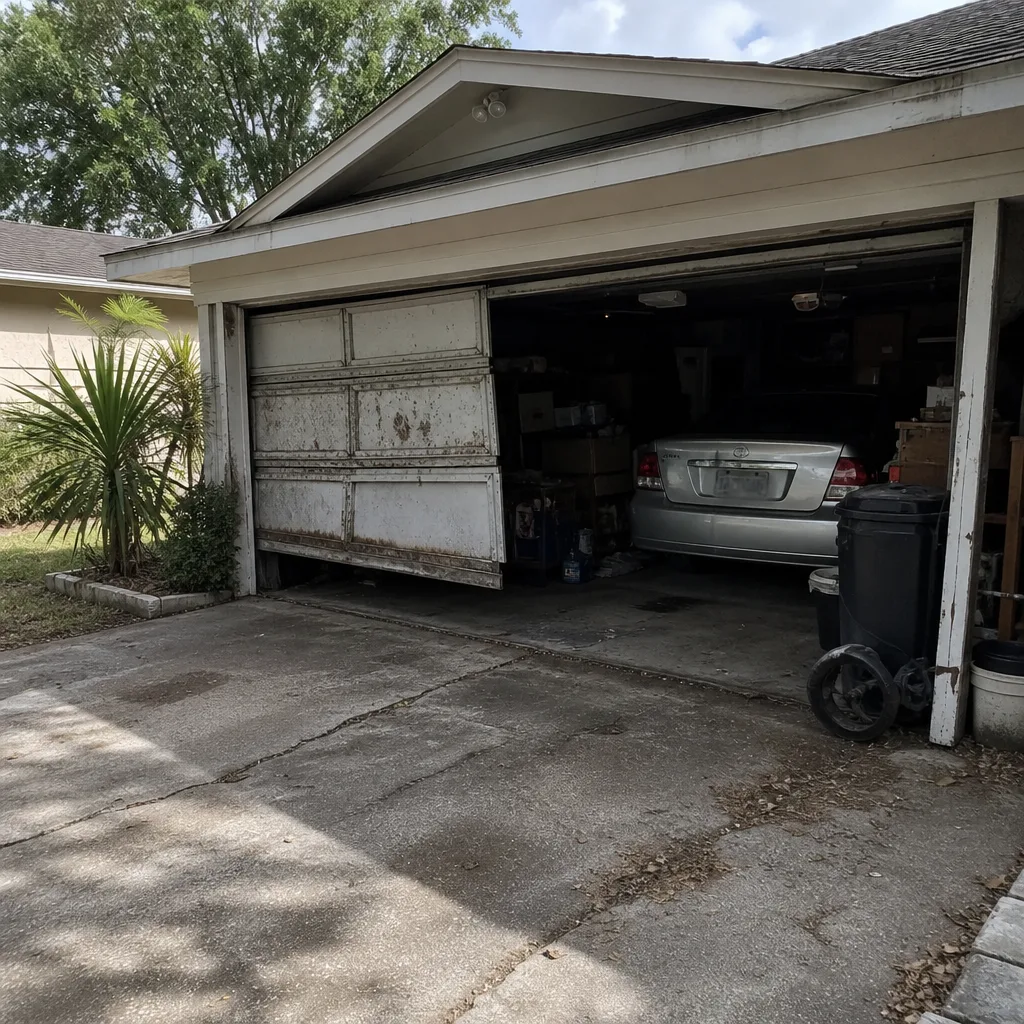 Before
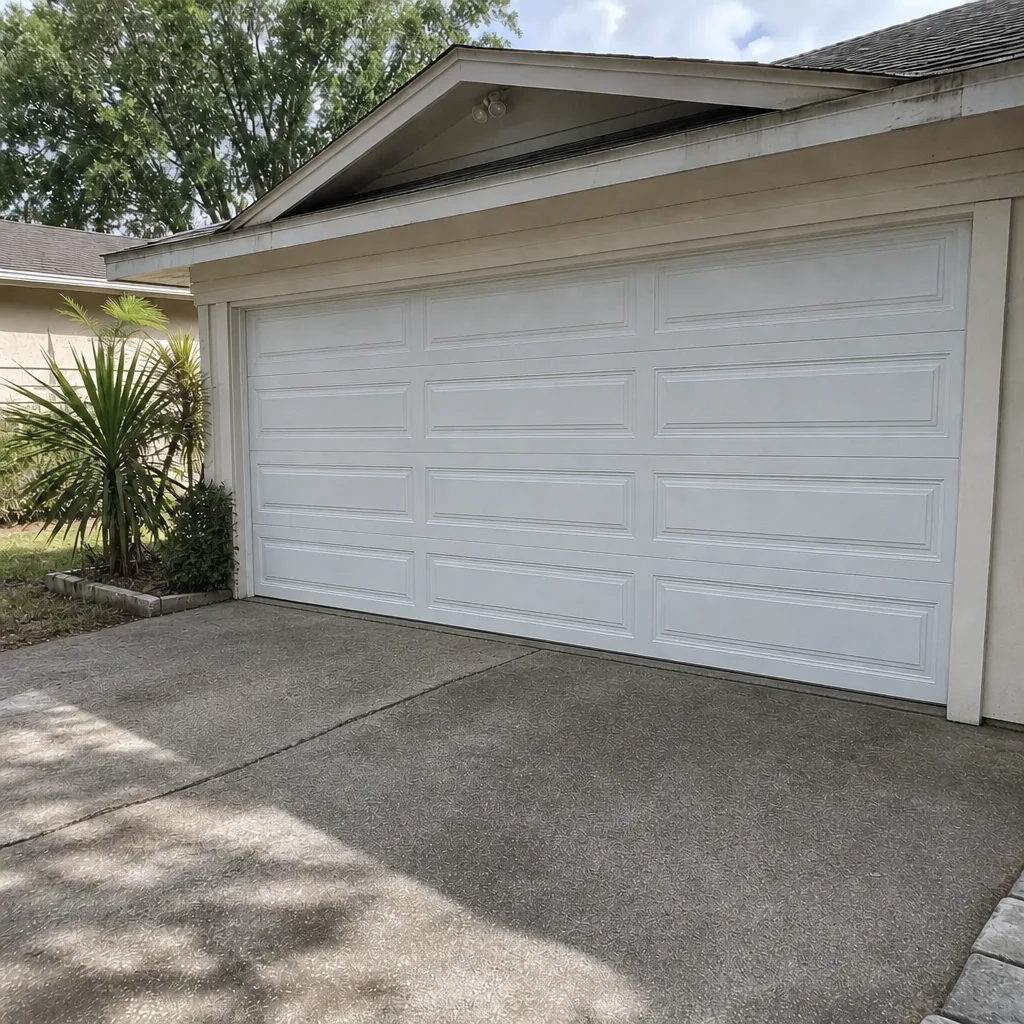 After
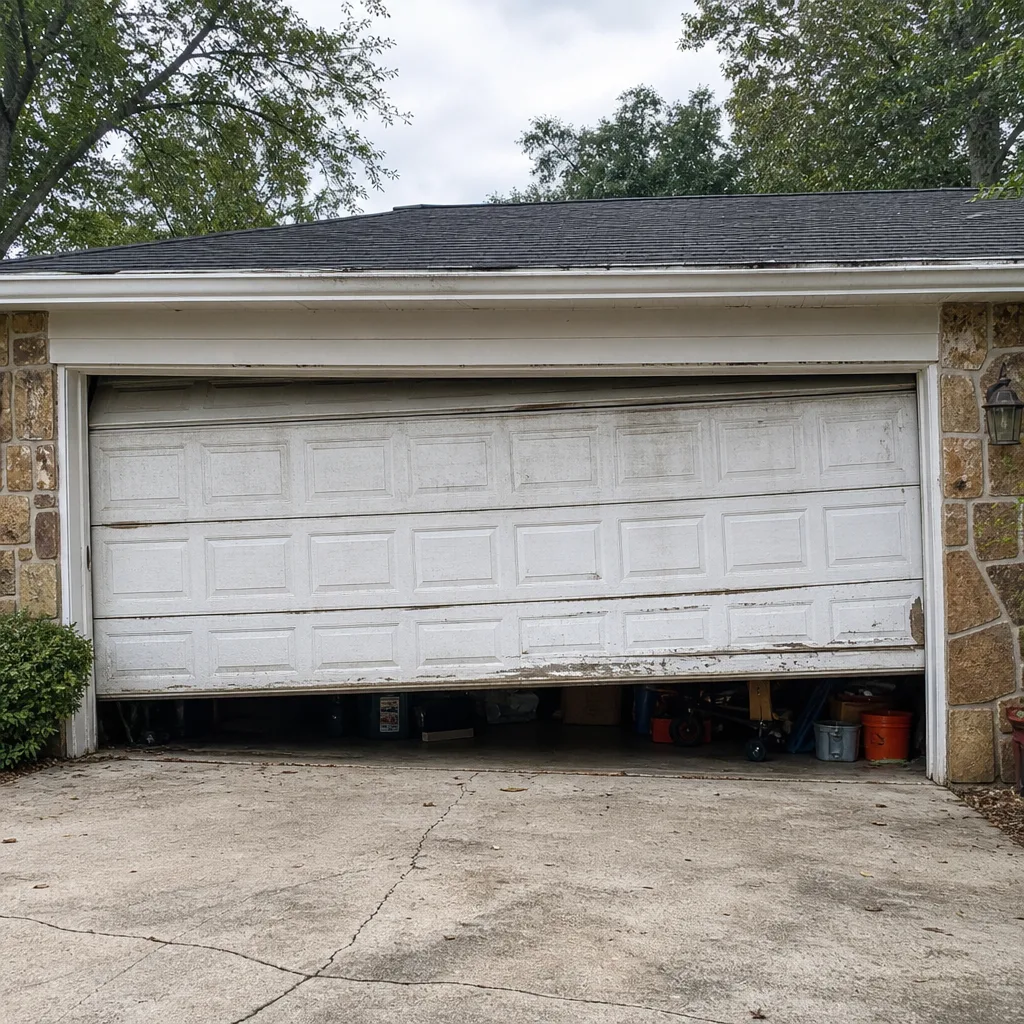 Before
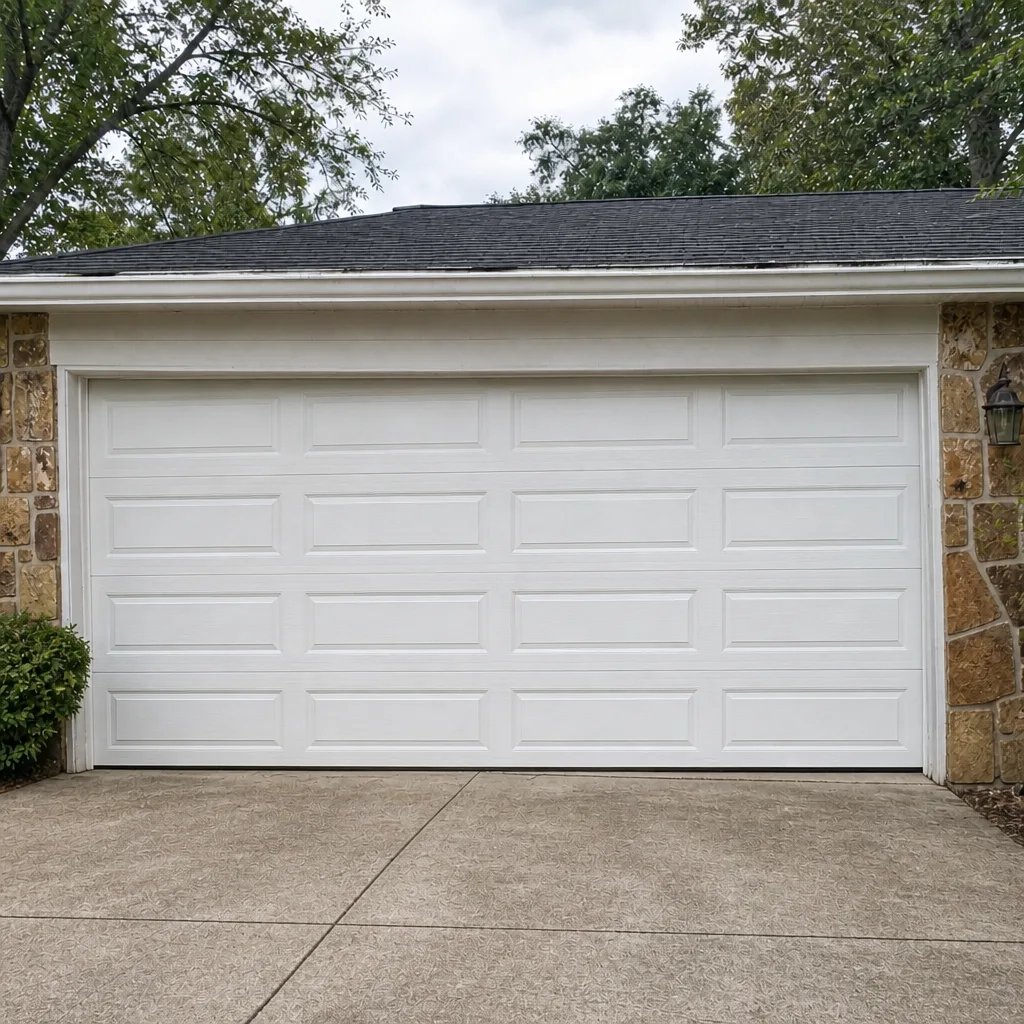 After
When to Call a Professional
Call us when the diagnosis points to springs or cables, when the door leaves its track, when the opener runs but the door doesn’t move, or when a sensor problem survives a clean lens and solid indicator lights. Call us if a strain hum or a pop has already happened. Call us if the door feels heavy by hand or sits crooked. And call us if you’re simply not sure which category your symptom belongs to. Garage Door Repair South Tampa offers free estimates in South Tampa. Call (833) 696-2185. We answer 24/7. Fast dispatch from 7am to 7pm, Sunday through Friday. A call outside dispatch hours is booked into the next opening.
Frequently Asked Questions
Garage door repair in South Tampa typically runs $150 to $450, depending on the component. Spring repairs usually sit at the higher end of that range, and sensor or roller work sits near the low end. A single torsion spring is typically $180 to $340, and a matched pair costs about twice that. The written quote you receive before work begins sets the final price. Call (833) 696-2185 for an exact quote; estimates are free.
Yes, in most cases. Spring repairs are a same-day job for us more often than not, and fast dispatch runs from 7am to 7pm, Sunday through Friday. We answer 24/7, so a call outside dispatch hours gets booked into the next opening. Call (833) 696-2185 and we’ll find the soonest slot.
No. The written estimate is prepared before any work starts, and the price you agree to is the price on the invoice. If we open the door and find a second problem, we stop and quote it separately before touching anything. That’s the rule. Call (833) 696-2185 to schedule the estimate; it’s free.
The local professionals we connect you with are licensed and insured as their state requires. Our technicians have up to 12 years of experience, and they work on LiftMaster, Chamberlain, Genie, Clopay, Amarr, Wayne Dalton, Craftsman, and Raynor hardware. If you’d like to confirm the credentials before the visit, call (833) 696-2185.
Almost always a safety sensor interruption. Clean both lenses with a dry cloth, check that the indicator lights are solid on both sides, and look for a spider or debris in the beam path. If the lights are solid and the door still reverses, the sensor itself has likely failed. Call (833) 696-2185 for a diagnostic.
You can, but a matched pair is usually replaced together. The two springs are wound to work as a set, and replacing one leaves the other carrying more load. A single spring is typically $180 to $340, and a pair costs about twice that. The written estimate will show both options. Call (833) 696-2185 to talk through it.
The Bottom Line
Most garage door problems in South Tampa come down to six categories, and the symptom is your first clue to which one. A crooked door points at a cable. A pop followed by nothing working points at a spring. A reversing door points at sensors. A straining hum points at the opener. Clean your sensors, listen to the door, look at the tracks, and stop the moment the diagnosis points to springs or cables. That’s the whole troubleshooting method, and it works for LiftMaster, Chamberlain, Genie, Clopay, Amarr, Wayne Dalton, Craftsman, and Raynor hardware alike. The right part, the right diagnosis, one call.
If you want the diagnosis handled for you, Garage Door Repair South Tampa offers free estimates in South Tampa. Call (833) 696-2185 for a free estimate. We answer 24/7, with fast dispatch from 7am to 7pm, Sunday through Friday. Garage doors, exclusively.
Written by the team at Garage Door Repair South Tampa.